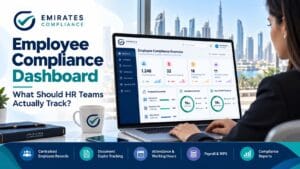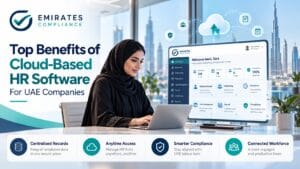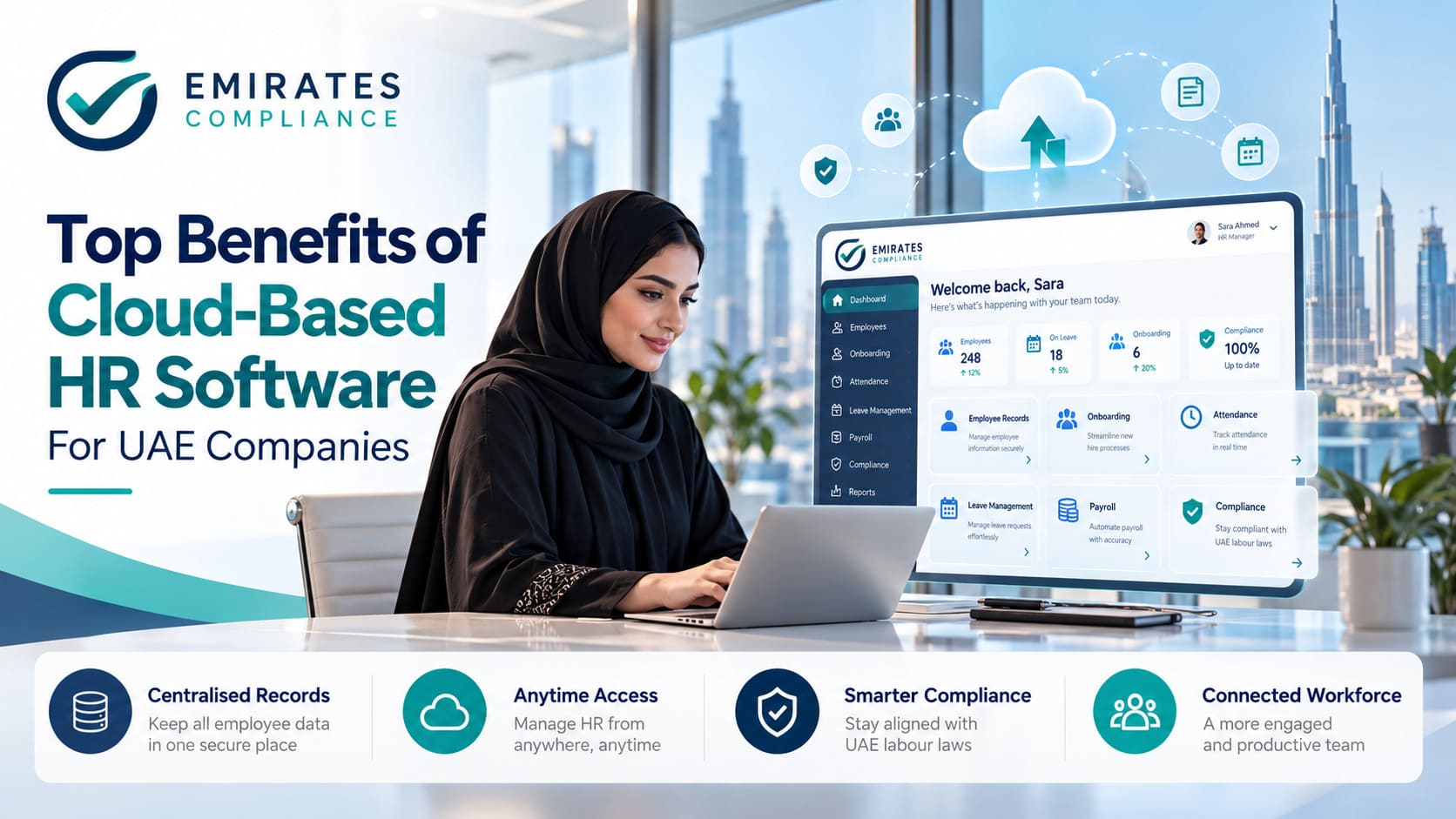
Managing employee compliance in the UAE involves much more than collecting documents during onboarding. HR teams must monitor employment records, work permits, document expiry dates, attendance, leave, and payroll information throughout the employee lifecycle. For businesses managing hundreds of workers across multiple locations, keeping track of these responsibilities through spreadsheets can become overwhelming. An employee compliance dashboard brings essential workforce information into one organised view, helping HR managers identify outstanding tasks, monitor potential risks, and take timely action before administrative problems grow.
What Is an Employee Compliance Dashboard?
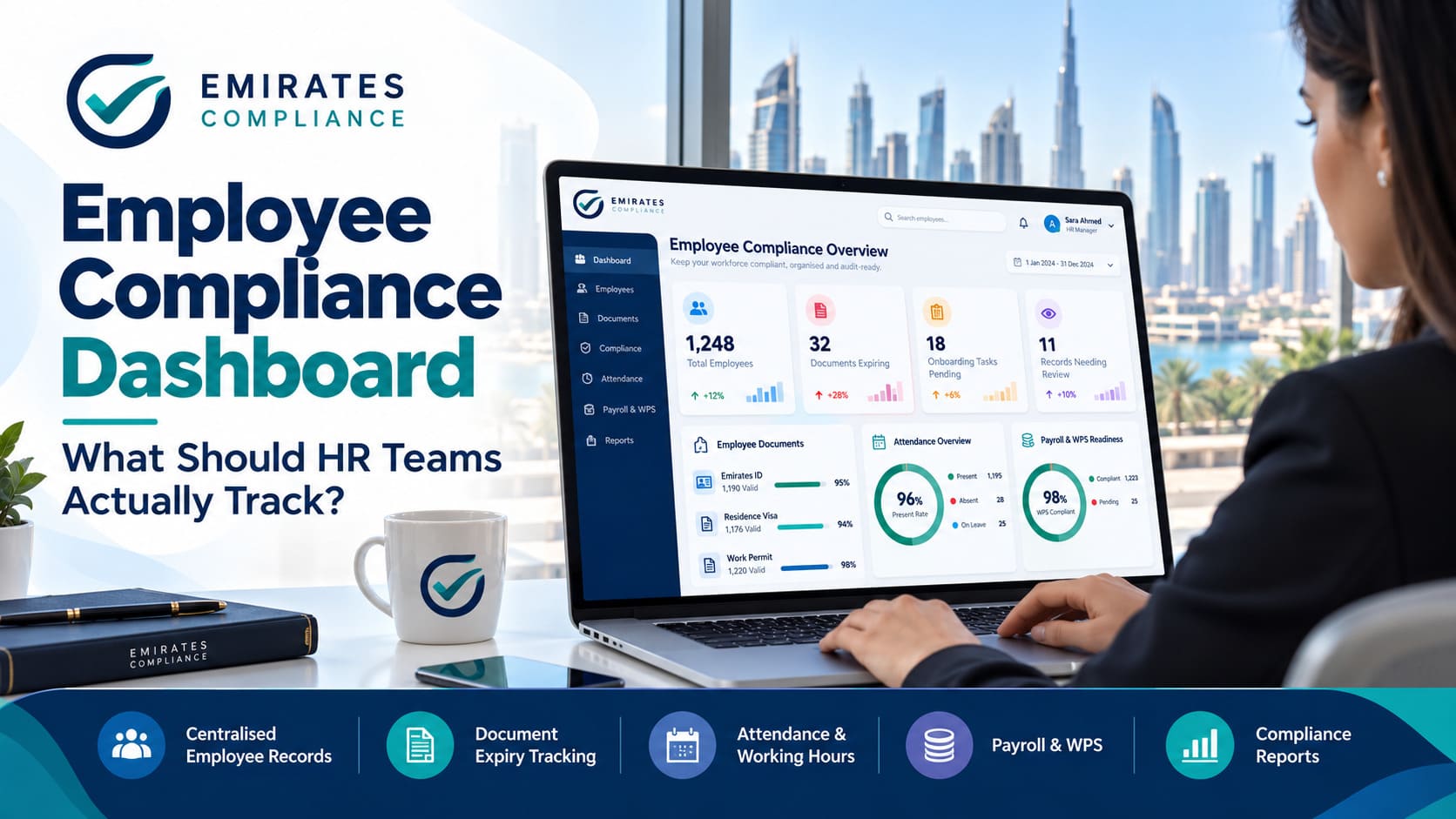
An employee compliance dashboard is a centralised digital interface that helps HR teams monitor important workforce records, document statuses, deadlines, and administrative activities. Instead of checking several spreadsheets or requesting updates from different departments, authorised users can review key information through one system. A well-designed HR compliance dashboard in UAE should highlight missing documents, upcoming renewals, payroll exceptions, and other items requiring attention. Its purpose is not simply to display statistics but to help managers understand what needs action, who is responsible, and when a task must be completed.
1. Emirates ID, Visa, and Work Permit Expiry Dates
Document expiry tracking should be one of the first priorities on an employee compliance dashboard. UAE employers frequently manage Emirates ID details, residency visa information, and work permits for employees with different joining dates and renewal schedules. Missing an important deadline can create administrative and operational difficulties. Employee document tracking software helps HR teams monitor expiry dates, identify records approaching renewal, and configure timely reminders. Dashboards should also show which documents are missing or awaiting verification, making follow-up easier for growing organisations.
2. Employee Records and Onboarding Status
Accurate employee information creates the foundation for effective HR compliance management. A dashboard should help employers identify incomplete employee profiles, outstanding onboarding tasks, and missing employment documentation. For manpower staffing companies and construction businesses, it is especially important to know which employees have completed internal onboarding requirements before deployment. Automated employee onboarding software can help organise document collection, employee profiles, and approval workflows. By monitoring onboarding progress centrally, HR teams can reduce repeated follow-ups and maintain more consistent workforce records.
3. Employment Contracts and Permit Information
HR teams should maintain visibility over employment contract details, relevant permit information, and pending administrative actions. A useful dashboard can highlight missing contract records, upcoming contract milestones, and information that requires verification. These indicators help employers conduct routine internal reviews without searching through individual employee folders. Since requirements can differ depending on the employment arrangement and applicable UAE jurisdiction, dashboards should support configurable tracking rather than applying identical rules to every employee.
4. Payroll Records and WPS Preparation
Payroll information is another important area of workforce compliance. Employers covered by the UAE Wage Protection System must follow applicable salary payment requirements. An HR and payroll compliance dashboard can help teams review payroll preparation status, missing employee details, unresolved salary-related exceptions, and SIF file readiness where supported. Monitoring these indicators helps payroll departments identify issues before submission. However, internal dashboard statuses should not be confused with official WPS confirmation, and employers remain responsible for verifying salary accuracy and payment obligations.
5. Attendance, Working Hours, and Overtime
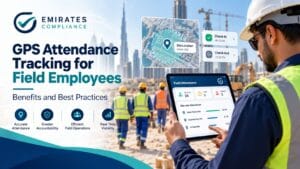
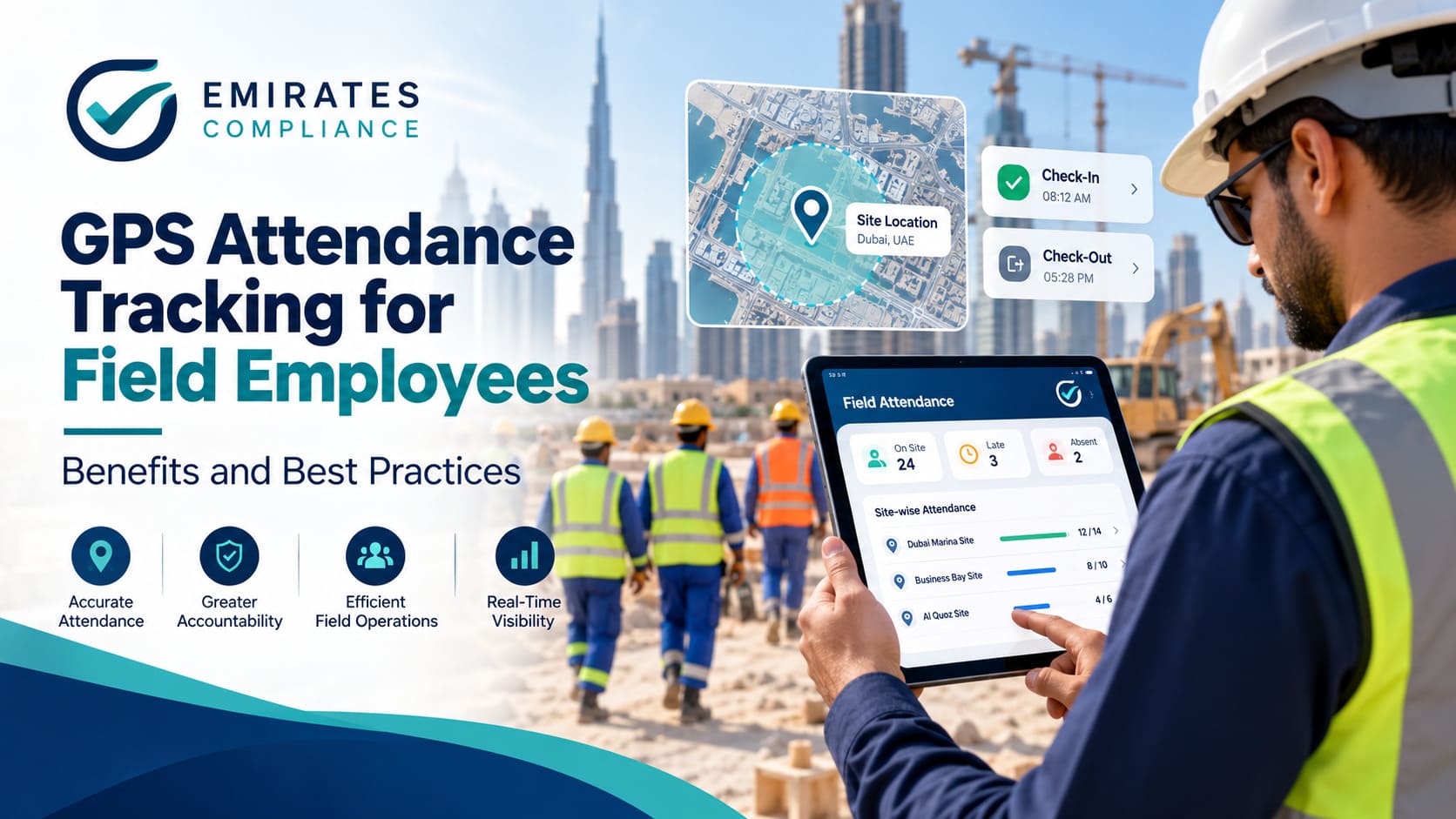
For businesses operating across construction sites, warehouses, and client locations, attendance information can be difficult to consolidate. An effective workforce compliance dashboard should help managers review missing check-ins, recorded working hours, overtime entries, and attendance discrepancies requiring approval. GPS-enabled attendance and site-wise reports can support better visibility for distributed workforces. Connecting attendance information with employee schedules also helps HR teams investigate unusual records and prepare more reliable payroll inputs while ensuring actual working arrangements follow applicable requirements.
6. Leave Balances and Employee Absences
Leave administration is closely connected with employee records, workforce planning, and payroll preparation. HR teams should be able to review approved leave, pending requests, recorded absences, and employee leave balances from a centralised system. An employee leave management dashboard helps managers identify overlapping absences and maintain clearer approval records. This is particularly useful for security, facilities management, and manpower supply businesses where staffing coverage matters. Leave calculations and policies should reflect the applicable employment framework and individual circumstances.
7. Training, Site Assignments, and Outstanding Actions
Some businesses also need to monitor role-specific training, internal induction requirements, and employee deployment information. Construction and industrial employers, for example, may need visibility into training completion or site-specific authorisations. These records should be configured according to operational and legal requirements rather than treated as universal obligations. A useful dashboard also assigns owners to unresolved tasks and shows whether corrective actions have been completed. This transforms compliance monitoring from passive reporting into a more accountable daily process.
How Emirates Compliance Helps HR Teams Stay Organised
At Emirates Compliance, we understand that workforce administration becomes more demanding as employee numbers and worksite locations increase. Our platform connects AI-assisted onboarding, centralised employee profiles, document expiry monitoring, GPS-enabled attendance, leave and shift management, and payroll-related workflows. By bringing essential information together, we help UAE businesses reduce fragmented recordkeeping and improve visibility into outstanding workforce activities. Our approach is particularly relevant for manpower staffing, construction, facilities management, security, and logistics companies.