Paying employees accurately and on time is an essential responsibility for businesses operating in the UAE. For employers covered by the Wage Protection System (WPS), salary processing also involves following a structured electronic wage-payment framework. As workforce size increases, managing employee information, payroll calculations and WPS files manually can become increasingly demanding. Understanding how WPS works and establishing an organised payroll process can help UAE employers manage salary administration more efficiently while maintaining better workforce visibility.
What Is WPS in the UAE?
The Wage Protection System (WPS) is an electronic wage-transfer system introduced to support the payment of workers' salaries through approved financial institutions and channels. It enables relevant authorities to monitor salary payments and provides a structured framework for employers to process wages.
For businesses, WPS is not simply another payroll feature. It connects employee information, salary data and the wage-payment process. This means employers need reliable payroll records and an organised method for preparing the information required for salary processing.
Requirements can vary depending on an organisation's circumstances, so employers should always verify their current obligations through official UAE authorities and applicable regulations.
Why WPS Compliance Matters for UAE Employers
WPS plays an important role in creating transparency around wage payments. Employers need to ensure that relevant employee and salary information is maintained accurately and that payroll is processed according to applicable requirements.
A poorly organised payroll process can create unnecessary administrative pressure. Missing information, incorrect employee records or inconsistencies between HR and payroll data may require teams to spend additional time reviewing information before salaries can be processed.
For labour-intensive organisations employing hundreds or thousands of workers, even a small inefficiency repeated across every employee can create significant work for payroll and HR teams.
Understanding the Salary Information File (SIF)
A key part of WPS payroll processing is the Salary Information File (SIF). The SIF contains salary-related information required as part of the WPS process and needs to follow the applicable structure before it moves through the appropriate financial channel.
Preparing SIF information manually can become challenging when payroll teams are working with large employee populations. Employee information may be maintained in HR spreadsheets, attendance data may come from operations, and salary calculations may exist in another payroll file.
Bringing these sources together every month creates additional administrative work. This is one reason businesses managing large workforces increasingly look toward WPS payroll software in the UAE.
How the WPS Payroll Process Works
Although the exact workflow depends on the organisation and its applicable requirements, WPS payroll generally involves maintaining accurate employee information, preparing salary calculations, creating the required payroll file and submitting salary information through the appropriate approved channel.
From an operational perspective, the process can be viewed as:
Employee Records → Attendance & Payroll Inputs → Salary Processing → SIF/WPS File Preparation → Approved Financial Channel → Salary Payment
The more fragmented these stages are, the more manual work payroll teams may need to perform between them.
Common WPS Payroll Challenges
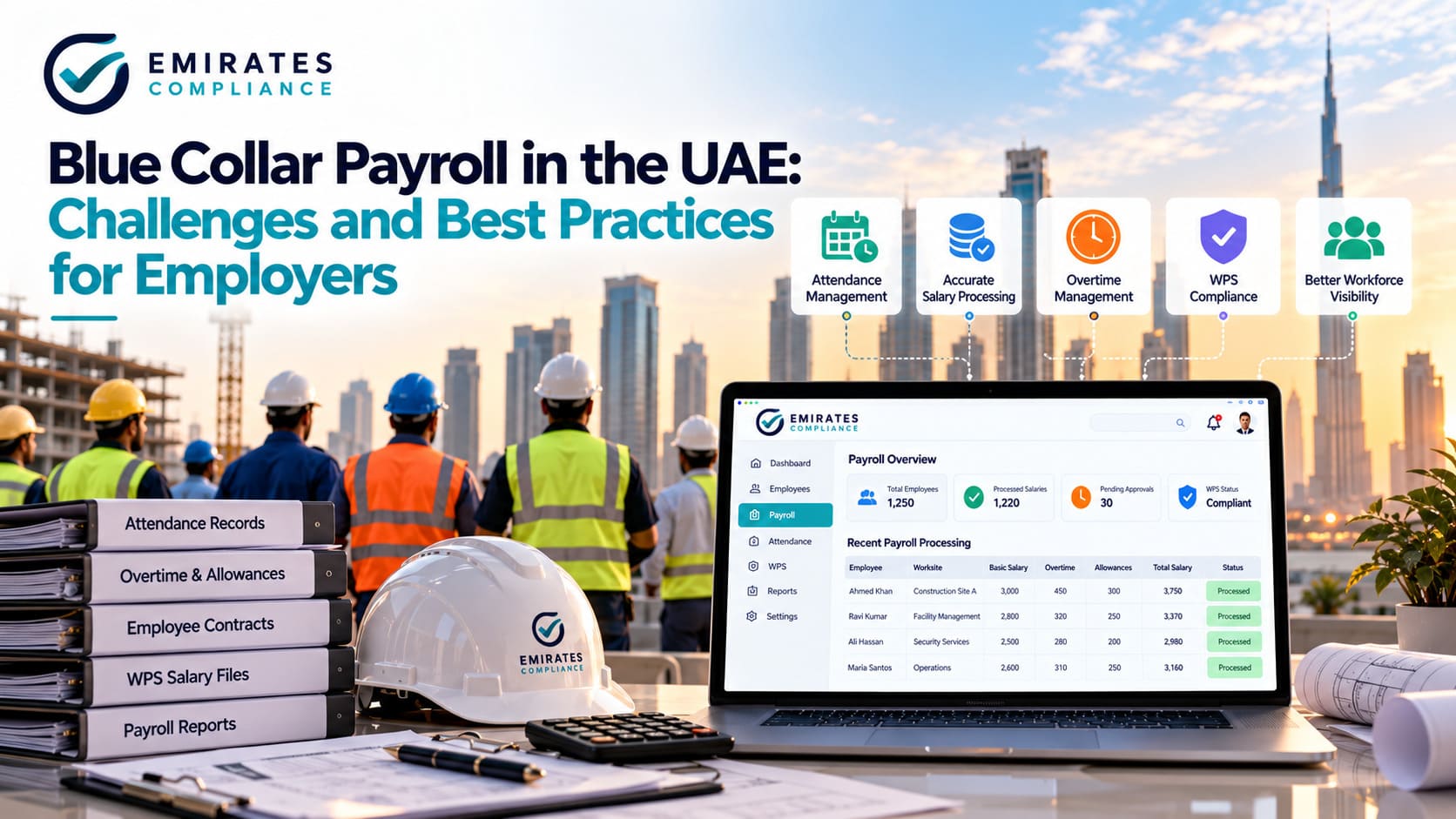
One of the biggest challenges is maintaining consistent employee data. When HR and payroll teams work with different versions of employee information, discrepancies may need to be resolved before payroll can move forward.
Attendance can create another layer of complexity for businesses with shift-based or distributed workforces. Workers may operate across construction sites, warehouses, customer premises or other field locations. Payroll teams may need relevant attendance information before completing salary calculations.
File preparation is another repetitive task. When salary data needs to be manually transferred between spreadsheets or reformatted every month, payroll preparation can consume significant administrative time.
These challenges become more noticeable as workforce size increases.
WPS for Labour Hire and Manpower Supply Companies
WPS payroll management can be particularly demanding for labour hire companies and manpower suppliers because these organisations often employ large numbers of workers who are deployed across multiple clients or projects.
An employee may work at a customer's location while payroll remains the responsibility of the sponsoring employer. As a result, businesses need central visibility over workforce records even when employees are operationally distributed.
Managing employee information, attendance and salary processing through disconnected systems can make this process difficult to scale. A central labour management and WPS payroll system can help create a more structured workflow.
WPS Payroll in Construction and Other Labour-Intensive Industries
Construction companies face similar challenges because workers can be distributed across numerous project sites. Facilities management and cleaning providers may have employees working at multiple customer premises, while security companies manage personnel across individual posts.
Delivery, logistics and warehousing businesses can also operate highly distributed workforces with different schedules and locations.
In all of these industries, payroll teams need accurate workforce information regardless of where employees physically work. Connecting workforce records, attendance and payroll can reduce the amount of information that needs to be collected manually each payroll cycle.
Why Attendance and Payroll Work Better Together
Attendance and payroll are closely related for many labour-intensive organisations. If attendance information is maintained entirely separately, payroll teams may need to wait for spreadsheets or reports from individual sites before completing monthly payroll preparation.
Digital attendance systems can create a more structured source of workforce information.
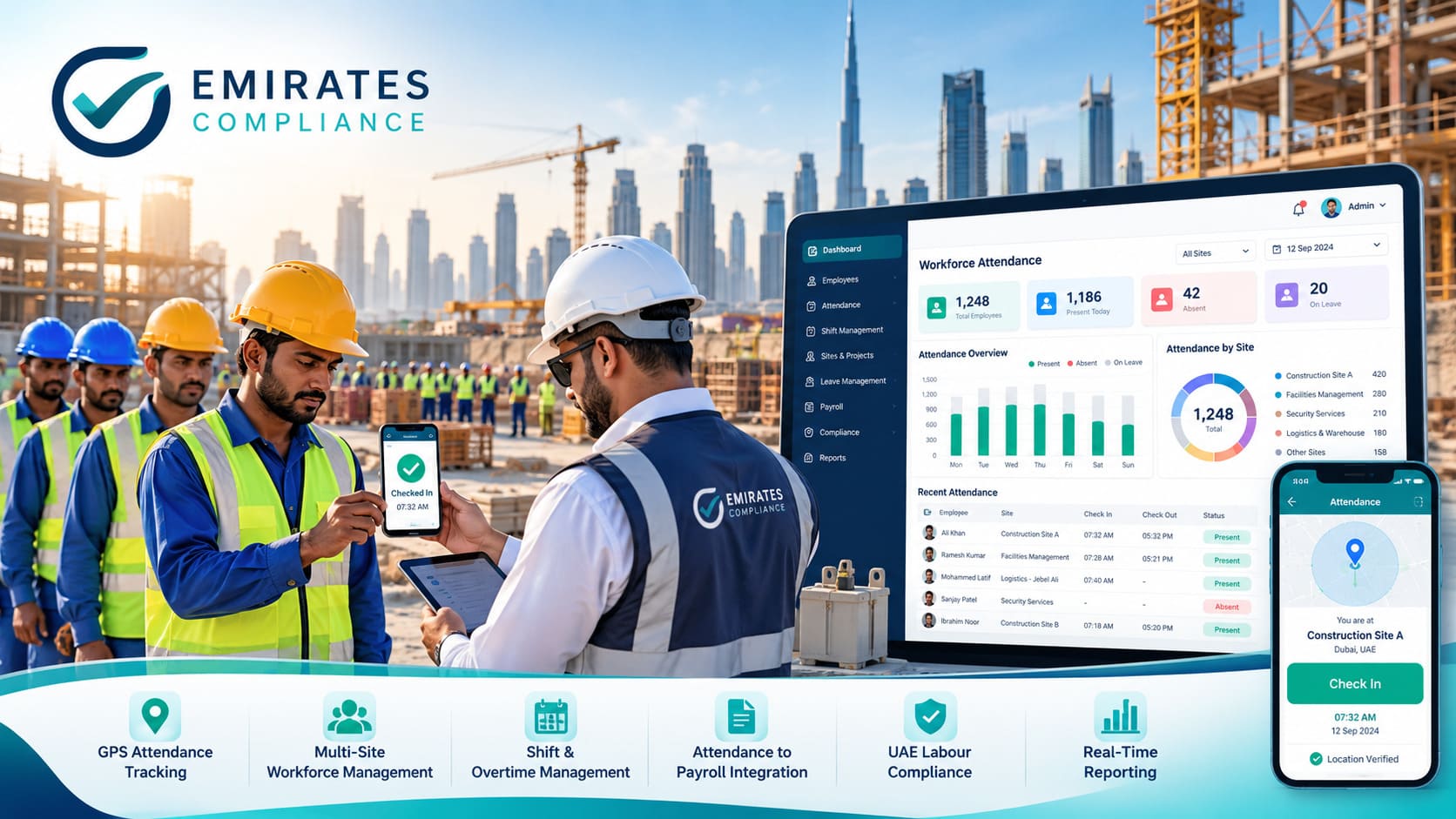
Emirates Compliance provides attendance management, geofencing and rostering alongside its WPS payroll functionality. This allows businesses to manage distributed employees while keeping workforce information more closely connected to payroll processes.
The objective is to reduce unnecessary movement of information between separate systems.
How Automation Can Simplify WPS Payroll
Payroll automation does not mean removing human review. Payroll teams still need to verify salary information and ensure the organisation follows applicable requirements.
Automation is most useful for reducing repetitive tasks.
Instead of repeatedly entering employee information, combining multiple spreadsheets and manually preparing payroll files, businesses can establish a consistent workflow where relevant workforce data is already organised.
This can be especially valuable for organisations processing payroll for thousands of workers every month.
How Emirates Compliance Supports WPS Payroll
Emirates Compliance provides WPS payroll capabilities as part of a broader workforce management and compliance platform for UAE employers.
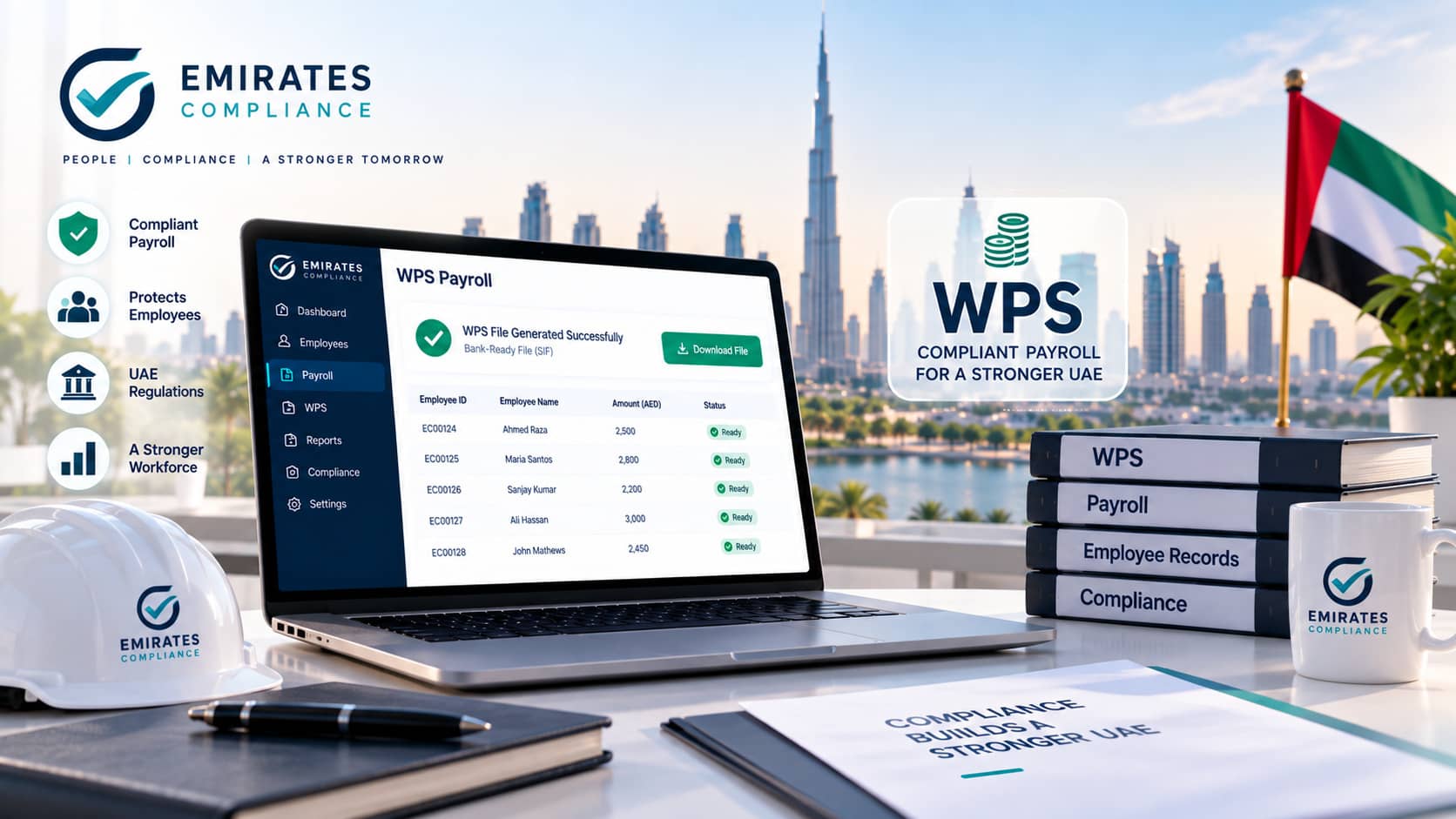
The platform helps businesses maintain employee information and prepare WPS and bank-ready SIF files through a more structured payroll workflow. Because payroll sits alongside other workforce functions, employee information does not need to exist entirely separately from onboarding, attendance and compliance records.
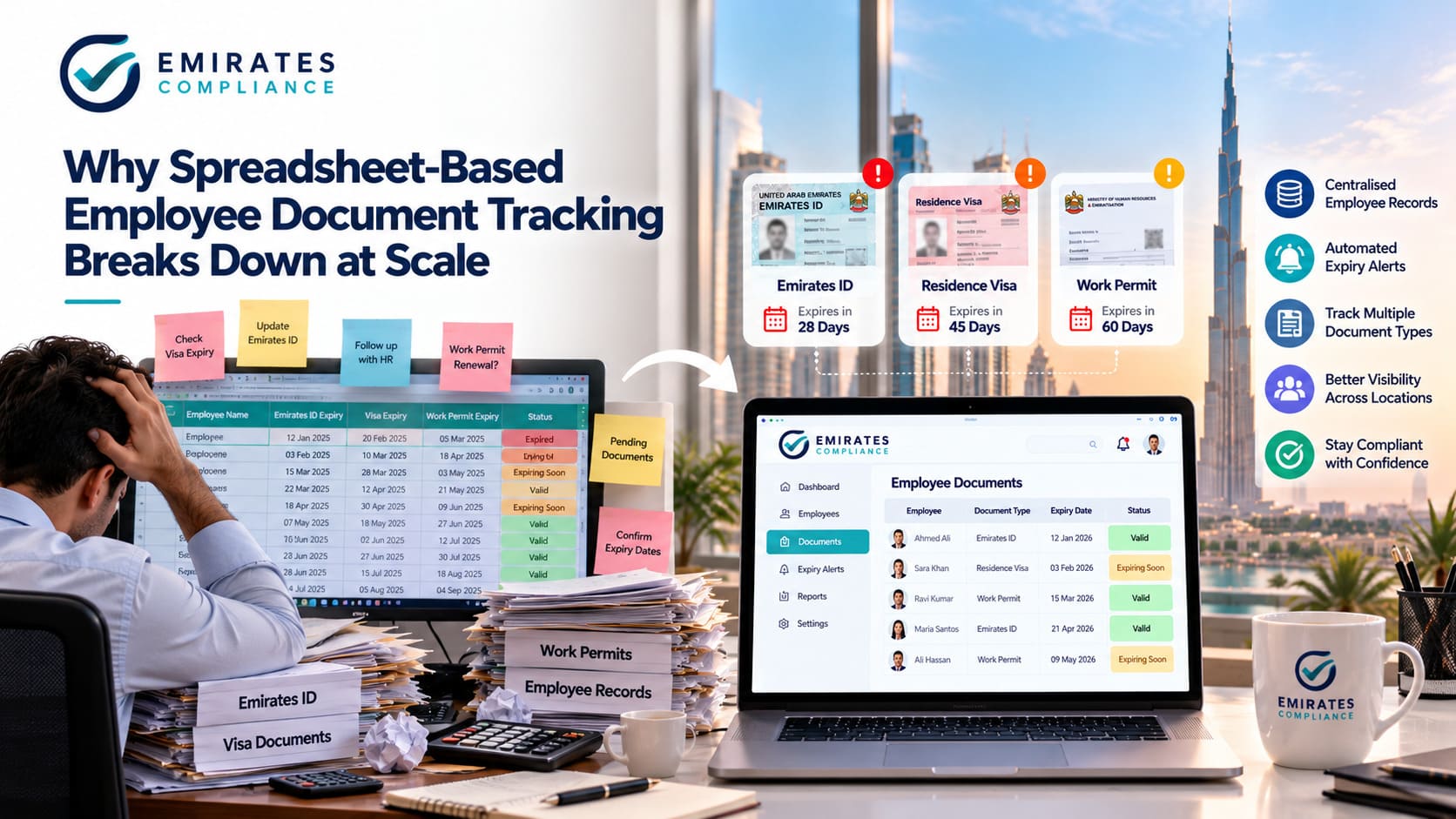
Emirates Compliance also includes AI-powered employee onboarding, visa and labour tracking, employee document expiry management, automated alerts, attendance and geofencing, mobile workforce management, Training and LMS, and reporting.
This connected approach can be particularly useful for businesses that want to reduce their dependence on multiple spreadsheets and standalone workforce systems.
Benefits of Using WPS Payroll Software
The primary benefit of WPS payroll software UAE is not simply generating a file faster. A well-designed system can improve the overall flow of workforce information leading up to payroll.
Centralised employee records can reduce duplicate data entry. Connected attendance information can make payroll preparation more efficient. Automated file generation can reduce repetitive formatting work, while reporting can provide management with greater visibility into workforce and payroll processes.
For large employers, these improvements can make payroll administration more scalable as the organisation grows.
Building a Better WPS Payroll Process
Technology alone does not guarantee effective payroll management. Businesses should maintain clear internal processes around employee records, attendance information, salary calculations, approvals and file preparation.
Employee information should be reviewed and updated when necessary. Payroll teams should have a defined monthly process rather than relying on last-minute collection of information. Access to payroll data should also be appropriately controlled because employee salary information is sensitive.
Combining strong internal procedures with the right payroll technology can create a more reliable WPS workflow.
Choosing WPS Payroll Software in the UAE
When evaluating WPS payroll software, employers should look beyond basic salary calculations. Consider how employee information enters the system, how attendance is managed, whether WPS/SIF file preparation is supported and how easily payroll information can be reviewed and reported.
Businesses with large workforces should also consider scalability. A system that works for 100 employees should remain manageable when the organisation grows to 1,000 or several thousand workers.
Integration with broader workforce processes can be particularly valuable because payroll depends on information created throughout the employee lifecycle.
Make WPS Part of a Connected Workforce Process
WPS payroll should not be treated as an isolated task that begins at the end of every month. A more efficient process starts with organised employee information and continues through attendance, payroll preparation, file generation and salary processing.
Emirates Compliance helps UAE employers connect these processes through one workforce management platform. From AI-powered onboarding and employee document management to attendance, WPS payroll and bank-ready SIF file generation, businesses can manage more of the employee lifecycle without relying on disconnected spreadsheets.
For labour hire companies, manpower suppliers and other labour-intensive UAE organisations, this provides a more scalable way to manage payroll alongside everyday workforce operations.