Paying employees accurately and on time is one of the most important payroll responsibilities for businesses operating in the UAE. For employers covered by the Wage Protection System (WPS), salary payments are also part of a regulated process that provides greater visibility into whether employees are receiving their wages as required. At Emirates Compliance, we believe preventing WPS salary payment delays starts well before payroll day. Accurate employee information, attendance records, payroll approvals and salary data all need to come together on time to create a smooth and reliable payroll cycle.
When Is a Salary Considered Delayed Under WPS?
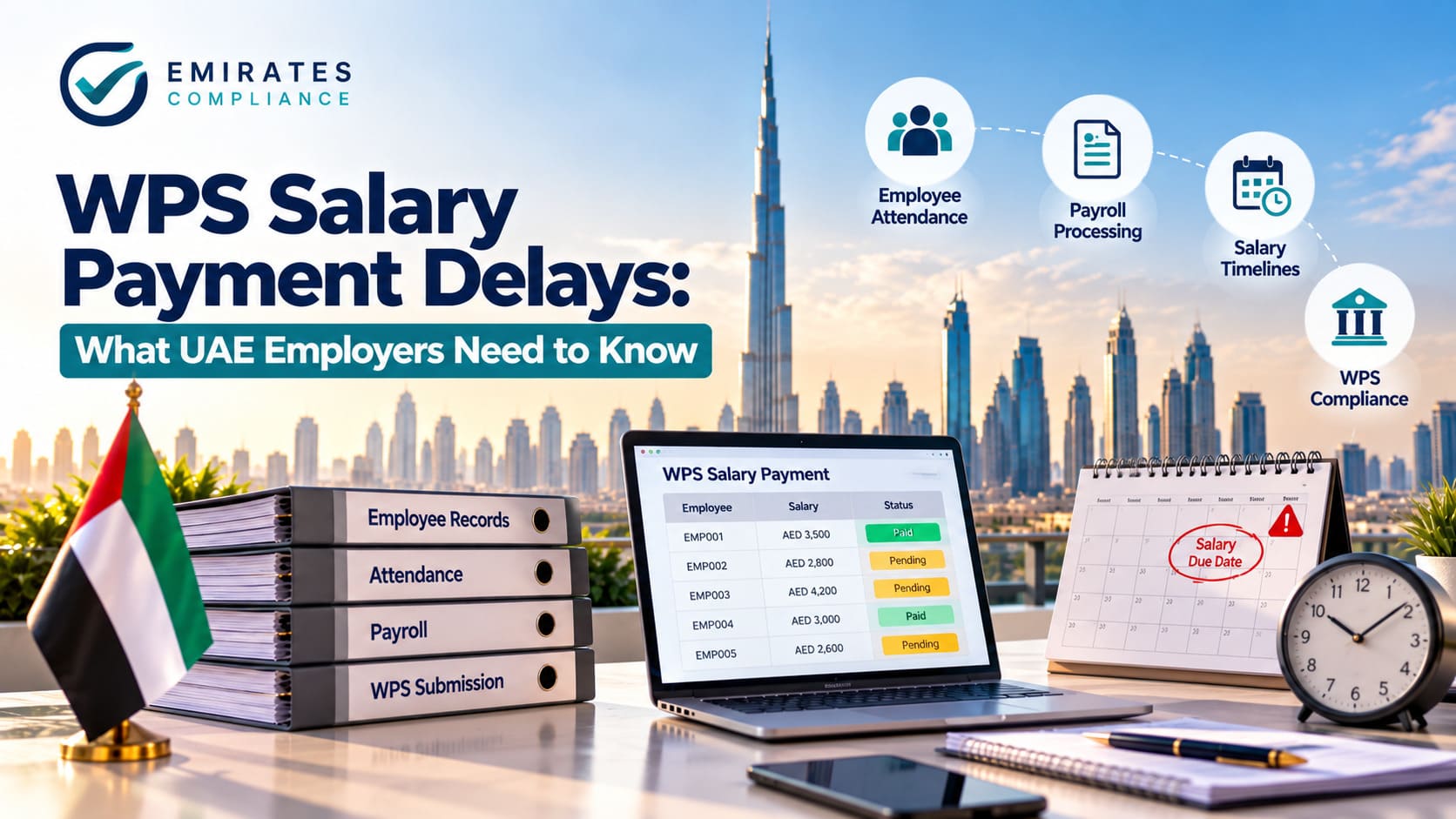
Understanding salary payment timelines is an important part of WPS compliance in the UAE. Employers need to ensure wages are processed according to the agreed salary schedule and applicable UAE requirements. Rather than treating the salary due date as the day to begin payroll processing, businesses should establish internal payroll deadlines several days earlier.
This gives HR and payroll teams enough time to review attendance, overtime, leave, deductions, salary adjustments and employee changes before salaries are processed. A structured payroll calendar can significantly reduce last-minute corrections and the risk of avoidable payment delays.
What Happens When WPS Salary Payments Are Late?
Late salary payments can become more than an employee-relations issue. Failure to meet applicable WPS requirements may lead to notifications, increased regulatory attention and administrative measures depending on the circumstances and duration of non-compliance.
For employers, the impact can also be operational. Employees may raise salary concerns, HR teams can spend additional time investigating payment issues, and payroll departments may need to correct records or resolve discrepancies under time pressure.
This is why timely salary payment in the UAE should be treated as an ongoing workforce management priority rather than something addressed only when a WPS issue occurs.
Why Do WPS Salary Delays Happen?
Not every payroll delay starts with a financial problem. Operational issues can also slow down salary processing, particularly for businesses managing large or distributed workforces.
Attendance may arrive late from individual sites, overtime might still be awaiting approval, employee records may not reflect recent changes, or payroll teams may identify discrepancies while preparing the Salary Information File (SIF). When HR, operations and payroll maintain separate spreadsheets, confirming the correct information can take additional time.
Construction, security, facilities management, logistics and labour-supply companies can be especially exposed to these challenges because workforce information may come from multiple sites and supervisors every month.
Build Payroll Around an Internal WPS Calendar
A reliable UAE payroll management process should include clear internal cut-off dates. Attendance and overtime can be finalised first, followed by employee-status checks, payroll adjustments, management approval, SIF preparation and final WPS processing.
The objective is to create enough time to identify and correct payroll errors before salaries become due.
Payroll teams should also review employees who recently joined or left the company, employees on approved leave, salary changes and other employment-status updates. Keeping these records current helps reduce discrepancies between HR information and the final payroll data.
Keep Attendance, Employee Data and Payroll Connected
Payroll delays become more likely when the information needed to calculate salaries is fragmented. A site supervisor may maintain one attendance record, HR may have another employee database, and payroll may work from a separate spreadsheet.
Connecting these processes gives teams clearer visibility into missing attendance, pending approvals, salary adjustments and employee changes before payroll reaches its final stage.
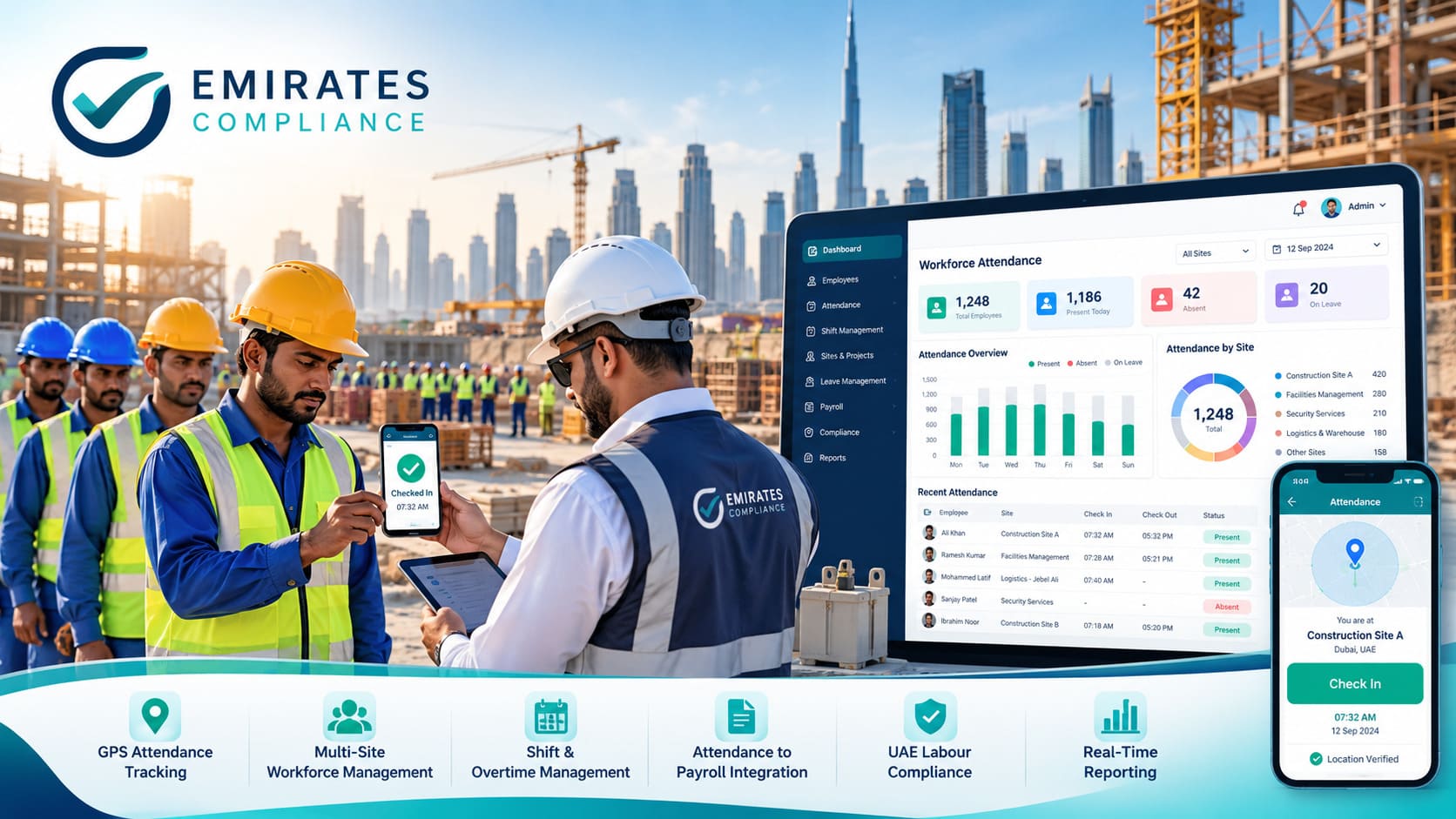
For companies managing hundreds or thousands of workers, manually reconciling workforce information every month can create unnecessary pressure. Payroll automation in the UAE and centralised workforce management can help teams identify problems earlier and establish a more consistent payroll workflow.
How Emirates Compliance Helps Reduce Payroll Complexity
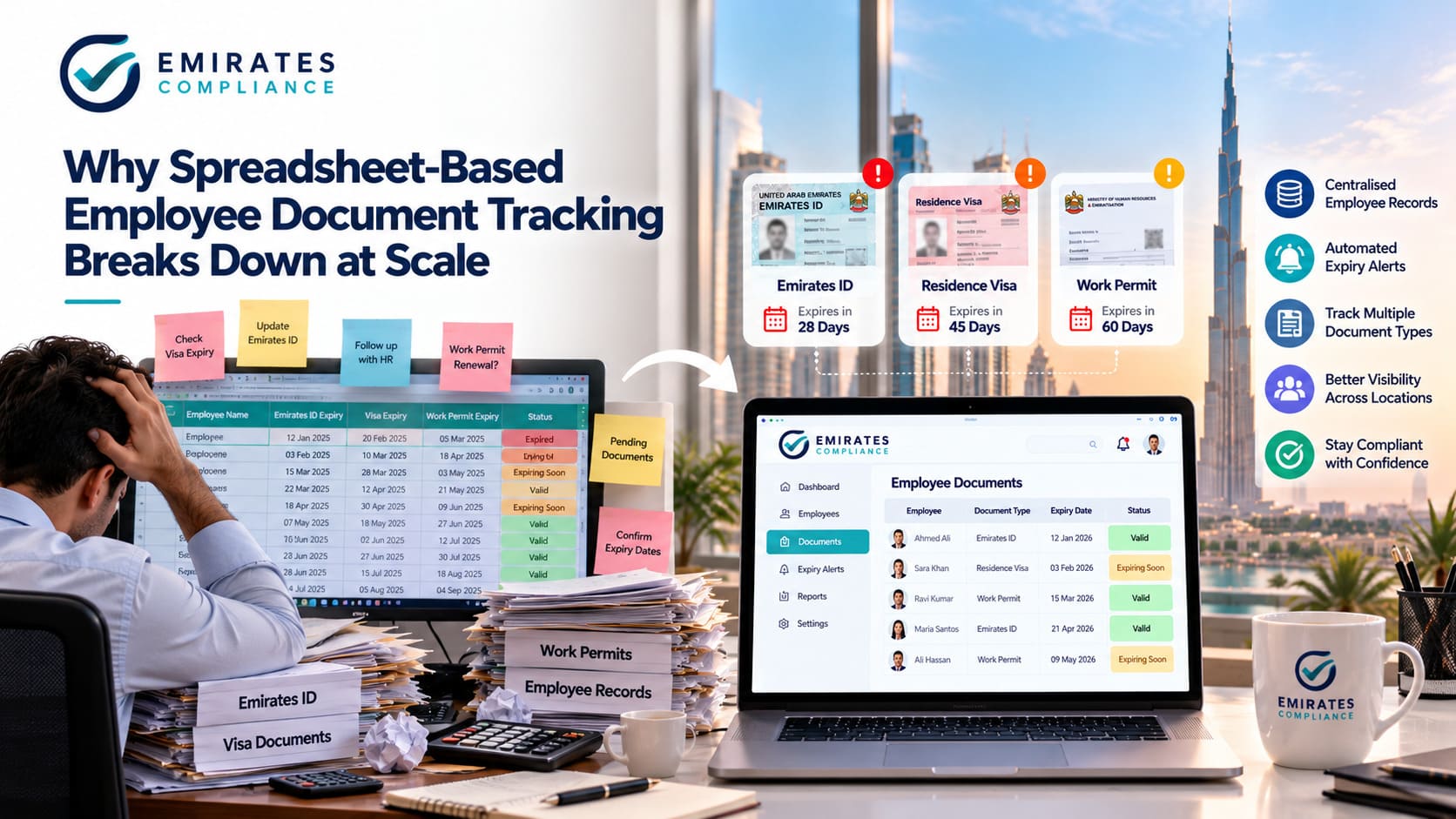
At Emirates Compliance, we help UAE businesses create a more connected journey from workforce management to payroll processing. By bringing employee information, attendance, compliance records and payroll workflows into a centralised environment, our platform gives HR and payroll teams better visibility before salaries are processed.
Instead of discovering missing information at the end of the payroll cycle, businesses can identify issues earlier, maintain organised employee records and prepare for WPS payroll processing more efficiently.
For companies managing large and multi-site workforces, greater payroll visibility can help reduce avoidable delays while supporting a more organised approach to UAE workforce compliance.