Employee onboarding is often the first major administrative challenge businesses face when expanding their workforce. HR teams need to collect employee documents, enter personal information, create workforce records and prepare new hires for the processes that follow. When a company recruits employees in large numbers, repeating these steps manually can consume significant time and increase the workload on HR teams. Emirates Compliance uses AI-powered employee onboarding and OCR technology to help UAE businesses turn employee documents into structured workforce records in as little as 60 seconds, creating a faster starting point for ongoing workforce management.
Why Traditional Employee Onboarding Takes So Much Time
Traditional onboarding often involves receiving documents from an employee and manually transferring information into HR systems or spreadsheets. Details such as names, document numbers, dates and other employee information may need to be entered one field at a time. The process becomes even more demanding when the same information is later required for document management, payroll, attendance or compliance tracking.
For a company onboarding a handful of employees, this may seem manageable. However, labour hire companies, manpower suppliers, construction businesses, facilities management providers and other labour-intensive employers may need to onboard dozens or even hundreds of workers within a short period. At that scale, manual data entry becomes a significant administrative task.
What Is AI-Powered Employee Onboarding?
AI-powered employee onboarding software uses technology to automate parts of the process that would otherwise require repetitive manual work. Instead of HR teams entering every piece of information from employee documents, the system can help read documents, extract relevant details and use that information to establish a digital employee record.
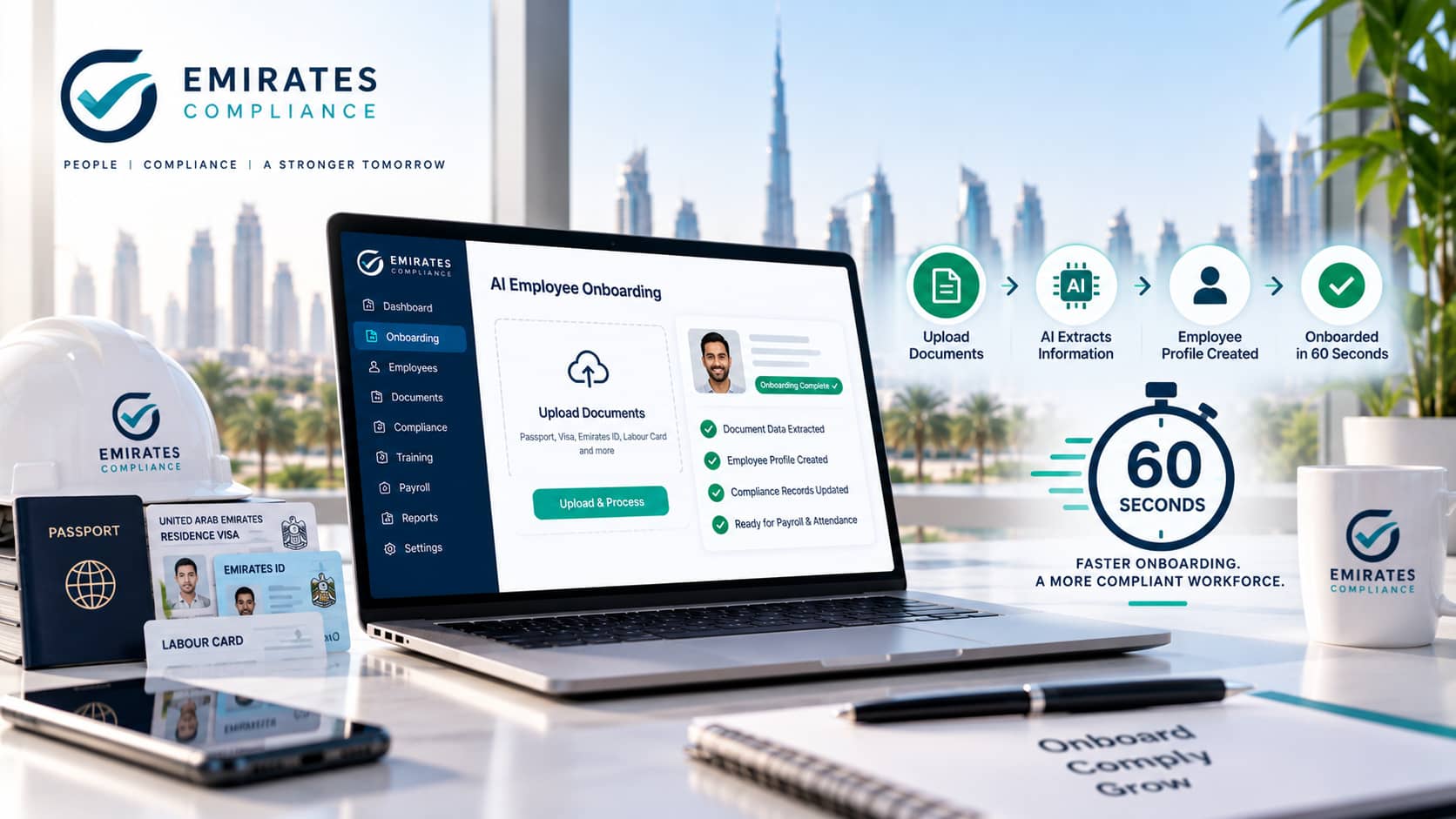
Emirates Compliance combines AI with Optical Character Recognition (OCR) to streamline this process. Once relevant employee documents are uploaded, the technology can capture information and help create a structured workforce profile. HR teams can then review the extracted information rather than starting every employee record from an empty form.
The result is a more efficient onboarding workflow, particularly for businesses that recruit at scale.
How the 60-Second Employee Onboarding Process Works
The Emirates Compliance onboarding workflow is designed to reduce the number of manual steps involved in creating a new employee profile. Instead of entering the same information across several screens, businesses can begin with the documents they already collect from new workers.
The process follows a straightforward flow:
Upload Employee Documents → AI & OCR Extract Information → Review Employee Details → Create Employee Profile → Continue Workforce Management
With supported documents and a straightforward record, this process can help create an employee profile in as little as 60 seconds. Actual processing and review time can naturally vary depending on document quality, completeness and the information requiring verification.
This is important because automation should not mean removing human review. The purpose is to eliminate unnecessary repetitive data entry while allowing HR teams to verify important employee information before continuing.
Turn Employee Documents into Useful Workforce Data
One of the biggest differences between digital onboarding and traditional document storage is what happens after a document is uploaded.
Simply saving a passport or Emirates ID in a folder does not automatically make the information useful. Someone may still need to open the file later, locate an expiry date and manually enter it into another spreadsheet.
With AI-assisted onboarding, document information can become part of the employee's digital profile from the beginning. This creates a foundation that can support other workforce processes rather than leaving important information trapped inside uploaded files.
For growing organisations, this can significantly improve the way employee data moves through the business.
Reduce Repetitive HR Data Entry
Manual data entry is not only time-consuming; it is repetitive. HR professionals may need to enter similar employee information during onboarding and then use or re-enter it later for payroll, document tracking, attendance and reporting.
An integrated employee onboarding system can reduce this duplication by creating a central employee profile that remains useful throughout the employee lifecycle.
Instead of thinking of onboarding as a one-time form that is completed on an employee's first day, Emirates Compliance treats it as the beginning of a connected workforce record.
Once created, that record can support the employee's ongoing management.
Connect Onboarding with Visa and Labour Tracking
Employee documents collected during onboarding do not stop being relevant once an employee begins work. Visas, Emirates IDs, passports, labour cards and other workforce records can have expiry dates that require ongoing attention.
This is where connecting onboarding with employee document expiry management becomes particularly valuable.
Information captured during onboarding can continue to support visa, labour card and document tracking. Emirates Compliance also provides automated email and WhatsApp alerts for upcoming expirations, helping responsible teams identify records that may require attention.
This creates continuity between hiring an employee and managing their workforce documentation over time.
From Onboarding to WPS Payroll
The employee record created during onboarding can also support payroll administration.
When onboarding and payroll operate through disconnected systems, teams may need to recreate employee information before salary processing begins. This adds another layer of administration and increases the number of places where workforce information needs to be maintained.
Emirates Compliance connects employee management with WPS payroll and SIF file preparation, allowing onboarding to become part of a wider workforce workflow.
Instead of onboarding ending when the employee profile is created, the same workforce record can continue into payroll and other operational processes.
Connect New Employees with Attendance and Rostering
Once employees are onboarded, businesses need to move them into day-to-day operations. For field-based and labour-intensive businesses, this can include assigning workers to shifts or locations and recording attendance.
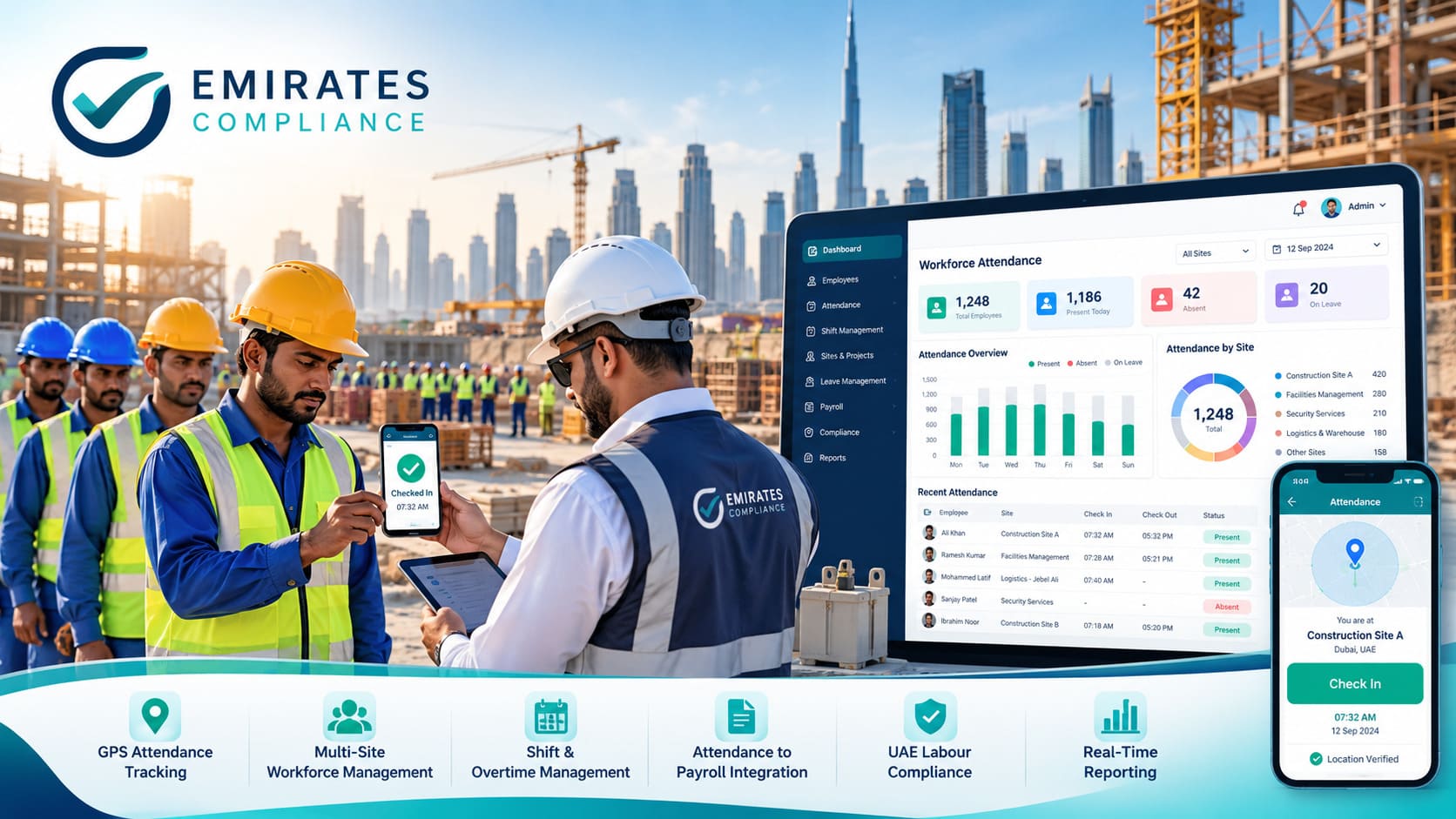
Emirates Compliance includes attendance management, GPS and geofencing, and rostering capabilities. This means a newly created employee record can become part of the operational workforce without requiring businesses to maintain an entirely separate employee database for attendance.
For organisations managing workers across multiple sites, connecting onboarding with attendance provides a more consistent transition from recruitment to active deployment.
Faster Onboarding for Labour Hire and Manpower Companies
High-volume onboarding is particularly relevant to labour hire companies, staffing agencies and manpower suppliers. These businesses can recruit workers in batches and deploy them across different clients or projects, creating a constant flow of employee administration.
If every new worker requires extensive manual data entry, HR workload can increase rapidly as the business grows.
AI-powered onboarding provides a more scalable approach. Instead of simply adding more administrative work whenever employee numbers increase, businesses can automate repetitive parts of the process and allow HR teams to focus on verification, workforce deployment and employee support.
Useful Across Labour-Intensive UAE Industries
The same onboarding challenges appear across several industries. Construction companies may need to mobilise workers quickly for new projects. Facilities management businesses can recruit employees for multiple contracts, while security providers may need to organise large groups of workers across customer sites.
Delivery and logistics companies may regularly onboard riders, drivers and warehouse employees. Hospitality and catering businesses can experience recruitment peaks, while healthcare staffing organisations may need to maintain detailed employee credentials alongside workforce records.
For these organisations, the value of automated employee onboarding software is not simply speed. It is the ability to establish structured employee information that can continue to support the business after onboarding is complete.
Why Onboarding Should Be Connected to the Entire Employee Lifecycle
Many onboarding tools focus only on the first stage of employment. Once the employee has been added, businesses may still need separate platforms for compliance, payroll, attendance, training and reporting.
Emirates Compliance takes a broader approach by connecting AI employee onboarding with visa and labour tracking, document expiry management, automated alerts, WPS payroll, attendance and geofencing, mobile workforce management, Training and LMS, and reporting.
This creates a continuous employee lifecycle.
Information enters the system during onboarding and can remain relevant as the worker moves through different workforce processes. For large organisations, reducing the number of disconnected employee records can make workforce administration significantly easier to manage.
Is 60-Second Onboarding Really About Speed?
The 60-second capability is an attractive benefit, but speed alone should not be the objective of employee onboarding.
The more important question is what happens to the information after the employee has been onboarded.
A fast onboarding process that creates another isolated employee record provides limited long-term value. A fast onboarding process that creates structured workforce information capable of supporting document monitoring, payroll, attendance and reporting can have a much broader impact.
That is where AI-powered onboarding becomes particularly useful for labour-intensive organisations.
It is not simply about entering employee information faster. It is about reducing repetitive administration across the employee lifecycle.
Move from Manual Onboarding to AI-Powered Workforce Management
As businesses grow, employee onboarding needs to become more scalable. Hiring another 100 workers should not automatically mean adding hundreds of repetitive data-entry tasks for the HR department.
Emirates Compliance helps UAE businesses automate employee onboarding with AI and OCR, creating structured employee profiles in as little as 60 seconds while connecting those records with ongoing workforce management.
From employee onboarding and document expiry monitoring to WPS payroll, attendance, training and reporting, Emirates Compliance provides a connected platform designed for businesses managing large, mobile and labour-intensive workforces.
For labour hire companies, manpower suppliers and other UAE employers looking to reduce manual onboarding work, AI-powered employee onboarding provides an opportunity to start the employee lifecycle faster and manage it more efficiently.