Managing payroll for blue collar employees in the UAE involves much more than calculating monthly salaries. Businesses operating in construction, facilities management, security, logistics and labour supply often manage hundreds or thousands of workers across multiple locations, shifts and projects. Unlike traditional office payroll, blue collar payroll frequently involves variable working hours, overtime, allowances, attendance discrepancies and workforce movements that directly affect salary calculations. When these details are managed manually, payroll processing can become complicated, time-consuming and vulnerable to errors.
At Emirates Compliance, we understand the operational challenges UAE employers face when managing large workforces. An organised blue collar payroll management system helps businesses maintain accurate employee records, improve payroll visibility and support more consistent salary processing while meeting applicable UAE labour and Wage Protection System (WPS) requirements.
Why Blue Collar Payroll Is More Complex in the UAE
Blue collar employees often work under different schedules and operational conditions. Construction workers may move between project sites, security personnel may work rotating shifts, and facilities management teams may be assigned to multiple client locations. These arrangements make attendance verification and payroll calculations more complicated than those for employees working fixed office schedules.
Payroll teams must account for contractual salaries, recorded working hours, approved overtime, applicable allowances, leave and authorised deductions. When supervisors, HR departments and finance teams maintain separate records, even minor inconsistencies can delay payroll preparation. Effective blue collar workforce management in the UAE therefore requires accurate information to move between operational teams and payroll without unnecessary manual reconciliation.
Common Blue Collar Payroll Challenges UAE Employers Face
One of the biggest challenges is collecting reliable attendance information. Workers may report to different sites, follow changing shift schedules or complete overtime that requires supervisor approval. If attendance records arrive late or contain discrepancies, payroll teams may struggle to finalise salary calculations accurately. Another challenge is managing employee changes, including new joiners, resignations, transfers and salary revisions, particularly in organisations with frequent workforce movement.
Manual payroll processing can make these issues more difficult. A company managing 500 workers may receive attendance reports from several supervisors, maintain employee information in separate spreadsheets and calculate salary adjustments through multiple files. This creates opportunities for duplicated entries, outdated records and incorrect calculations. For growing businesses, adopting blue collar payroll software in the UAE can help reduce fragmented processes and improve coordination between HR, operations and finance.
Managing Attendance, Overtime and Shift-Based Payroll
Accurate attendance is essential for reliable blue collar employee payroll. Employers need a consistent method for recording working hours, identifying attendance exceptions and confirming overtime before salaries are calculated. This is especially important for businesses with employees working across construction sites, warehouses, residential communities or client facilities.
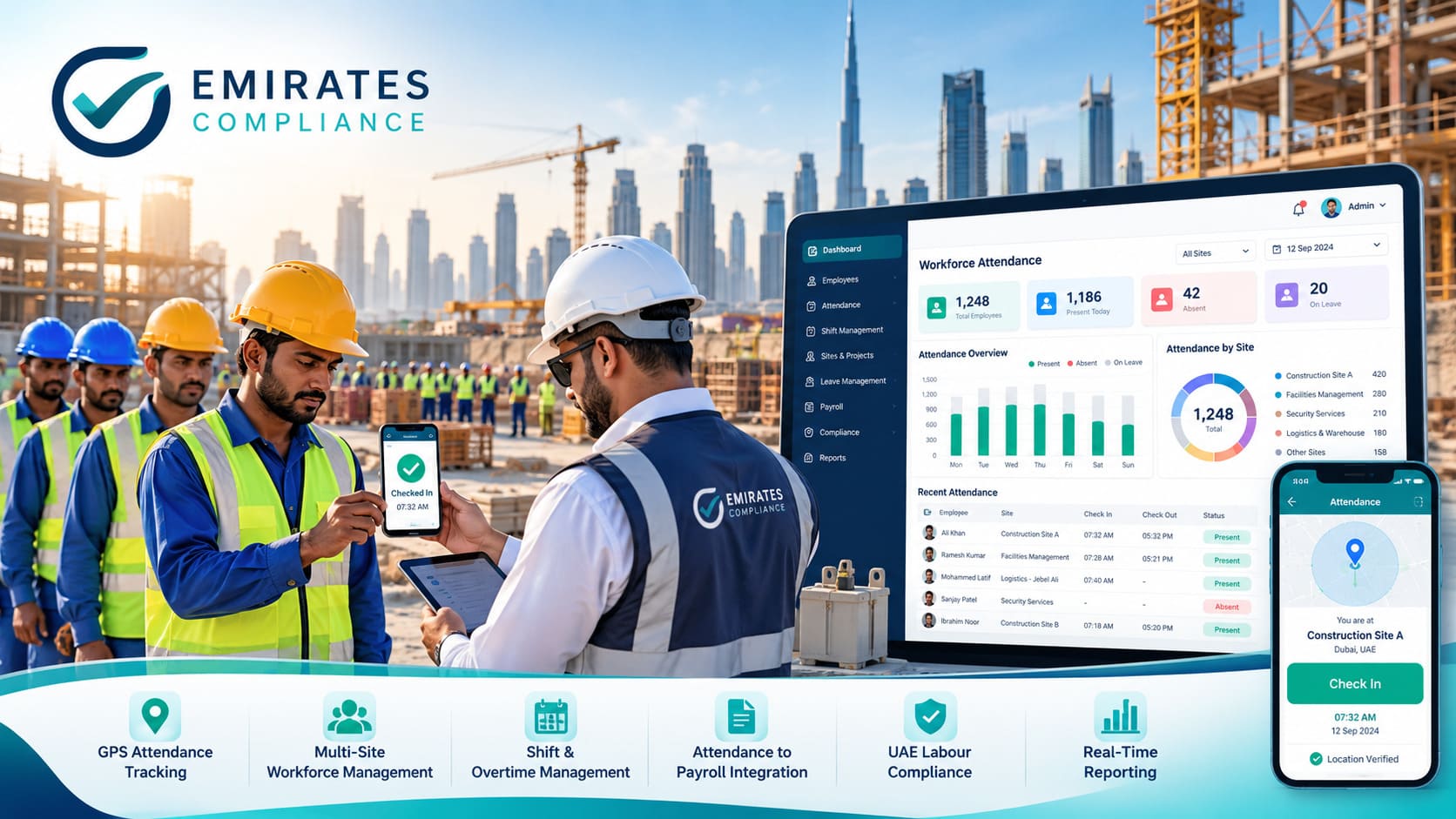
Digital attendance management, including mobile attendance and geofencing where appropriate, can help businesses maintain clearer records across multiple locations. When attendance information is connected with payroll workflows, teams can review discrepancies earlier rather than discovering them during final salary processing. Overtime and shift-related payments must also be calculated according to applicable UAE labour requirements and employment arrangements, making accurate records and approvals particularly important.
WPS Compliance and Timely Salary Processing
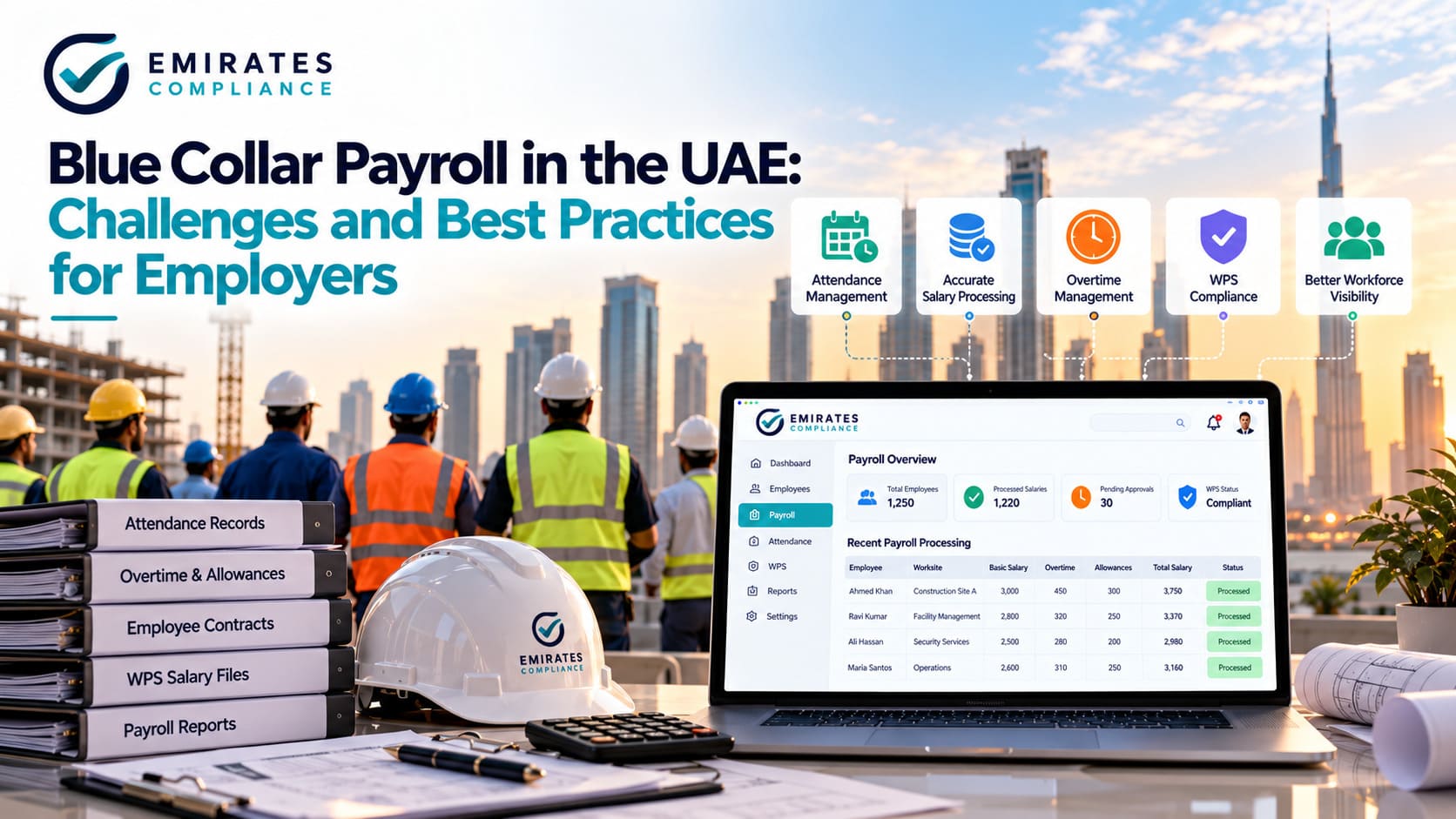
The Wage Protection System in the UAE is an important consideration for employers covered by WPS requirements. Businesses must ensure employee wages are processed accurately and within the applicable payment timelines. For large blue collar workforces, payroll errors can arise from incorrect employee information, incomplete salary adjustments or inconsistencies discovered while preparing the Salary Information File (SIF).
A structured WPS payroll management process should begin before the salary due date. HR teams can finalise employee updates, operations teams can approve attendance and overtime, and payroll departments can validate salary information before preparing the relevant payment files. Establishing internal deadlines provides additional time to resolve discrepancies and reduces the pressure associated with last-minute payroll corrections.
Best Practices for Managing Blue Collar Payroll Efficiently
UAE employers can improve payroll accuracy by creating a connected process between workforce operations and salary management. Maintaining centralised employee records ensures that payroll teams have access to current employment information, while clearly defined attendance cut-offs and approval responsibilities help prevent missing or incomplete payroll inputs.
Businesses should also review salary variations, employee-status changes and payroll adjustments before finalising each pay cycle. For organisations managing multiple worksites, centralised reporting can provide greater visibility into workforce attendance and payroll readiness across locations. Blue collar payroll automation can further reduce repetitive data entry and help teams spend less time reconciling spreadsheets and more time resolving genuine exceptions.
How Emirates Compliance Simplifies Blue Collar Payroll Management
At Emirates Compliance, we help UAE businesses connect employee onboarding, attendance, workforce information and payroll workflows within a centralised platform. Our approach gives HR, operations and payroll teams better visibility into the information required for accurate salary processing, particularly when managing large and distributed workforces.
By reducing dependence on disconnected spreadsheets and improving access to employee and attendance records, our platform supports a more organised approach to blue collar payroll management in the UAE. Whether your business operates construction projects, security services, facilities management teams or labour supply operations, connecting workforce data with payroll processes can help reduce avoidable errors, improve operational efficiency and support consistent workforce compliance.