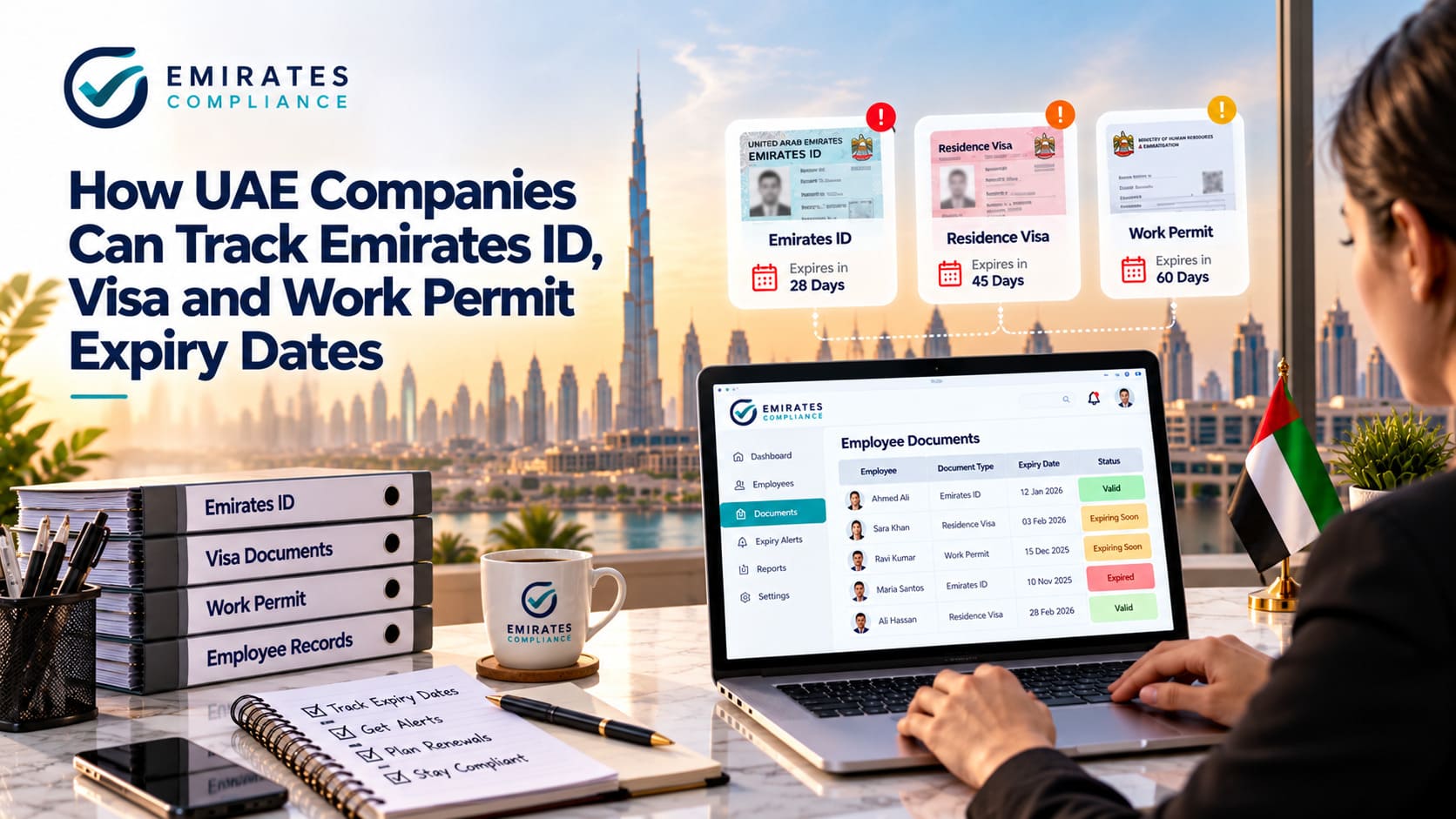
Managing employee documents is an essential part of workforce compliance for businesses operating in the UAE. Every employee may have multiple documents with different validity periods, including an Emirates ID, residence visa and work permit. Keeping these records updated becomes increasingly challenging when companies manage hundreds of employees across multiple departments or locations. Without a proper employee document expiry tracking system, HR teams may overlook upcoming renewals, leading to administrative delays and potential compliance issues.
At Emirates Compliance, we understand how difficult it can be to manage workforce documentation through spreadsheets, emails and manual reminders. A structured approach to Emirates ID expiry tracking, visa expiry tracking and work permit expiry tracking in the UAE helps businesses maintain accurate records, plan renewals and reduce unnecessary operational pressure.
Why Tracking Employee Document Expiry Dates Matters
Employee documents have different purposes and expiry dates. An Emirates ID serves as an official identity document, a residence visa establishes immigration status, and a work permit provides employment authorisation under the applicable regulatory framework.
These documents should not be treated as interchangeable, and their validity periods may differ. Employers need to monitor the relevant dates and coordinate renewals through the appropriate authorities.
For companies operating in construction, security, facilities management, logistics, hospitality and labour supply, employee compliance tracking in the UAE is particularly important because workers may be deployed across several sites.
1. Maintain a Centralised Employee Document Database
The first step towards effective document tracking is maintaining all relevant employee information in one organised system.
Each employee profile should contain the necessary document details, including Emirates ID information, residence visa status, work permit information, expiry dates and supporting records.
A centralised employee document management system allows HR teams to access current information without searching through multiple folders or spreadsheets. It also makes it easier to identify employees whose documents require attention.
2. Use Automated Emirates ID Expiry Reminders
Manually reviewing Emirates ID expiry dates for every employee can become time-consuming, especially for large organisations.
An automated Emirates ID expiry reminder system can notify HR teams before documents reach their expiry dates. Businesses can configure internal reminders at appropriate intervals, such as 90, 60 and 30 days before expiry, depending on their operational needs.
These reminders give HR departments time to verify employee information, coordinate the renewal process and follow up on pending documentation.
3. Track Residence Visa and Work Permit Expiries Separately
One common mistake in employee document management is assuming that an employee's visa, Emirates ID and work permit will always expire together.
In practice, these records should be monitored individually because their validity and renewal requirements may differ.
A reliable visa expiry tracking system in the UAE should record the relevant residence information, while work permit expiry tracking should maintain the appropriate employment authorisation details.
Businesses should also distinguish between employees covered by MOHRE procedures and those subject to applicable free-zone or other authority requirements.
4. Create a Clear Document Renewal Workflow
Tracking expiry dates is only one part of the process. Businesses also need a clear workflow for managing renewals.
HR teams should be able to identify which documents are approaching expiry, which renewals have started and which cases require follow-up.
Assigning responsibility to the appropriate HR team member and recording renewal progress can prevent confusion between departments.
A structured employee document renewal tracking process helps organisations move away from last-minute follow-ups and maintain better visibility throughout the renewal cycle.
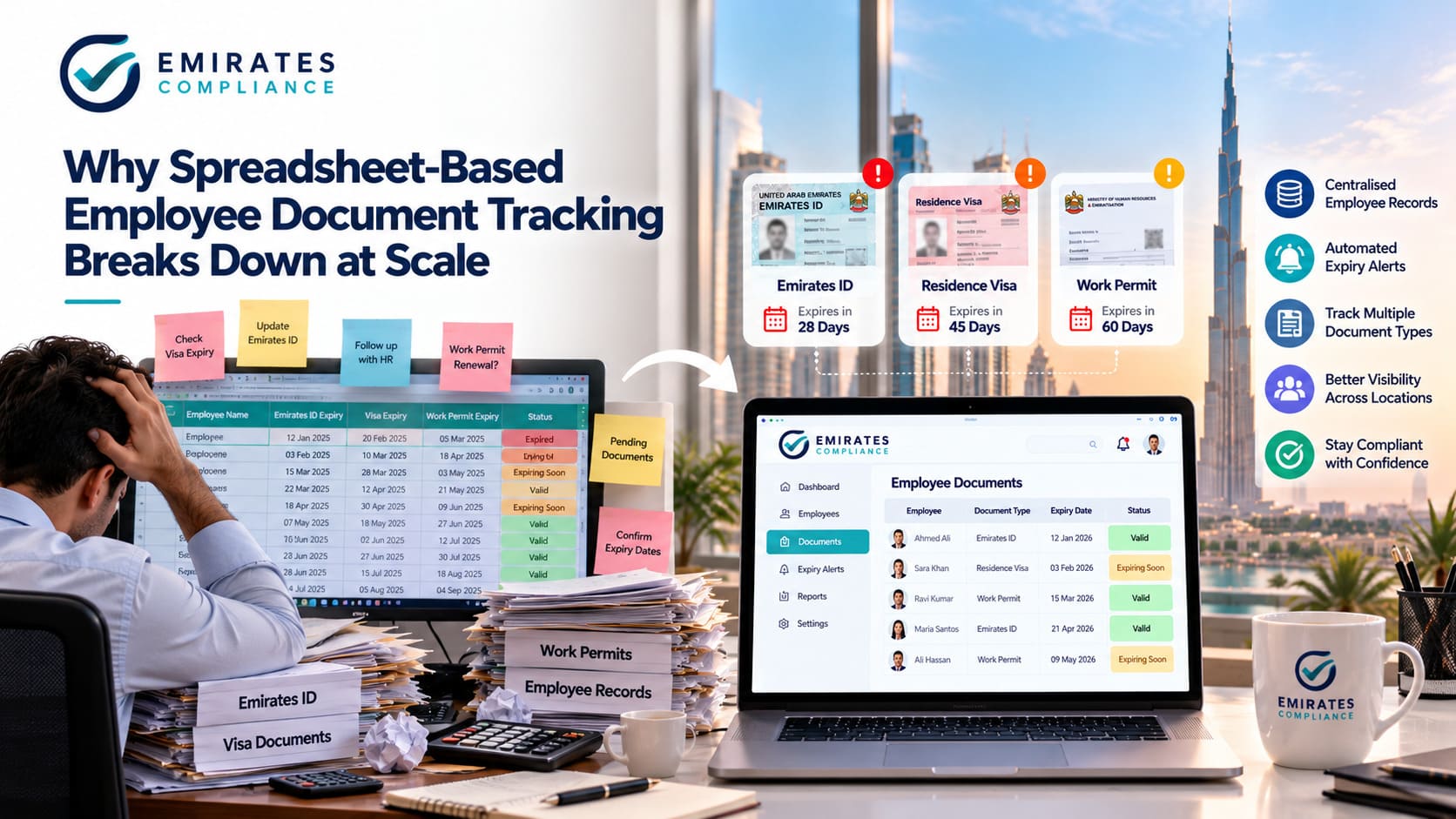
5. Avoid Relying Entirely on Spreadsheets
Spreadsheets can help businesses organise basic employee information, but managing large workforces through multiple files creates additional challenges.
Information may be duplicated, expiry dates may be entered incorrectly, and updated documents may not be reflected across every department.
For companies managing hundreds or thousands of employees, automated document expiry tracking software can reduce repetitive administrative work and provide a more consistent way to monitor workforce documentation.
6. Connect Document Tracking With Employee Onboarding
Effective expiry tracking should begin when an employee joins the organisation.
During onboarding, HR teams should collect relevant documents, verify their details and record the appropriate expiry dates. When an employee's immigration or employment status changes, those records should be reviewed and updated.
Connecting employee onboarding software in the UAE with document management helps businesses maintain accurate information throughout the employee lifecycle rather than rebuilding records whenever a renewal is required.
How Emirates Compliance Simplifies Employee Document Expiry Tracking
At Emirates Compliance, we help UAE businesses manage employee documentation through a connected workforce management platform. Our solution brings employee records, document information and expiry monitoring into a centralised environment, helping HR teams stay informed about upcoming renewal requirements.
With organised employee profiles, document tracking and automated expiry alerts, businesses can reduce dependence on manual reminders and gain better visibility across their workforce.
Whether your company manages 50 employees or 5,000 workers across multiple locations, a structured approach to Emirates ID, visa and work permit expiry tracking can help reduce administrative complexity and support more proactive workforce compliance management.