Managing employee documents is an ongoing responsibility for UAE businesses, particularly those with large, distributed or frequently changing workforces. Emirates IDs, employment-related permits, visas and other workforce records all have validity periods that HR teams need to monitor. When hundreds or thousands of employees are involved, relying on spreadsheets, calendar reminders or individual follow-ups can make employee document expiry tracking in the UAE increasingly difficult.
At Emirates Compliance, we believe document management should be proactive rather than reactive. Knowing what is approaching expiry gives HR and operations teams more time to coordinate the necessary actions, maintain accurate records and reduce last-minute administrative pressure.
Why Employee Document Expiry Tracking Matters
Employee documents are not static records that can simply be uploaded and forgotten. Many documents need to remain current throughout an employee's time with the business.
Without a structured employee document management system, HR teams may only discover an expired or soon-to-expire document when it is urgently required. This can lead to rushed internal processes, additional administrative work and unnecessary disruption.
The challenge becomes greater for industries such as construction, facilities management, security, logistics, hospitality and labour supply, where businesses may be managing employees across several locations.
Which Employee Documents Should Businesses Track?
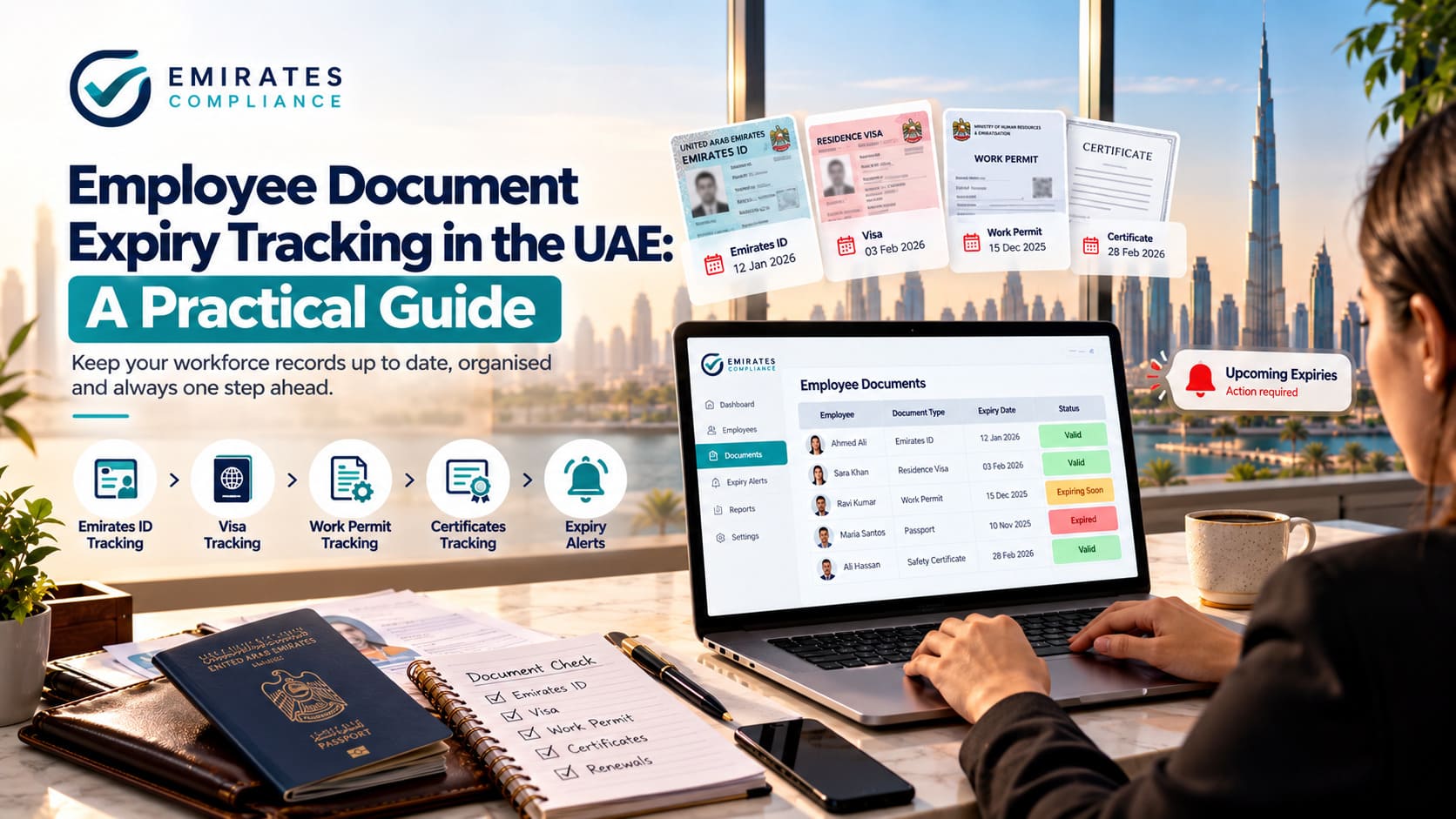
The exact documents a company needs to monitor will depend on its workforce and operational requirements. However, employee records commonly include Emirates ID, residency visa information, work permit or labour-related records, passports, employment documents and role-specific certificates.
Some businesses may also need to monitor professional licences, training certificates or other documents required for particular roles.
Instead of treating each document independently, HR teams can maintain a central employee profile showing relevant documents, issue dates, expiry dates and renewal status.
The Problem With Spreadsheet-Based Expiry Tracking
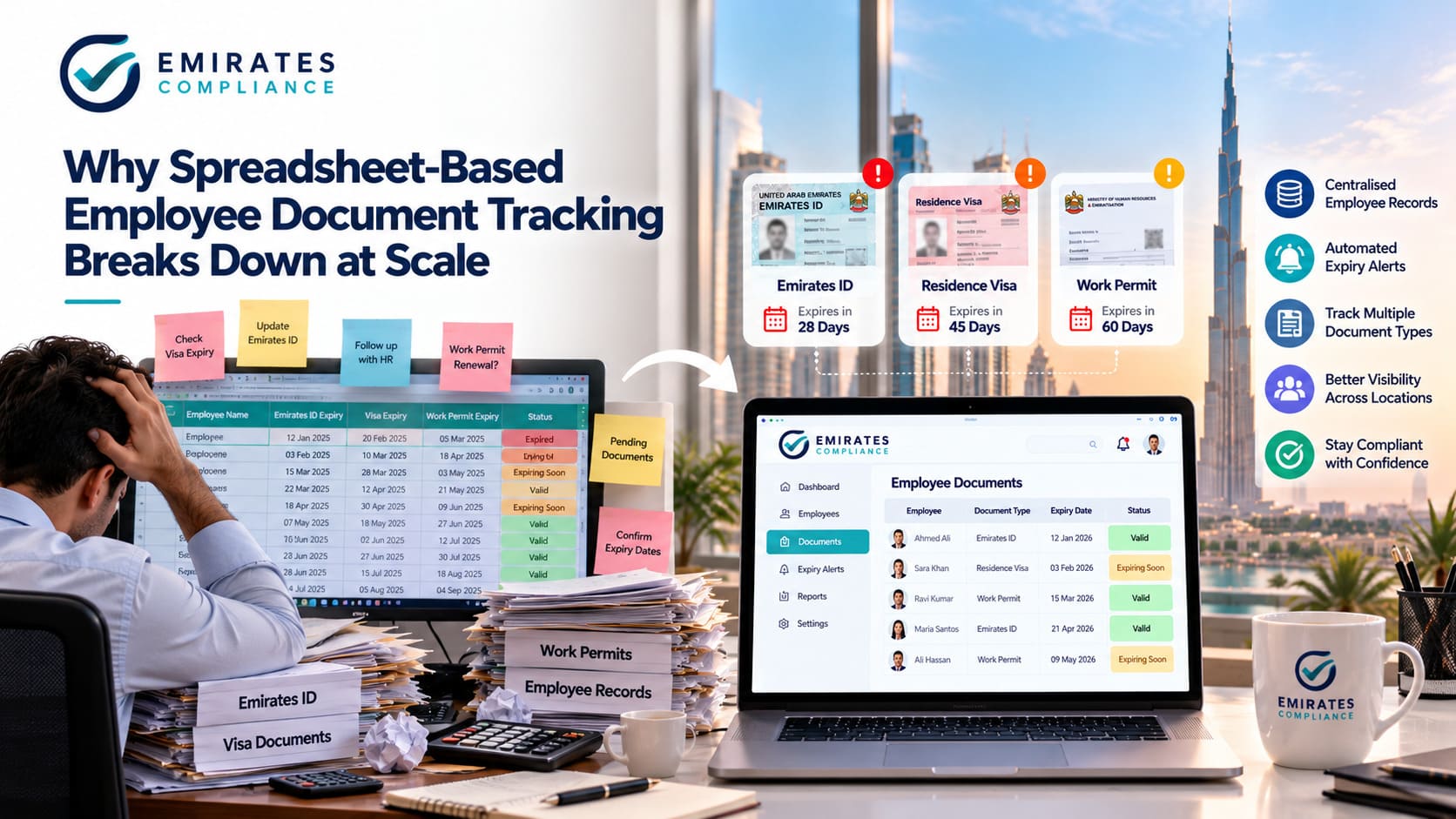
Spreadsheets are often the first solution businesses use for document expiry tracking. They may work for a small workforce, but the process becomes more difficult as employee numbers increase.
One spreadsheet may contain visa information while another tracks Emirates IDs. Individual departments may maintain separate records, and updates may not always reach the central HR team.
Manual reminders create another challenge. If HR needs to check expiry dates every week and contact employees or managers individually, document tracking becomes a repetitive administrative task.
The result is often limited visibility into what has expired, what is approaching expiry and what is already being renewed.
Use Automated Expiry Alerts
A more organised approach is to use automated document expiry alerts. Instead of waiting until the expiry date arrives, HR teams can receive notifications in advance.
For example, internal alerts can help teams identify documents approaching expiry and provide sufficient time to review the employee's information and begin the relevant process.
Advance visibility is particularly useful for organisations with large workforces because HR teams can prioritise upcoming expiries instead of manually searching employee records.
Create a Centralised Employee Document Record
Effective HR document management in the UAE requires more than notifications. Businesses also need a reliable place to maintain the latest employee records.
A centralised system can associate documents directly with individual employee profiles. When a document is renewed, the previous information can be updated and the new expiry date recorded.
This provides HR, payroll and operations teams with a clearer view of workforce information while reducing dependence on multiple folders, emails and spreadsheet versions.
Build Document Reviews Into Workforce Operations
Document expiry tracking works best when it becomes part of normal workforce management. HR teams can review upcoming expiries regularly, while managers can be informed when action is required for employees under their supervision.
Businesses should also verify documents during onboarding so that expiry dates are captured correctly from the beginning. When an employee's status changes, the relevant records should be reviewed and updated.
This creates a continuous process from employee onboarding and document collection to expiry monitoring and renewal tracking.
How Emirates Compliance Simplifies Document Expiry Tracking
At Emirates Compliance, we help UAE businesses bring employee information and workforce compliance records into one connected environment. Our platform supports centralised document management and expiry visibility, helping teams identify upcoming requirements before they become urgent.
For businesses managing hundreds or thousands of employees across multiple locations, better employee document expiry tracking means less dependence on manual spreadsheets, clearer workforce records and a more organised approach to day-to-day compliance management.
By connecting employee onboarding, document records, expiry monitoring and workforce operations, businesses can spend less time searching for information and more time keeping their workforce organised.