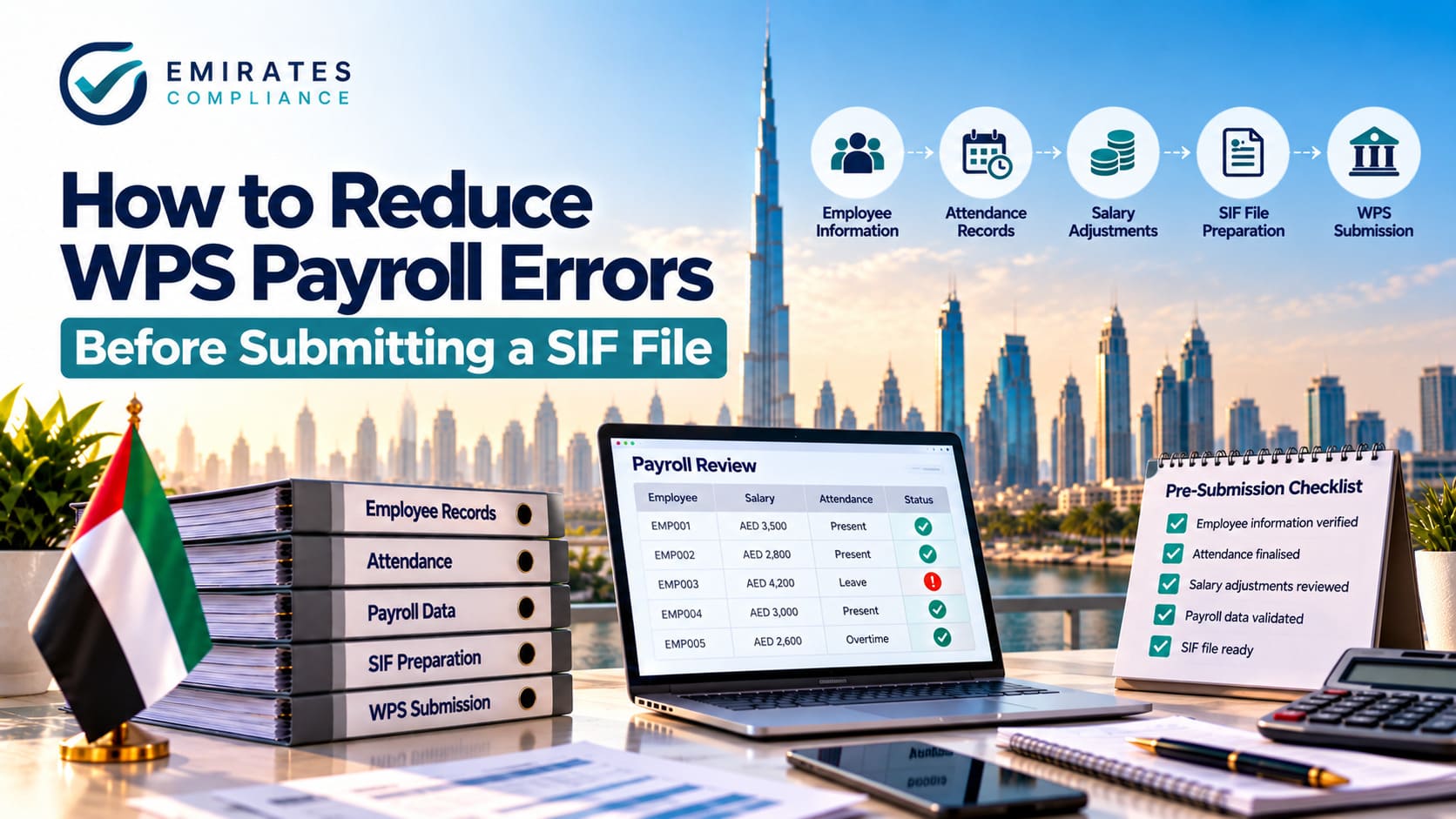
For UAE payroll teams, preparing salaries for the Wage Protection System (WPS) involves more than calculating what each employee should receive. Employee records, attendance, overtime, deductions, salary adjustments and payroll data all need to be accurate before the Salary Information File (SIF) is prepared and submitted. A small discrepancy earlier in the payroll cycle can become a much bigger problem at the final submission stage.
At Emirates Compliance, we believe the most effective way to reduce WPS payroll errors is to identify problems before they reach the SIF file. A structured payroll process gives HR and finance teams more time to review discrepancies and helps businesses maintain more reliable salary records.
1. Verify Employee Information Before Payroll Processing
Accurate payroll begins with accurate employee data. Before preparing the monthly payroll, teams should review employee records and confirm that relevant information is complete and current.
New joiners, employees who have left the company, salary revisions and other employment changes should be reflected in the payroll system. When HR records and payroll records are maintained separately, updates can easily be missed.
A centralised employee management system in the UAE can help ensure payroll teams are working with current workforce information rather than outdated spreadsheets.
2. Finalise Attendance Before Calculating Salaries
Attendance is one of the most important inputs for businesses with shift-based, hourly or site-based employees. Missing check-ins, incorrect working hours, unapproved overtime or leave discrepancies can affect salary calculations.
This becomes particularly challenging for construction, security, facilities management, logistics and labour-supply businesses where employees may work across multiple locations.
Setting an attendance cut-off before payroll begins gives supervisors time to review exceptions. Connecting employee attendance with payroll can also reduce the amount of manual reconciliation required at the end of each month.
3. Review Salary Adjustments and Deductions
Payroll teams should verify any changes that affect an employee's final salary before generating the SIF file. This may include overtime, allowances, unpaid leave and authorised deductions.
The problem is not simply whether an adjustment has been entered. Payroll teams should also be able to understand why it was made and whether it has gone through the appropriate internal approval process.
Maintaining clear payroll records and approval histories makes discrepancies easier to investigate before WPS payroll processing.
4. Check Payroll Data Before SIF File Preparation
Waiting until the SIF file is generated to identify payroll problems can create unnecessary pressure. Businesses should perform an internal payroll review first.
Compare the current payroll with employee records and investigate unexpected differences. Large salary variations, missing employees, duplicate records or unusual adjustments should be checked before the data moves to the next stage.
This additional validation can help reduce avoidable SIF file errors in the UAE.
5. Avoid Last-Minute SIF Preparation
Preparing the SIF file too close to the salary due date leaves little time to resolve errors. If payroll data is incomplete or inconsistent, teams may have to return to HR, operations or site supervisors for clarification.
An internal payroll calendar can make the process more predictable. Set clear dates for attendance closure, payroll adjustments, approvals, validation, SIF preparation and WPS processing.
Creating this buffer gives payroll teams time to resolve issues without turning every salary cycle into a last-minute exercise.
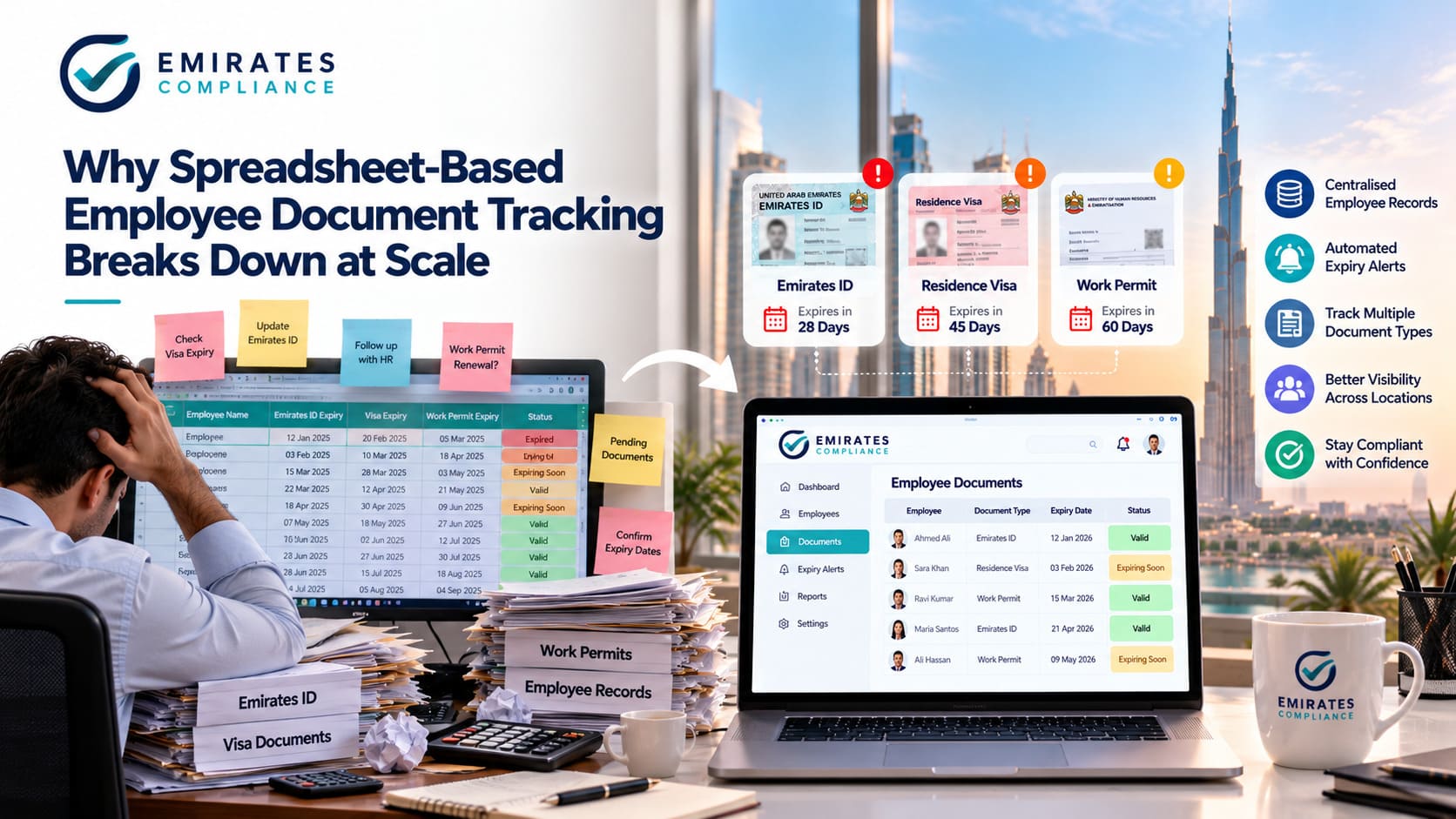
6. Reduce Dependence on Multiple Spreadsheets
Spreadsheets remain useful, but payroll becomes harder to control when employee records, attendance and salary calculations are maintained across several separate files.
A change made in one spreadsheet may not appear in another. Different versions can circulate between departments, making it difficult to determine which information is current.
For companies managing hundreds or thousands of employees, payroll automation in the UAE can help create a more consistent flow of information from workforce management to payroll.
Build a More Reliable WPS Payroll Process
Reducing WPS payroll errors is not only about checking the final SIF file. It requires better control over the information feeding into payroll throughout the month.
At Emirates Compliance, our approach connects employee records, attendance, workforce information and payroll workflows within a centralised environment. This gives HR and payroll teams greater visibility into potential discrepancies before salaries reach the WPS processing stage.
For UAE businesses managing large or multi-site workforces, improving the process before SIF submission can mean fewer corrections, clearer payroll records and a more organised approach to UAE payroll compliance.