
Managing payroll in the UAE involves much more than calculating salaries and transferring money to employees. For businesses operating with large or distributed workforces, payroll is closely connected with employment contracts, attendance records, approved deductions, employee data and the UAE Wage Protection System (WPS). Even a small inconsistency between these records can create payroll delays, employee queries and additional administrative work. UAE employers covered by the relevant requirements must pay employees according to the agreed wage and payment schedule, with WPS providing an electronic mechanism for monitoring wage payments. This makes UAE payroll compliance an important part of day-to-day workforce management rather than simply a monthly finance task.
1. Paying Salaries Late
One of the most important payroll mistakes is failing to process salaries on time. MOHRE guidance states that workers' wages should be paid within the first 15 days after the due date unless the employment contract specifies a shorter period. MOHRE also uses WPS to monitor wage payments, and its employer guidance describes escalating actions where establishments remain non-compliant. For companies managing hundreds or thousands of workers, delays can arise when attendance approvals, overtime calculations, payroll adjustments and management approvals are completed too close to the salary-processing date. Establishing a clear payroll processing schedule in the UAE can give HR, operations and finance teams enough time to identify discrepancies before payroll is submitted.
2. Using Incorrect Employee or Salary Data
Payroll accuracy depends heavily on the quality of employee records. A difference between the salary recorded in an employment contract and the information used during payroll processing can create unnecessary complications. The UAE's WPS is designed to help ensure workers receive the wages registered in their employment contracts in a timely manner. Employers should therefore maintain accurate records for basic salary, allowances, employee status, bank or payment information and other payroll-related details. Maintaining one reliable source of employee information can also reduce the risk of HR, payroll and operations teams working from different spreadsheet versions.
3. Making Deductions Without Proper Records
Salary deductions should never become an informal payroll practice. When deductions are permitted, businesses should maintain supporting information explaining why the deduction was made and how the amount was calculated. Under current WPS rules, where a legal deduction results in an employee receiving at least 80% of the registered wage, evidence supporting that deduction may need to be provided upon request. Keeping payroll adjustments properly documented creates a clearer audit trail and makes it easier for HR teams to respond when an employee questions a salary difference.
4. Treating Attendance and Payroll as Separate Processes
Attendance is one of the most common sources of payroll discrepancies, particularly in construction, facilities management, security, logistics and other industries with workers spread across multiple sites. When attendance, overtime, leave and payroll are maintained in separate systems, teams often spend significant time reconciling records before salaries can be processed. A stronger UAE workforce management process connects verified attendance information with payroll preparation, reducing repetitive data entry and helping payroll teams identify unusual records before they affect salary calculations.
5. Failing to Update Employee Status Changes
New joiners, employees on unpaid leave and employees leaving the organisation need to be reflected correctly in payroll records. This is particularly important because WPS requirements recognise specific employee circumstances. For example, current rules identify certain categories that may be exempt from WPS compliance requirements, including employees on unpaid leave where the required supporting documentation has been submitted to the Ministry. A clear workflow between HR and payroll can help ensure that employee status changes are recorded before each payroll cycle rather than corrected after submission.
6. Relying Too Heavily on Manual Spreadsheets
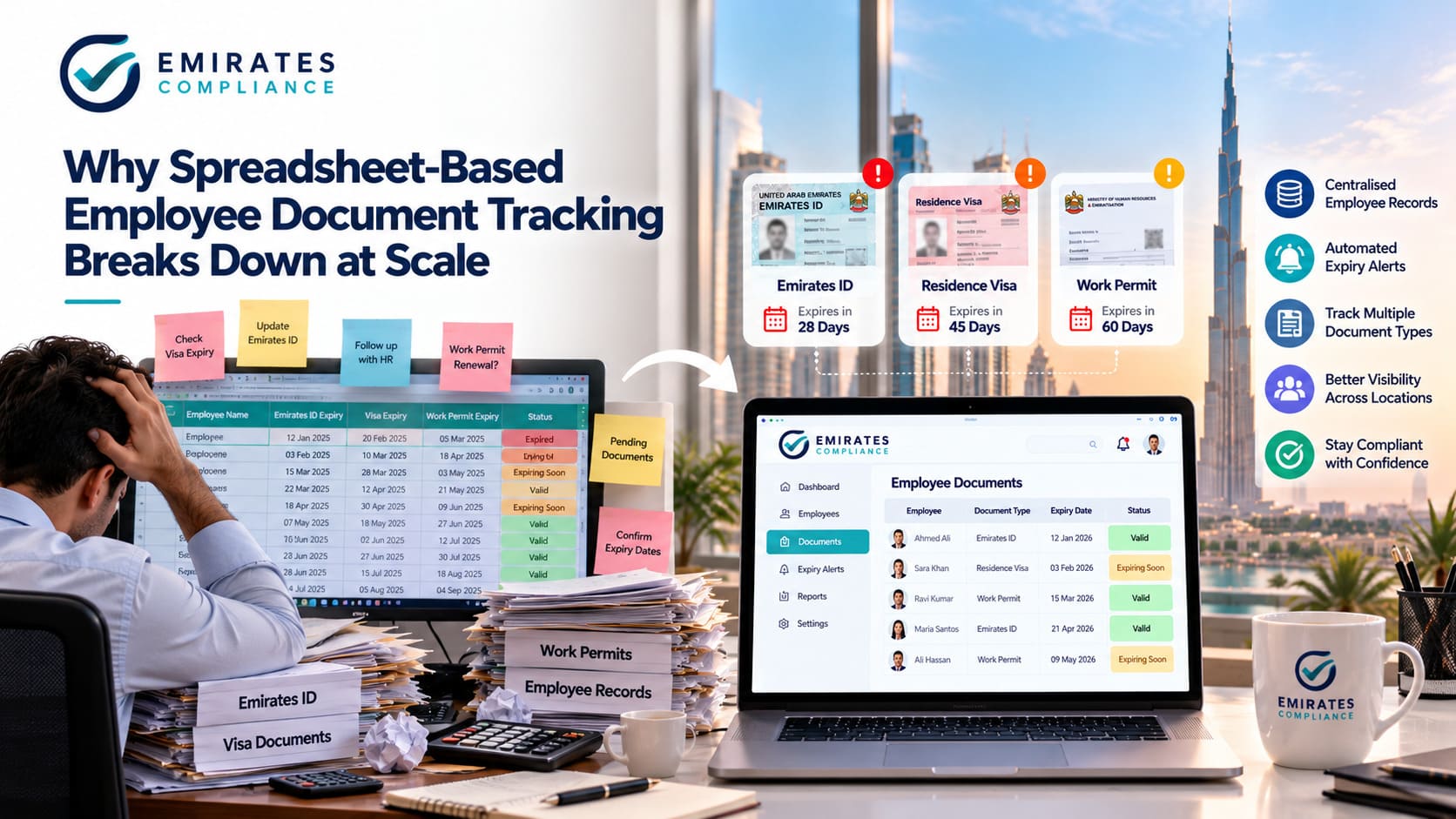
Spreadsheets can work for a small workforce, but the risk of duplicated records, outdated information and manual errors increases as an organisation grows. A company managing workers across several sites may need to reconcile employee details, attendance, overtime, leave, salary adjustments and WPS information every month. Payroll automation in the UAE can help centralise these processes, create clearer approval workflows and maintain consistent payroll records while reducing repetitive administrative work.
Building a More Reliable UAE Payroll Process
Effective payroll compliance starts with accurate employee data, timely salary processing, documented adjustments and better coordination between HR, operations and finance. Companies should regularly review their WPS payroll process, employee records, attendance data and payroll approval procedures instead of waiting for an error to reveal a weakness. Emirates Compliance brings workforce information, attendance, compliance records and payroll workflows into a more connected environment, helping UAE businesses manage complex workforces with greater visibility and control.
Related keywords: UAE payroll compliance, WPS UAE, Wage Protection System UAE, payroll management UAE, WPS payroll, salary processing UAE, payroll software UAE, payroll automation UAE, employee payroll management, workforce management UAE, SIF file UAE, MOHRE payroll compliance.