Processing salaries for a large workforce involves more than calculating how much each employee should be paid. UAE businesses also need to organise payroll information into the required Wage Protection System (WPS) format before salary data can move through the appropriate banking or financial channels. For organisations managing hundreds or thousands of workers, manually preparing payroll data every month can become time-consuming and difficult to scale. Emirates Compliance simplifies WPS payroll management by helping businesses organise employee salary information and generate bank-ready WPS/SIF files through a connected workforce platform.
What Is a Bank-Ready WPS File?
The UAE Wage Protection System (WPS) provides an electronic framework for salary payments. As part of the payroll process, employers subject to WPS requirements need to prepare salary information in the required format for submission through the applicable approved financial channel.
A Salary Information File (SIF) contains payroll-related information required for WPS salary processing. Preparing this information accurately is therefore an important stage between calculating employee salaries and completing the salary transfer process.
For smaller workforces, payroll teams may be able to manage much of this manually. The challenge increases significantly when an organisation needs to prepare salary information for hundreds or thousands of employees every month.
Why Manual WPS File Preparation Can Become Complicated
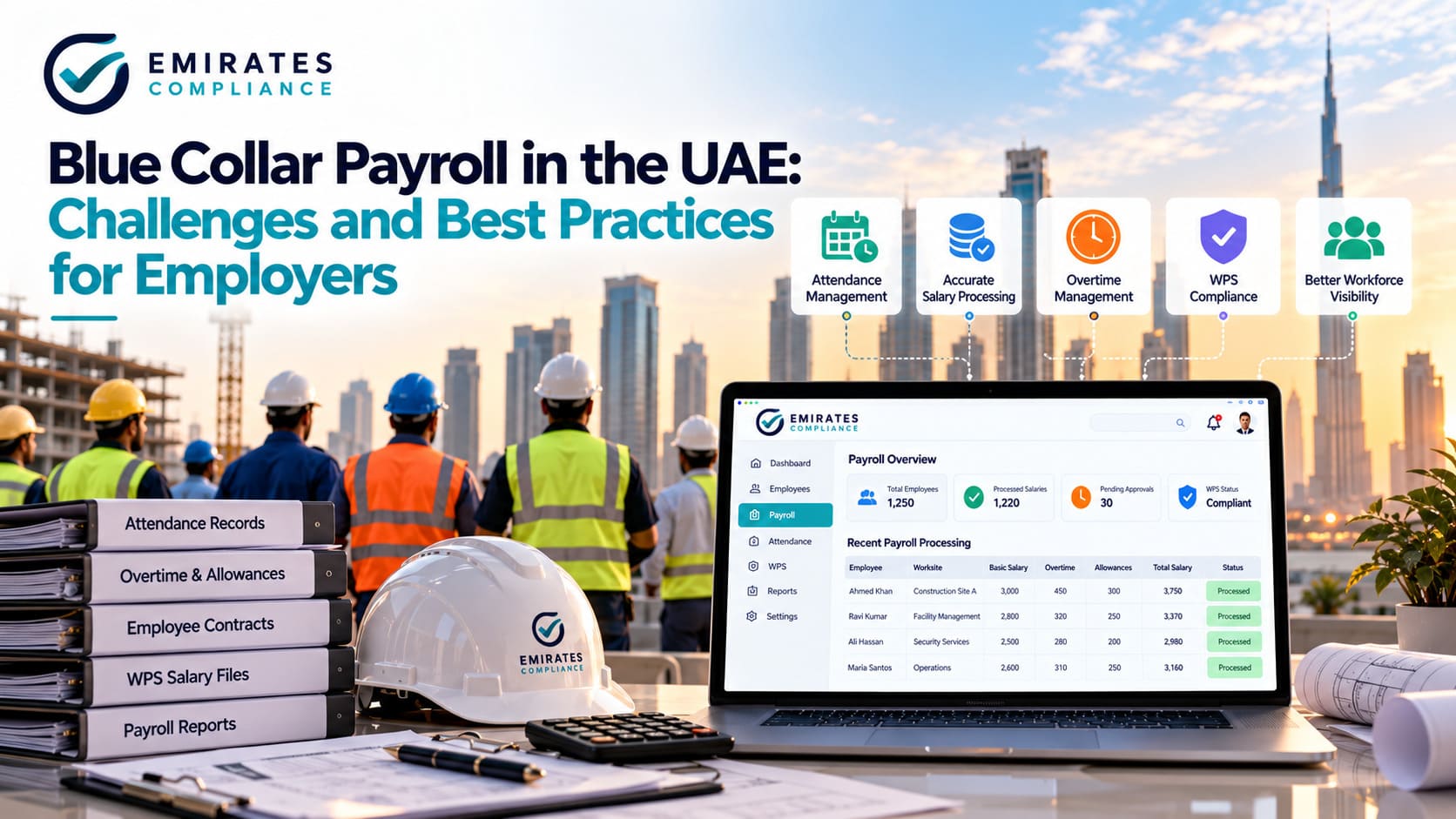
Large workforces generate large amounts of payroll data. Employee information may be maintained by HR, attendance may be recorded separately by operations, and payroll calculations may exist in another spreadsheet or application. Before a WPS file can be prepared, payroll teams can find themselves collecting and checking information from several different sources.
The problem becomes even greater for labour-intensive businesses. Employees may work different shifts, move between sites or have different attendance and payroll records. When these details are maintained through disconnected processes, payroll teams may need to perform repetitive checks every payroll cycle.
Using WPS payroll software in the UAE can help create a more structured process by bringing relevant workforce and payroll information together.
Step 1: Start with Organised Employee Records
Reliable payroll processing begins with reliable employee information. Incorrect or incomplete workforce records can create additional work later when payroll is being prepared.
Emirates Compliance starts the employee lifecycle with AI-powered onboarding. OCR technology helps businesses capture relevant information from employee documents and establish structured digital employee records more efficiently.
Instead of recreating basic employee information each time another workforce process needs it, the employee profile can continue to support document management, attendance, payroll and reporting.
This provides payroll teams with a more organised foundation for WPS preparation.
Step 2: Connect Attendance and Workforce Information
For many labour-intensive organisations, attendance is an important input into monthly payroll administration. Workers may operate different shifts, work across multiple sites or have attendance-related information that needs to be considered during payroll preparation.
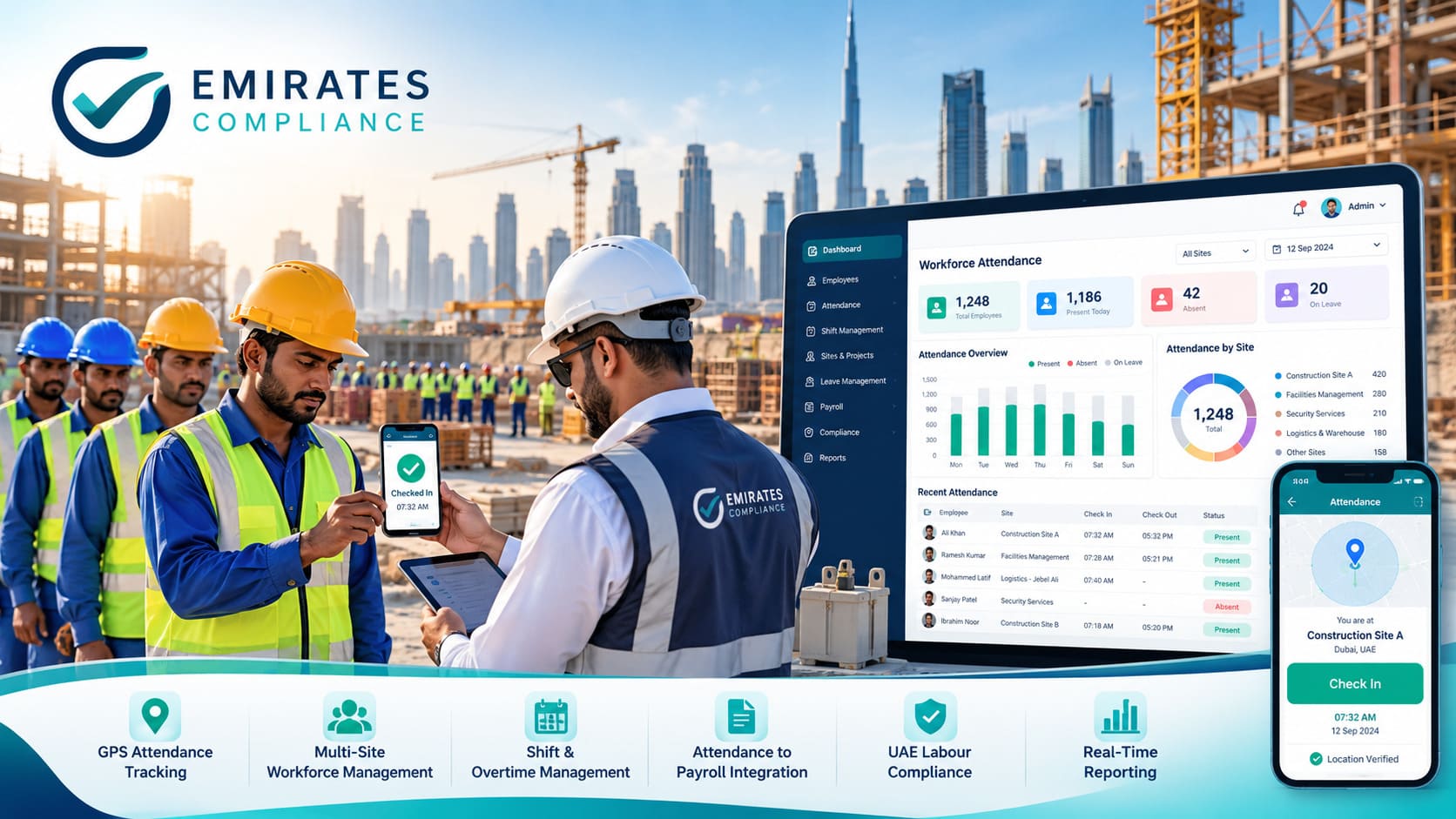
Emirates Compliance includes attendance management, geofencing and rostering alongside its payroll capabilities. This allows businesses to manage workforce attendance within the same broader environment rather than relying entirely on separate site sheets and payroll spreadsheets.
For construction companies, manpower suppliers, facilities management providers, security businesses, delivery companies and other field-based operations, connecting workforce attendance with employee records can make payroll preparation more manageable.
Step 3: Prepare Employee Payroll Information
Once relevant employee and workforce information is available, payroll teams can prepare salary data for the applicable payroll period.
This is where centralisation becomes particularly valuable. Rather than repeatedly moving information between unrelated systems, teams can work with employee payroll records within a connected workforce environment.
For organisations with large employee populations, reducing these repetitive administrative steps can make a meaningful difference to the monthly payroll workload.
Step 4: Generate WPS and SIF Files
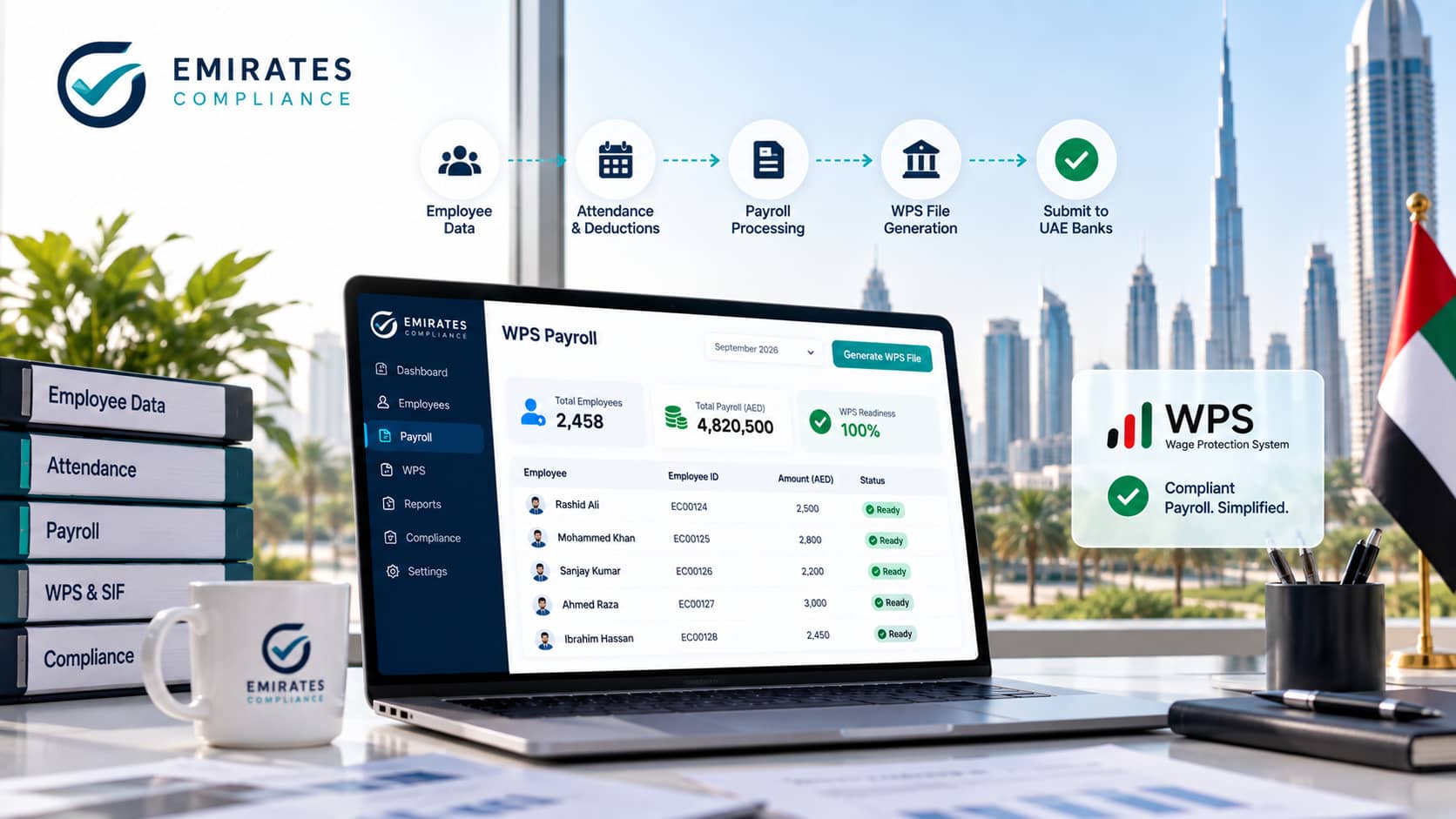
After payroll information has been prepared and reviewed, Emirates Compliance helps businesses generate the required WPS/SIF payroll files.
Instead of manually building files from multiple spreadsheets, payroll teams can use the organised employee and salary information maintained through the platform to support file preparation.
This creates a clearer workflow:
Employee Records → Attendance & Payroll Data → Payroll Processing → WPS/SIF File Generation → Submission Through the Applicable Financial Channel
The objective is to make the journey from workforce data to a bank-ready payroll file more structured and easier to manage.
Why Bank-Ready WPS Files Matter
Generating the file is only one part of the process. The information contained within it needs to be organised correctly for the next stage of payroll processing.
When payroll teams rely heavily on manual preparation, additional time may be spent checking fields, comparing employee information and correcting inconsistencies before submission. For businesses processing payroll at scale, even small repetitive tasks can create substantial administrative work across the entire workforce.
A dedicated WPS payroll management system helps businesses standardise more of this workflow and reduce their dependence on manually assembled payroll files.
WPS Payroll for Labour Hire and Manpower Companies
The benefits become particularly clear for labour hire companies and manpower suppliers.
These organisations can employ large numbers of workers who are deployed across different clients and locations. A single workforce may include employees working on construction projects, facilities management contracts, warehouses or other customer sites.
Although employees are distributed operationally, payroll still needs to be managed centrally.
Having employee records, attendance information and WPS payroll capabilities within a connected system gives payroll teams greater visibility and can reduce the need to collect information manually from numerous files before every payroll cycle.
Supporting Other Labour-Intensive Industries
The same approach can benefit other businesses with large or distributed employee populations. Construction companies need to manage workers across project sites, security companies may operate numerous posts, facilities management providers can have employees across customer locations, and logistics businesses may manage workers across warehouses, hubs and routes.
For these organisations, WPS payroll software UAE is most valuable when it fits naturally into the wider workforce operation rather than functioning as another disconnected application.
Connecting WPS with Workforce Compliance
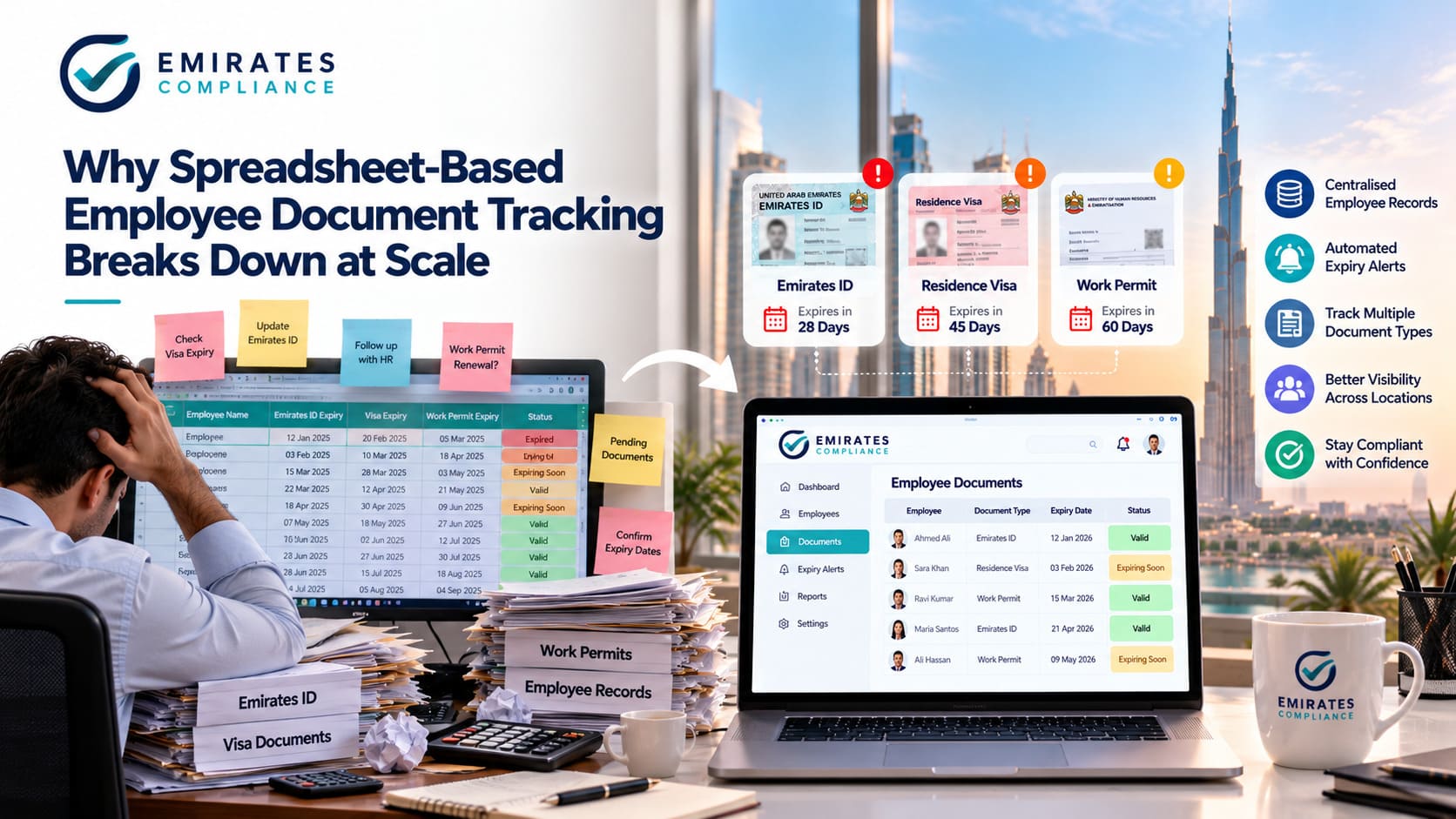
Payroll is only one part of managing an employee in the UAE. The same worker can also have a passport, Emirates ID, visa, labour card and other documents that need to be maintained. Employees need to be onboarded, attendance needs to be captured, and training or workforce information may need ongoing management.
Emirates Compliance connects WPS payroll with AI-powered employee onboarding, visa and labour tracking, employee document expiry management, automated alerts, attendance and geofencing, mobile workforce management, Training and LMS, and reporting.
This allows businesses to manage more of the employee lifecycle through one platform instead of maintaining separate systems for every workforce activity.
Reducing Repetitive Payroll Administration
Automation is most useful when it removes repetitive work without removing necessary human oversight. Payroll teams still need to review salary information and ensure their processes meet the organisation's requirements, but technology can make the preparation stage more efficient.
Instead of repeatedly collecting the same employee information, manually combining spreadsheets and rebuilding payroll files every month, businesses can establish a more consistent workflow.
For an organisation managing thousands of employees, reducing repetitive work across every payroll cycle can free up considerable administrative capacity.
From Employee Data to Bank-Ready WPS Files
An effective WPS process begins long before the final payroll file is generated. It starts with organised employee information and continues through attendance, payroll preparation, validation and file generation.
Emirates Compliance brings these stages together to help UAE employers move from workforce data to bank-ready WPS files through a more connected process.
For labour hire companies, manpower suppliers and other labour-intensive UAE businesses, this means less dependence on disconnected spreadsheets and greater visibility across payroll and workforce operations.
Simplify WPS Payroll with Emirates Compliance
Managing WPS payroll at scale should not require payroll teams to rebuild the same process from scratch every month. By connecting employee information, attendance, payroll and WPS/SIF file generation, businesses can create a more structured and scalable payroll workflow.
Emirates Compliance helps UAE businesses generate bank-ready WPS files while managing the wider workforce from one connected platform.
From AI onboarding and employee document tracking to attendance, WPS payroll and reporting, the platform is designed to help labour-intensive organisations reduce manual administration and manage their workforce more efficiently.