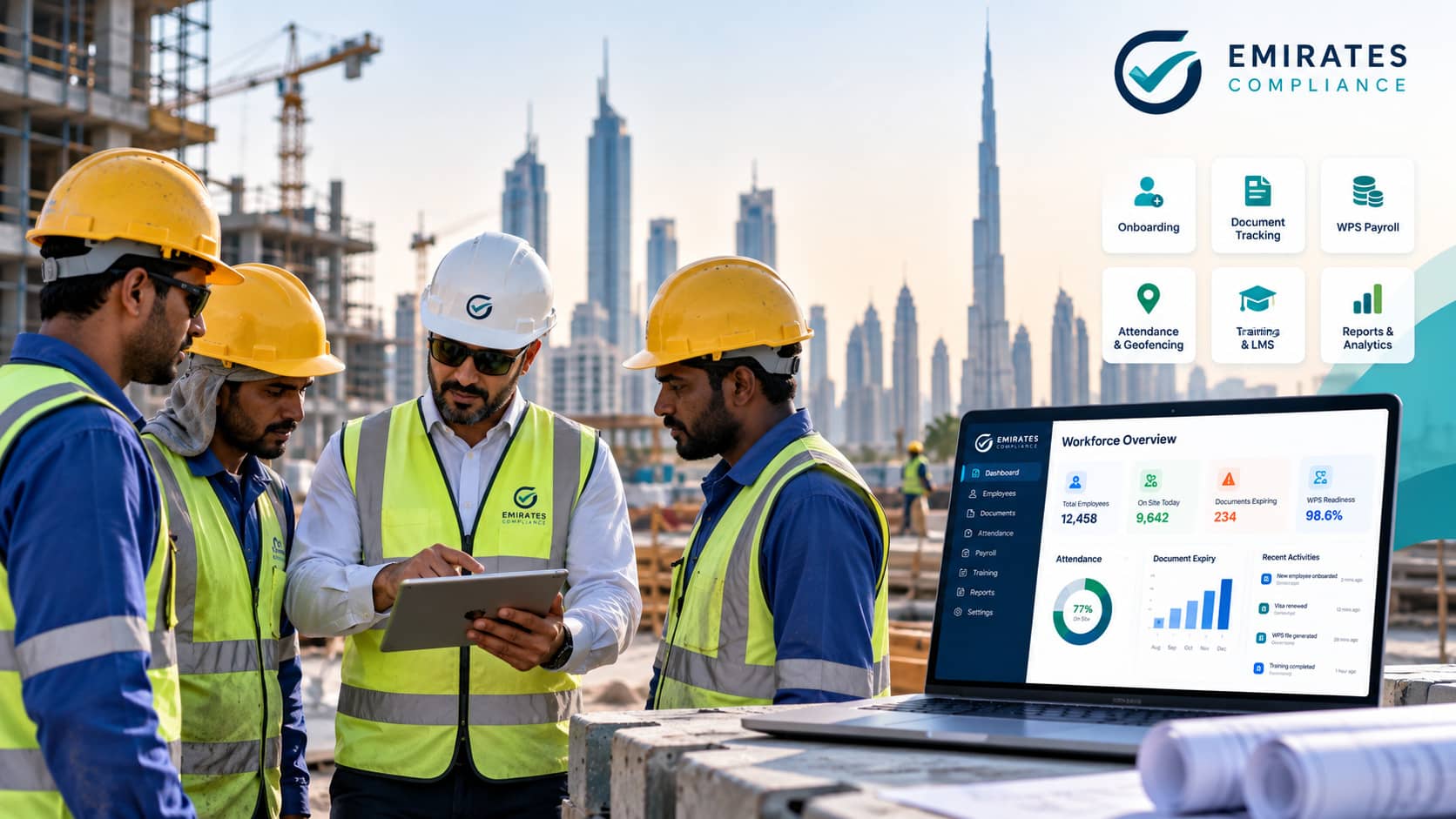
Managing a blue-collar workforce is very different from managing a small office-based team. In labour-intensive industries, businesses may have hundreds or thousands of employees working across construction sites, warehouses, client premises, delivery routes and other field locations. HR and operations teams need to know who is working, where employees are deployed, whether important documents are current, whether attendance has been recorded and whether payroll information is ready. As workforce numbers increase, managing all of these activities through spreadsheets, paper records and disconnected systems can become increasingly difficult. For UAE businesses, effective blue-collar workforce management therefore requires more than maintaining basic employee information; it requires a structured way to manage workers throughout their employment lifecycle.
Why Blue-Collar Workforce Management Is More Complex
A large blue-collar workforce is constantly changing. New employees join, workers move between projects, shifts change, documents approach expiry, employees complete training and payroll needs to reflect accurate workforce information. Unlike a workforce operating from one office, employees may rarely interact directly with the central HR team. A construction worker might be assigned to a new project, a cleaner may work at several client locations, or a delivery rider may spend an entire shift away from a company facility. This distributed working environment makes visibility one of the biggest challenges for HR and operations teams. Businesses need systems and processes that allow them to manage employees effectively regardless of where those employees are working.
High-Volume Employee Onboarding
Employee onboarding can become one of the first bottlenecks for labour-intensive businesses. Hiring five employees manually may be manageable, but onboarding 100 or 500 workers within a short period creates a very different workload. HR teams need to collect employee information, review documents and create workforce records while making sure important details are organised correctly. Repeating the same data-entry process for every employee consumes significant administrative time. AI-powered employee onboarding and OCR technology can help streamline document processing and reduce repetitive data entry, allowing businesses to create structured employee profiles more efficiently when hiring at scale.
Managing Visas, Labour Cards and Employee Documents
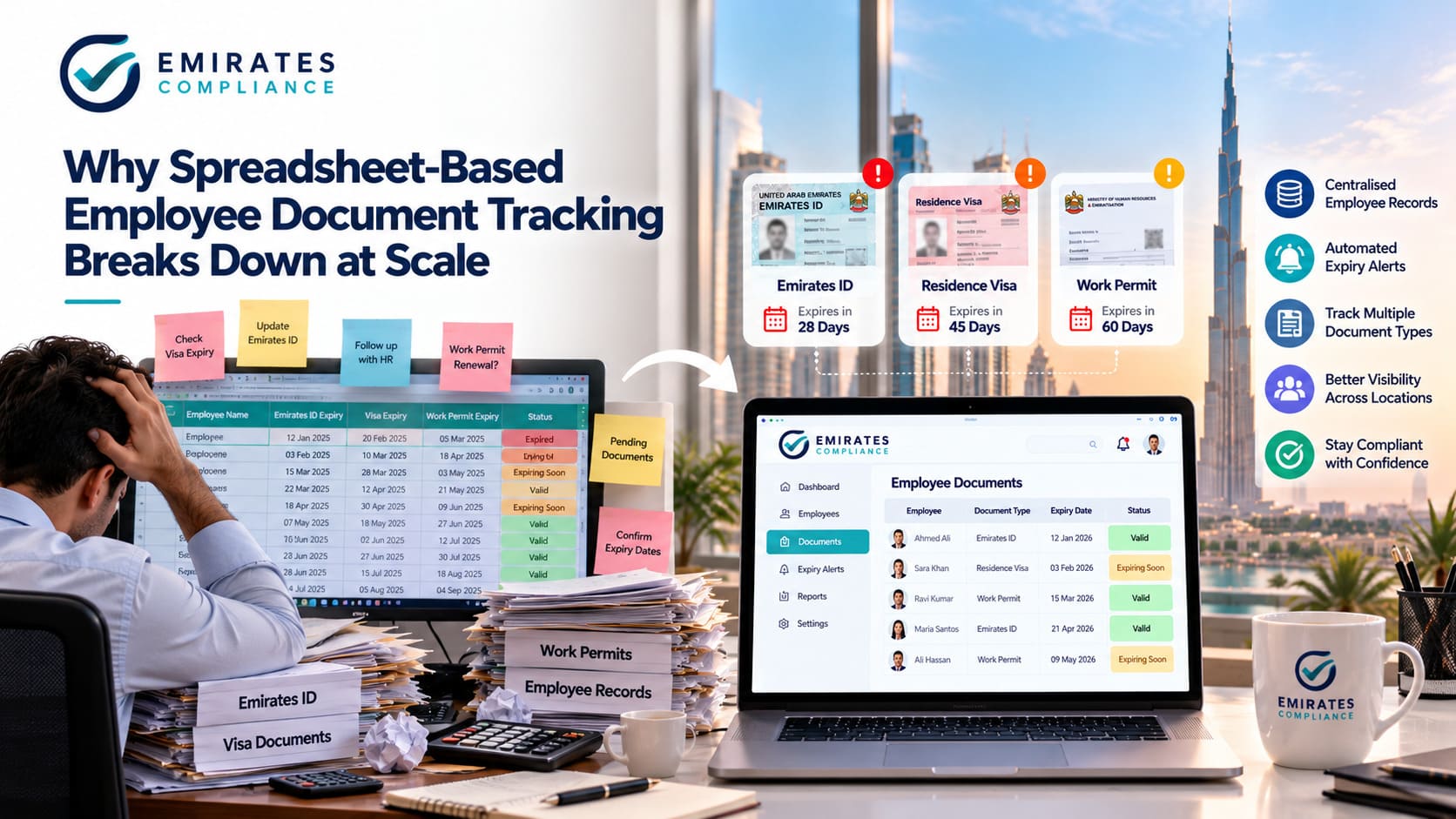
Document management is another major challenge for UAE employers. Employees can have passports, Emirates IDs, visas, labour cards, permits, licences, insurance records or industry-specific certificates that need ongoing attention. Each document may have a different expiry date, meaning HR teams can effectively be responsible for monitoring thousands of dates across a large workforce. When this information is maintained manually, identifying upcoming expirations requires constant checking. Centralised employee document expiry tracking and automated alerts can provide better visibility and help teams identify records that may require attention before important dates arrive.
Tracking Attendance Across Multiple Locations
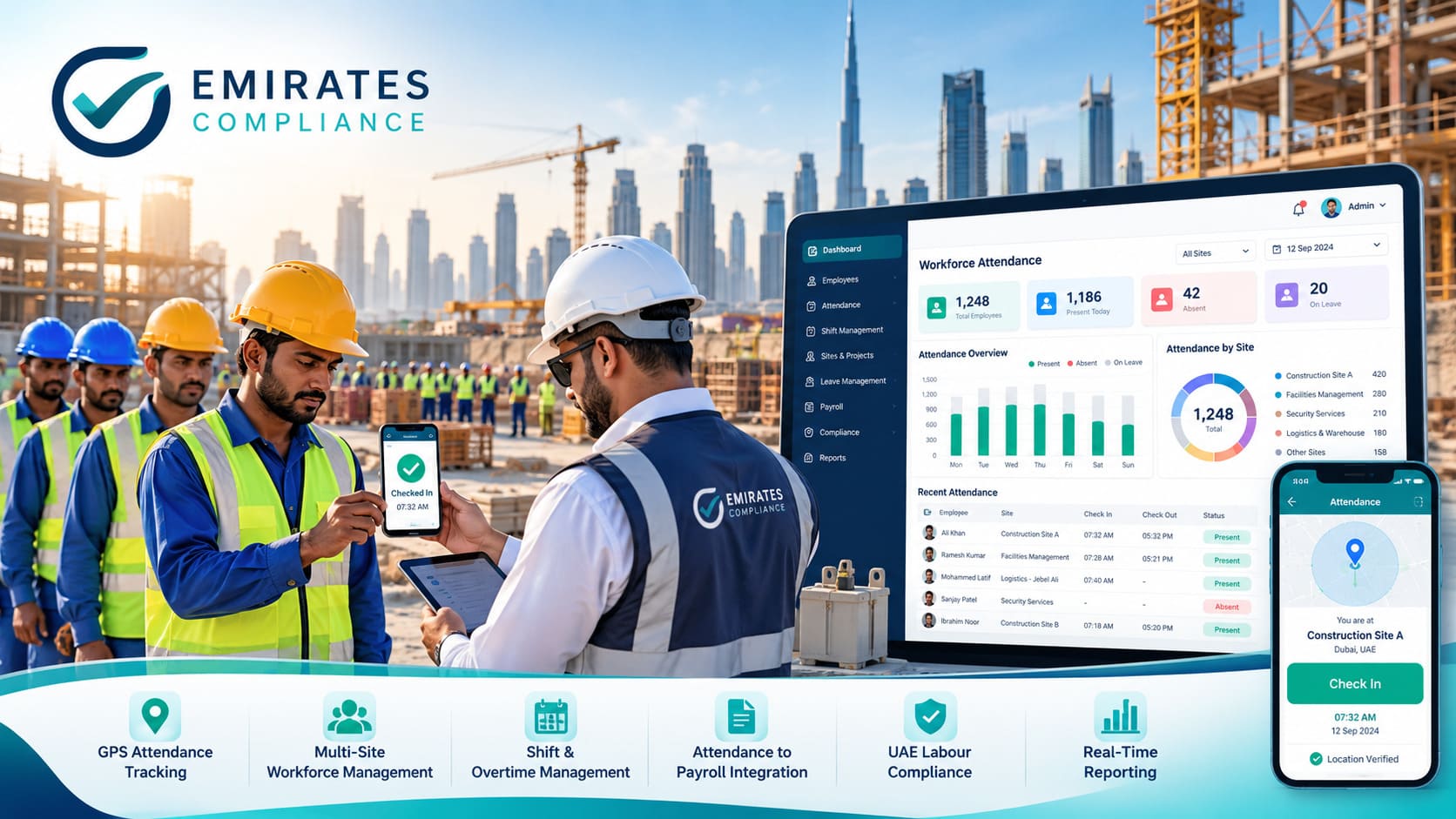
Attendance is relatively straightforward when employees enter the same office every morning. The situation is different when workers are distributed across dozens of locations. Construction companies may operate several sites, facilities management providers can have employees at multiple customer premises, security companies deploy guards to individual posts, and logistics businesses may have employees working across hubs and routes. Manual attendance sheets can make it difficult for management to obtain a timely view of the workforce. Geofenced attendance and GPS-based check-ins can provide a more structured way to record attendance for mobile and site-based employees while giving operations teams better visibility across locations.
Shift and Roster Management
Labour-intensive operations rarely follow a simple Monday-to-Friday office schedule. Workers may operate across morning, evening and night shifts, while demand can change according to projects, client requirements or seasonal workloads. Managing these schedules manually becomes increasingly difficult when hundreds of employees are involved. A change at one location can also affect workforce availability elsewhere. Digital rostering connected with employee and attendance information can help businesses organise shifts more effectively while maintaining a clearer view of workforce deployment.
WPS Payroll for Large Workforces
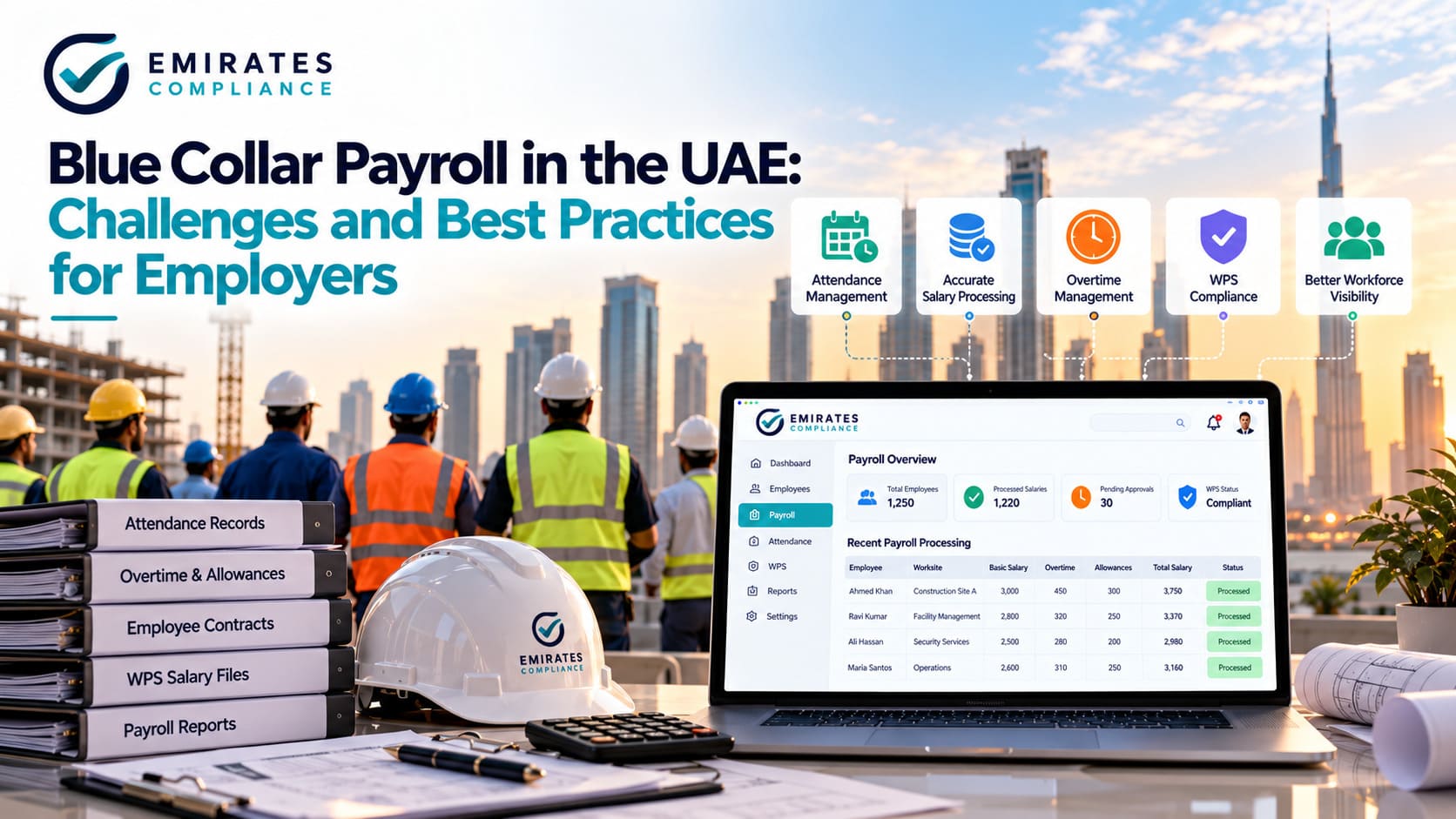
Payroll administration is another area where scale creates complexity. UAE businesses need accurate employee and payroll information, while organisations managing large workforces may process salaries for hundreds or thousands of employees each payroll cycle. When attendance, employee information and payroll records are maintained independently, teams may spend additional time reconciling data between different systems. Integrating WPS payroll with broader workforce management can create a more connected process and help organisations prepare payroll and SIF-related information without maintaining completely separate employee records.
Training and Workforce Readiness
Blue-collar employees may require inductions, safety training, operational instruction or role-specific certificates before carrying out particular duties. These requirements can differ according to industry, role and work location. Construction teams may need HSE inductions, security personnel may have licence or training requirements, while employees deployed to client premises may need site-specific preparation. When training records are stored separately from employee profiles, understanding workforce readiness can become difficult. Connecting training and certificates with employee records gives businesses a clearer picture of whether relevant learning activities have been completed.
Communication with a Mobile Workforce
Communication is another challenge that is sometimes overlooked. Office employees can usually access company systems throughout the working day, but blue-collar workers may spend most of their time in the field. They still need access to relevant information such as rosters, leave details, documents and payslips. A mobile workforce app can help bridge this gap by giving employees access to useful workforce information without requiring them to visit the HR office for routine requests.
Industries Where These Challenges Are Most Visible
These workforce management challenges can appear across many labour-intensive sectors. Labour hire and manpower supply companies need to manage workers sponsored by the business but deployed to different clients. Construction companies manage employees across changing project sites, while facilities management and cleaning providers coordinate large teams across customer locations. Security businesses need visibility over employees assigned to individual posts, and delivery, logistics and warehousing companies manage highly mobile workers across hubs, routes and operational zones. Hospitality, catering and healthcare staffing businesses can also experience similar challenges when large groups of employees need to be scheduled, documented and managed across different locations.
The details vary between industries, but the underlying problem is similar: workforce information becomes increasingly difficult to manage when employees, documents and operational processes are spread across multiple systems.
Why Spreadsheets Become Difficult at Scale
Spreadsheets are often useful during the early stages of a business because they are familiar and flexible. However, every additional employee increases the amount of information that needs to be maintained. One spreadsheet may contain document expiry dates, another records attendance, another supports payroll and a separate file tracks training. Teams can eventually spend significant time updating, comparing and transferring information between these files. The issue is not simply whether spreadsheets can hold the data; it is whether the organisation can maintain accurate and timely workforce visibility as employee numbers continue to grow.
How Emirates Compliance Simplifies Blue-Collar Workforce Management
Emirates Compliance is designed to bring key workforce processes together for UAE employers managing labour-intensive operations. The platform combines AI-powered employee onboarding, visa and labour tracking, employee document expiry management, WPS payroll, attendance and geofencing, shift rostering, automated alerts, mobile workforce capabilities, Training and LMS, and workforce reporting within a connected system.
Instead of creating an employee record during onboarding and then recreating that information across several different tools, businesses can maintain a more continuous workforce record. Information captured when an employee joins can continue to support document monitoring, attendance, payroll, training and reporting throughout the worker's employment.
For labour hire companies and manpower suppliers in particular, this can provide greater visibility across employees who may be deployed to numerous clients and work locations.
Moving from Workforce Administration to Workforce Visibility
Technology cannot remove every challenge associated with managing a large blue-collar workforce. Employees still need to be supported, managers need to make operational decisions and HR teams remain responsible for important workforce processes. What technology can do is reduce the repetitive administration required to understand what is happening.
Instead of manually searching for expiring documents, teams can identify upcoming requirements more easily. Instead of collecting separate attendance sheets from multiple sites, organisations can maintain centralised attendance information. Instead of repeatedly entering employee information into different systems, a connected workforce record can support several operational processes.
This allows HR and operations teams to spend less time finding information and more time acting on it.
Building a Smarter Blue-Collar Workforce Operation
As labour-intensive businesses grow, workforce management needs to grow with them. Adding hundreds of employees should not automatically mean adding more spreadsheets, more manual checks and more disconnected administrative processes. Businesses need visibility across employees from the moment they are onboarded through their ongoing attendance, documents, payroll, training and deployment.
For UAE organisations managing large, mobile or distributed teams, adopting the right labour management software can help create a more structured and scalable workforce operation.
Emirates Compliance helps UAE businesses manage blue-collar workforces through one connected platform, bringing employee onboarding, compliance, WPS payroll, attendance, training and workforce visibility together. Book a free demo to explore how the platform can support your workforce operations.