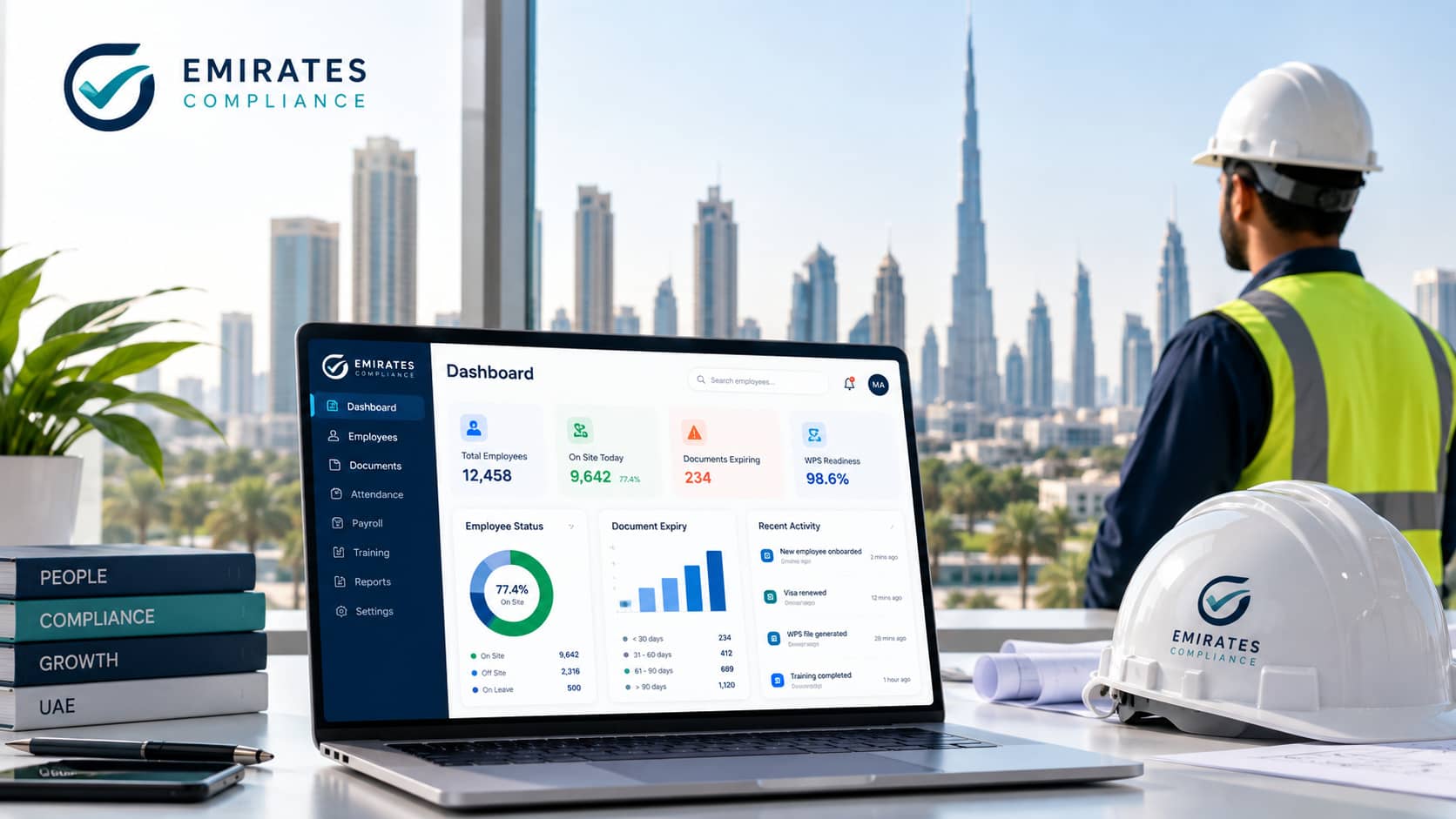
Managing a labour-intensive workforce in the UAE can involve far more than maintaining employee records. Businesses may need to onboard workers, monitor visas and labour documents, prepare WPS payroll, track attendance across multiple locations, manage training and maintain visibility over workforce compliance. When each process is handled through a different spreadsheet or system, administration can become increasingly difficult as the workforce grows. Emirates Compliance is designed to bring these activities together through a workforce management and compliance platform built around the requirements of UAE employers.
In this Emirates Compliance software review, we look at its main features, pricing, practical use cases and the types of businesses that may benefit most from using the platform.
What Is Emirates Compliance?
Emirates Compliance is a workforce management and compliance software platform designed particularly for businesses managing labour-intensive, mobile or distributed workforces. Instead of treating onboarding, employee documents, payroll, attendance and compliance as completely separate processes, the platform connects them around a central employee record.
This approach can be particularly useful for labour hire and staffing companies because workforce information changes constantly. New employees need to be onboarded, workers may be deployed across different client locations, documents approach expiry, attendance needs to be recorded and payroll needs accurate workforce information. Having these activities connected can reduce the need to maintain multiple versions of the same employee information.
AI-Powered Employee Onboarding
One of the key features of Emirates Compliance is AI-powered employee onboarding. High-volume onboarding can consume considerable HR time when employee information has to be entered manually from identification and employment documents.
Emirates Compliance uses AI and OCR technology to help capture information from employee documents and create digital workforce records more efficiently. This can reduce repetitive data entry and provide a more structured starting point for the employee lifecycle. Once an employee record has been established, the information can continue to support document tracking, payroll, attendance and other workforce processes rather than remaining isolated within the onboarding process.
Visa, Labour Card and Document Expiry Tracking
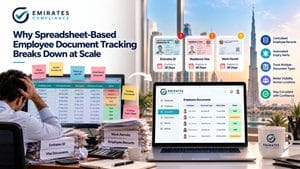
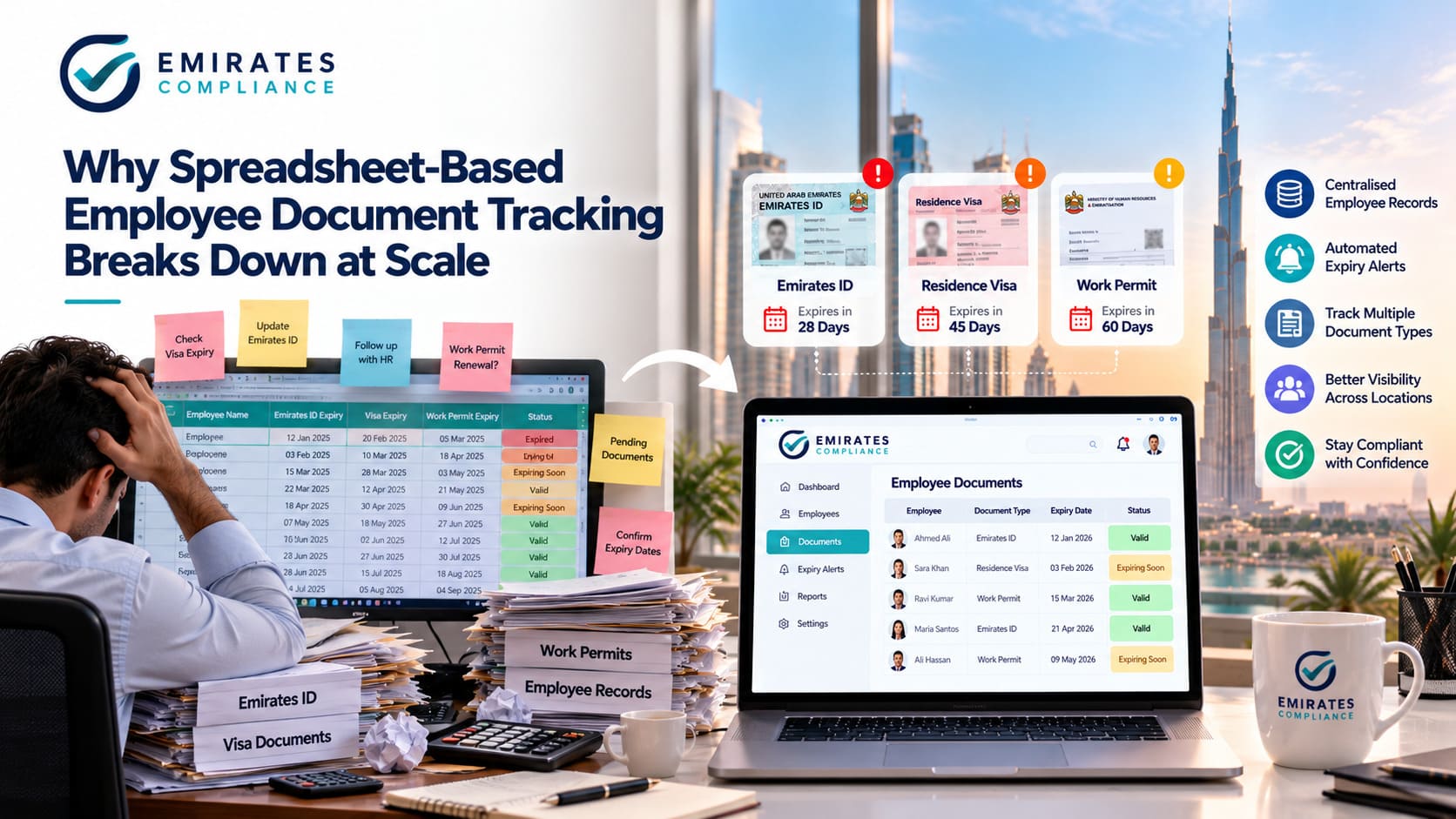
Document expiry management is particularly relevant for UAE employers managing large workforces. Employee passports, visas, Emirates IDs, labour cards, permits and other workforce documents can all have different expiry dates. Monitoring these dates manually becomes increasingly demanding as employee numbers increase.
Emirates Compliance provides visa and labour tracking and employee document expiry management, allowing important workforce information to be maintained centrally. Automated email and WhatsApp alerts can help responsible teams identify upcoming expirations and take action earlier. The practical advantage is that HR teams do not need to rely entirely on spreadsheets, calendars or individual reminders to determine which employee documents require attention.
WPS Payroll Management
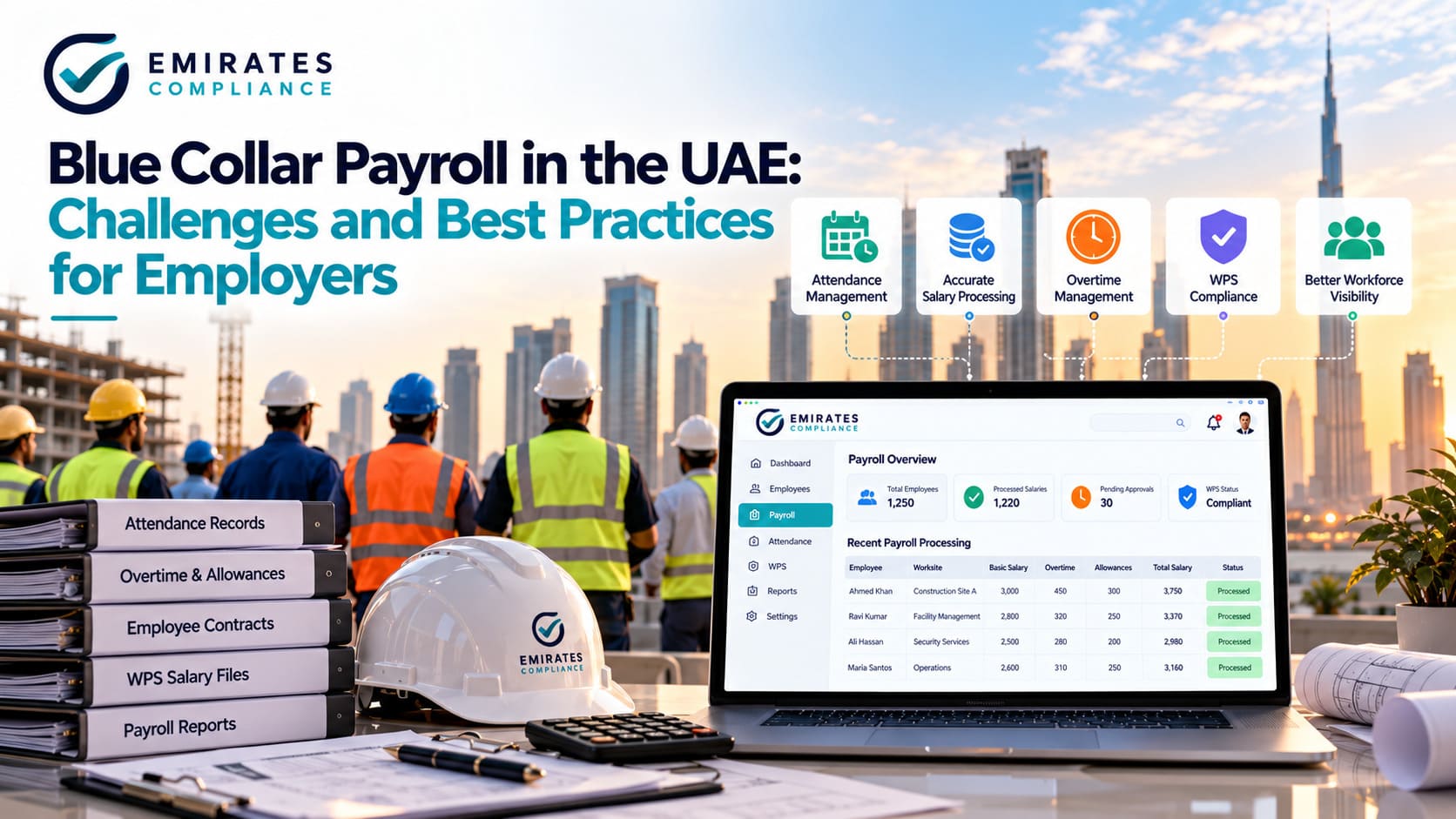
WPS payroll is another important component of the platform. Emirates Compliance helps employers maintain payroll information and prepare WPS and SIF files as part of the wider workforce management process.
Connecting WPS payroll with employee information can be particularly useful for businesses managing substantial worker populations. Instead of payroll existing in complete isolation from onboarding and workforce records, teams can work with a more connected source of employee information. This can help reduce repetitive administration between HR and payroll processes.
Attendance, Geofencing and Rostering
For businesses where employees work across construction sites, client premises, delivery zones, warehouses or other field locations, traditional office attendance systems may not provide enough visibility.
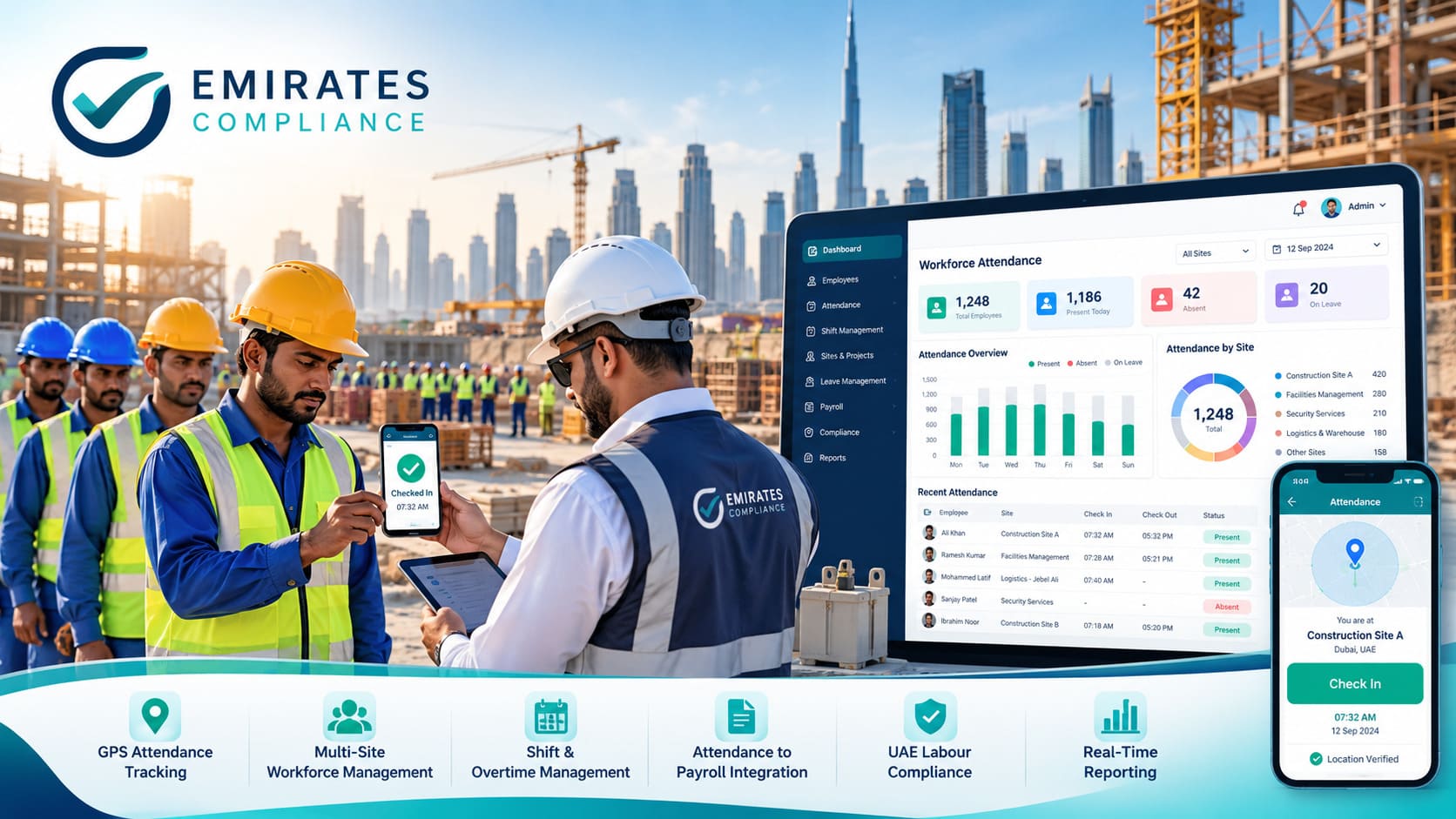
Emirates Compliance offers GPS attendance and geofencing, along with rostering capabilities. Businesses can manage attendance for workers across different locations while maintaining those records as part of the wider workforce system. This makes the feature particularly relevant for organisations with mobile employees or teams deployed across multiple customer sites.
Mobile Workforce App
Emirates Compliance also provides a mobile workforce experience for iOS and Android. Employees can use the worker app for activities such as clocking in, viewing rosters, accessing documents, managing leave-related activities and viewing payslips.
For employers managing distributed workforces, mobile access helps connect workers with HR and operational processes without requiring every activity to take place through a central office. This can be especially valuable for delivery riders, field employees, construction workers and employees deployed to client locations.
Training and LMS
Workforce readiness can also involve training, inductions and certificates. Emirates Compliance includes Training and LMS capabilities that allow businesses to manage role-based lessons, quizzes and certificates as part of employee workforce records.
This gives organisations another way to bring workforce information together. Instead of maintaining separate spreadsheets for employee training and certifications, relevant learning information can sit alongside other workforce records. The feature can be useful for businesses where safety inductions, operational training or recurring certification forms part of workforce management.
Reporting and Workforce Visibility
A workforce system becomes more valuable when the information it contains can be understood quickly. Emirates Compliance includes reporting and analytics capabilities designed to provide management with better visibility across employee and compliance information.
Rather than manually combining several spreadsheets whenever management needs an update, teams can use centralised reporting to review workforce information and export data to Excel when additional analysis is required. For larger employers, this can make it easier to identify areas requiring attention without manually inspecting individual employee records.
Emirates Compliance Pricing
Emirates Compliance uses a per-employee pricing structure, which makes costs easier to relate to workforce size.
The Comply plan starts at AED 8 per employee per month and focuses on core workforce compliance requirements. It includes AI onboarding and OCR, visa, labour and Emirates ID expiry tracking, email and WhatsApp alerts, WPS and SIF capabilities, employee self-service through the app and standard reporting.
The Operate plan is AED 12 per employee per month and adds operational workforce capabilities including GPS attendance and rostering, leave approvals, field or rider app functionality, automated reminders and advanced reporting.
Annual billing provides a 20% saving, while Emirates Compliance states that implementation generally takes around one to three days with no setup fee. Businesses should still confirm current pricing and plan inclusions directly before purchasing, as software packages can change over time.
Who Is Emirates Compliance Best Suited For?
Emirates Compliance is most relevant to organisations where workforce size, mobility and administrative complexity make manual management difficult. Labour hire companies, staffing agencies and manpower supply businesses are particularly strong use cases because they need to manage workers from initial onboarding through ongoing deployment and payroll.
Construction businesses can use the platform to manage site-based employees, workforce documents, attendance and training. Facilities management and cleaning providers can manage distributed teams, shifts and employee compliance. Security businesses may benefit from licence and certificate tracking alongside site attendance, while delivery, logistics and warehousing companies can manage mobile workers, document records, attendance and payroll.
Healthcare and medical staffing organisations can also use workforce compliance functionality where professional credentials, licences, training and employee records need ongoing monitoring.
What Makes Emirates Compliance Different?
The strongest aspect of Emirates Compliance is not necessarily one individual feature. Its value proposition comes from connecting several workforce activities within the same platform.
A business could use separate software for onboarding, another application for attendance, spreadsheets for document expiry dates and another process for payroll. Each tool might work independently, but HR teams can still find themselves transferring information between systems.
Emirates Compliance instead follows the employee lifecycle. Information captured during onboarding can continue to support visa and document monitoring, attendance, payroll, training and reporting. For organisations managing large numbers of workers, reducing this fragmentation can be more valuable than simply adding another standalone HR application.
Is Emirates Compliance Worth Considering?
Whether Emirates Compliance is the right solution depends on the size and structure of the organisation. A very small business with a simple, office-based workforce may not require the same level of workforce management functionality as a labour hire company managing thousands of employees across multiple locations.
For labour-intensive UAE employers, however, the combination of AI onboarding, employee document expiry tracking, WPS payroll, attendance and geofencing, mobile workforce tools, training and reporting addresses several processes that commonly become difficult to manage manually at scale.
The per-employee pricing model also allows businesses to compare the platform's cost against the administrative time currently spent maintaining spreadsheets, following up on documents and managing disconnected workforce processes.