A missing document rarely becomes a problem at a convenient time. For UAE employers managing dozens or hundreds of workers, scattered employee files can quickly turn routine administration into a daily search exercise. Effective employee file management in the UAE means more than storing passport copies in folders. It means keeping accurate records, knowing which details need updating, and ensuring the right people can find reliable information when needed.
Start with One Complete Employee Profile
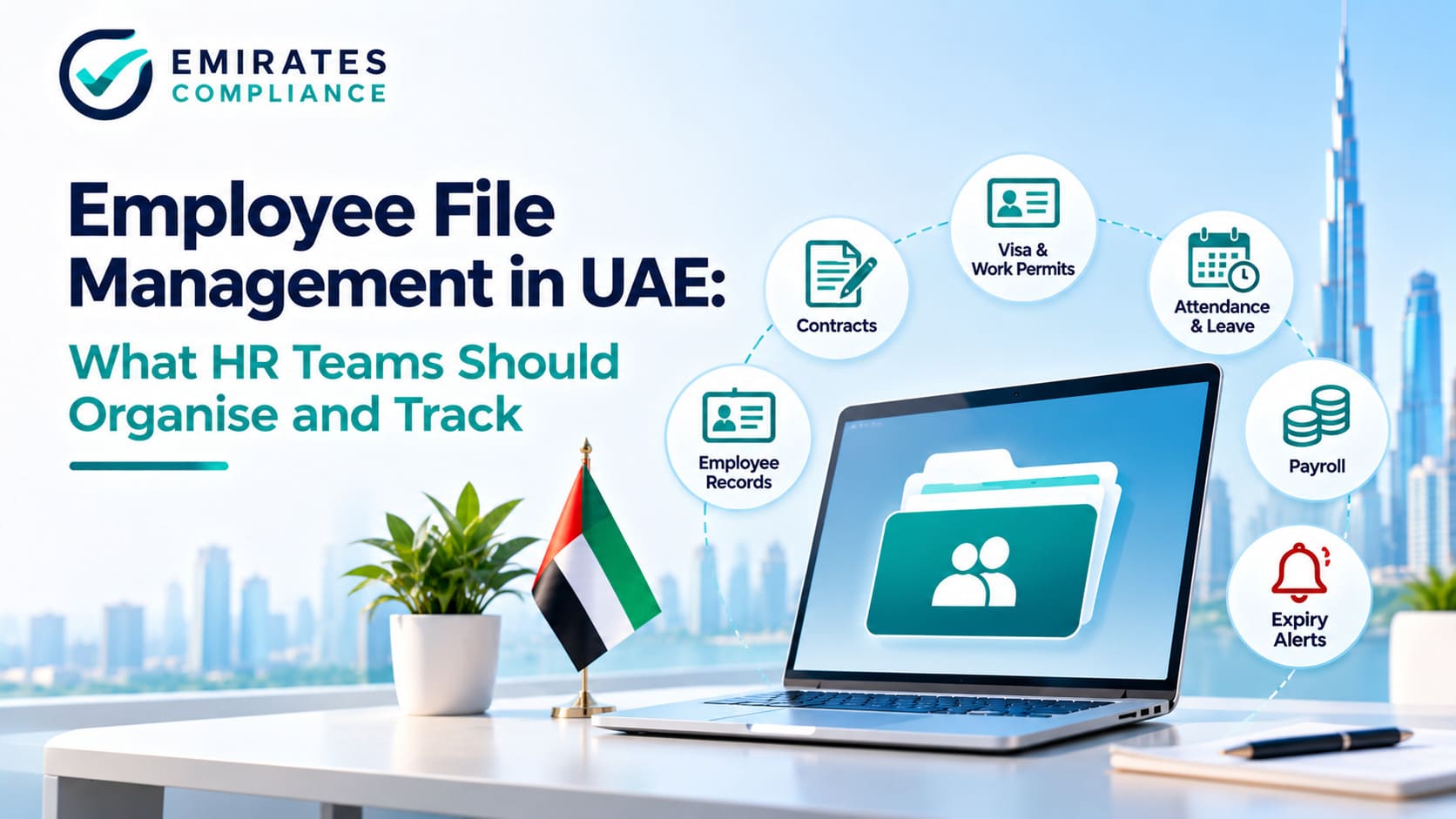
Every employee should have a consistent profile built around a unique employee reference. Start with their full name, contact details, joining date, department, job title, reporting manager, and assigned work location. Add the relevant identification and employment information, and establish who can update each field. A centralised employee records management system gives HR one dependable starting point for everyday decisions.
Organise Contracts and Employment Documents
Keep the signed employment contract, applicable offer documentation, contract amendments, and records of relevant approvals together. HR teams should be able to confirm agreed salary components, employment start dates, working arrangements, and contract changes without searching through old emails. For organisations under MOHRE rules, employment records must reflect applicable requirements. A standard HR document management checklist helps teams spot missing records before a routine request becomes an urgent issue.
Track Emirates ID, Visa and Work Permit Details
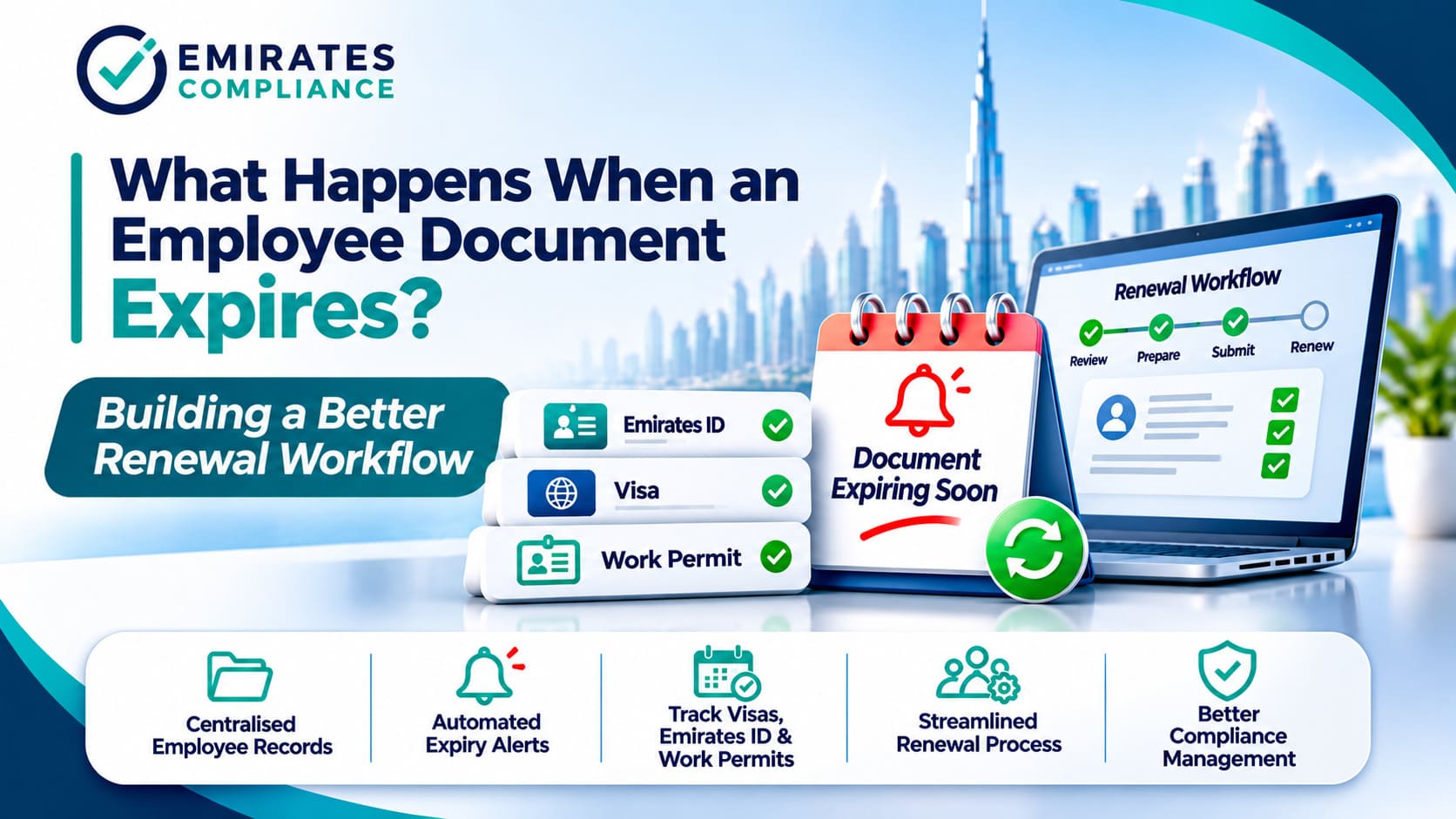
Employee identity and immigration-related records deserve their own structured section. Where applicable, capture Emirates ID, residency visa, passport and work permit details, including reference numbers, validity dates, and renewal progress. Recording an expiry date is only the beginning; someone must also own the follow-up. HR should know whether a renewal has been initiated, submitted, approved, or still requires action. Employee document expiry tracking with scheduled alerts can help prevent important dates from disappearing into a crowded spreadsheet.
Connect Attendance, Leave and Payroll Information
A useful employee file tells a wider story than the documents collected on joining day. It should also connect to attendance, approved leave, shift assignments, and payroll information where appropriate. This matters especially for manpower suppliers, construction firms, and facilities management businesses whose employees work across multiple sites. If attendance adjustments or unpaid leave are recorded in one system but missed by payroll, avoidable discrepancies follow. An integrated HR and payroll management system in UAE makes it easier to review consistent information before the monthly pay cycle.
Record Training and Worksite Readiness
Some roles require induction, safety training, client approvals, or site-specific certifications. Rather than treating these as loose attachments, connect them to the employee's role and assigned location. Record completion dates, evidence of training, and any review dates that matter for that particular job. Supervisors need visibility into deployment readiness without unrestricted access to personal information. This is where organised digital employee files become useful for operations as well as HR.
Make Updates and Exceptions Visible
Employee files are living records. People change locations, renew documents, update contact information, take leave, and move into new roles. Set a simple rule: whenever a material change occurs, update the record and note who made the change. Review missing fields, approaching expiries, and unresolved corrections on a regular schedule. An employee compliance dashboard can turn these exceptions into a manageable task list rather than leaving HR to discover them during payroll preparation or an inspection.
Protect Personal Data and Plan for Offboarding
Employee files contain sensitive information, so access should reflect genuine job responsibilities. Use secure storage, role-based permissions, controlled sharing, and a documented retention process. Do not keep employees' original official documents as a routine file-management practice. At exit, organise final payroll records, leave settlement information, required acknowledgements, and relevant employment history. For employers covered by the UAE federal private-sector labour framework, employee files generally must be retained for at least two years after employment ends; other applicable obligations may require further consideration.
How Emirates Compliance Helps HR Teams Stay Organised
At Emirates Compliance, we bring employee onboarding, centralised profiles, document expiry alerts, GPS-enabled attendance, leave and shift records, and payroll-related workflows into one connected platform. We focus on workforce-intensive UAE businesses with frequent hiring and multiple worksites. By reducing duplicate entry and making outstanding actions easier to identify, we help teams spend less time chasing files and more time managing their workforce.