Hiring a new employee is an important step for any growing business, but the process involves much more than issuing an offer letter. UAE employers must coordinate employment documentation, work permit procedures, employee records, payroll information, and workplace arrangements before a new hire is fully integrated into the organisation. For construction companies, manpower suppliers, security providers, and facilities management businesses, these responsibilities become more demanding when onboarding large groups of workers. A structured new employee onboarding checklist in UAE helps HR teams reduce administrative errors, maintain accurate records, and create a more organised employee experience.
Why Employee Onboarding Matters for UAE Employers
A well-planned onboarding process helps employees understand their responsibilities while ensuring HR departments have the information needed for workforce administration. Without a consistent system, businesses may encounter missing documents, delayed approvals, incomplete employee profiles, and payroll discrepancies. These issues become particularly challenging when workers are recruited for different client locations or project assignments. Employee onboarding software in UAE helps organisations establish standard procedures, monitor pending activities, and improve communication between HR, payroll, and operations teams.
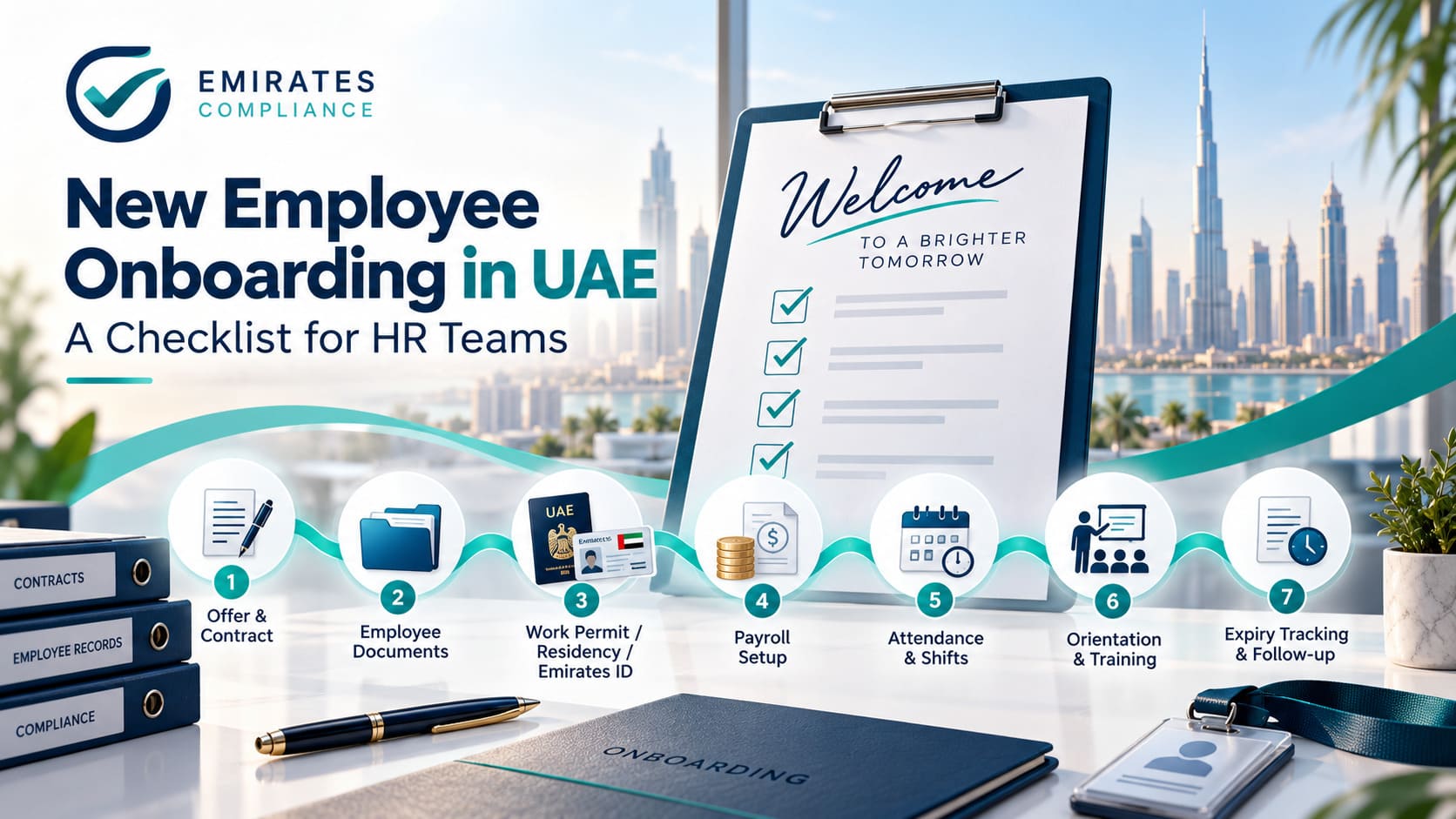
1. Verify the Job Offer and Employment Contract
The first step in the UAE employee onboarding process is confirming that the employment offer and contract reflect the agreed working arrangements. HR teams should review the employee's job title, salary, workplace, employment terms, and relevant contract details. For businesses governed by MOHRE requirements, the applicable offer, work permit, and employment contract procedures must be followed. Employers should also ensure employees understand their contractual terms. Proper documentation at this stage helps establish clear expectations and reduces potential misunderstandings after joining.
2. Collect and Organise Employee Documents
Employee documentation is a major part of onboarding administration. Depending on the employee's circumstances and job requirements, HR teams may need passport information, photographs, qualifications, identification records, and other supporting documents. These details should be collected through appropriate, secure procedures and reviewed for accuracy. A centralised employee document management system helps businesses avoid scattered files and repeated data entry. Creating a complete digital employee profile also makes future document reviews and administrative updates easier.
3. Coordinate Work Permits, Residency, and Emirates ID
Employers must follow the applicable work authorisation and immigration procedures before employees undertake work. Depending on the employment arrangement, this may involve obtaining a work permit, coordinating residency procedures, completing medical fitness requirements, and processing Emirates ID applications. The exact steps can differ between mainland and free-zone employment frameworks. Automated employee onboarding software helps HR teams track application stages, store relevant information, and identify outstanding tasks. However, official approvals must still be completed through the responsible government authorities.
4. Set Up Employee Profiles and Payroll Information
Accurate payroll information should be established early in the onboarding process. HR departments need to record employee identification details, agreed salary components, joining dates, and applicable payment information. For employers covered by the Wage Protection System (WPS), payroll teams must also prepare employee information in accordance with relevant salary payment requirements. A connected HR and payroll management system in UAE reduces repeated data entry and supports better coordination between departments. All payroll inputs should be verified before the employee's first salary cycle.
5. Configure Attendance, Shifts, and Leave Records
Once employment arrangements are confirmed, employees should be connected to the organisation's attendance and scheduling processes. This is particularly important for companies managing rotating shifts or workers deployed across multiple locations. HR teams should configure appropriate work schedules, attendance methods, site assignments, and leave records. Workforce management software in UAE can help centralise these activities through mobile attendance, shift management, and employee availability information. Establishing accurate records from the beginning supports smoother daily operations and payroll preparation.
6. Complete Workplace Orientation and Training
Onboarding should also prepare employees for their actual working environment. New hires need clear information about workplace policies, reporting structures, job responsibilities, and relevant safety procedures. Construction, logistics, and industrial employers may require additional role-specific induction or training before workers begin particular activities. HR and operations managers should document completed sessions and identify outstanding requirements. Digital onboarding checklists help organisations monitor progress while ensuring employees receive appropriate guidance before beginning their assigned duties.
7. Track Document Expiry Dates and Pending Tasks
Employee onboarding does not end when the initial paperwork is submitted. HR teams must maintain ongoing visibility over important documents, outstanding approvals, and administrative follow-up requirements. Recording relevant Emirates ID, visa, and work permit expiry dates helps businesses plan future renewals. HR compliance software in UAE can support this process through centralised records, configurable reminders, and task monitoring. Regular reviews also help identify incomplete employee profiles before they create avoidable operational difficulties.
How Emirates Compliance Simplifies Employee Onboarding
At Emirates Compliance, we understand the challenges UAE businesses face when onboarding employees across multiple departments, projects, and worksites. Our platform brings together AI-assisted document capture, centralised employee profiles, document expiry monitoring, attendance tracking, leave and shift management, and payroll-related workflows. By connecting essential workforce information, we help HR teams reduce repetitive administration and improve onboarding visibility. Our solution supports businesses managing both smaller teams and large, distributed workforces.