Managing workforce compliance in the UAE requires consistent attention to employee documentation, payroll deadlines, leave records, and administrative responsibilities. For companies managing hundreds of workers across multiple sites, remembering every important date can become challenging. A missed document renewal or delayed payroll review can create avoidable operational problems. Building a workforce compliance calendar in UAE helps HR teams organize important deadlines, assign responsibilities, and maintain better visibility over employee-related tasks throughout the year.
What Is a Workforce Compliance Calendar?
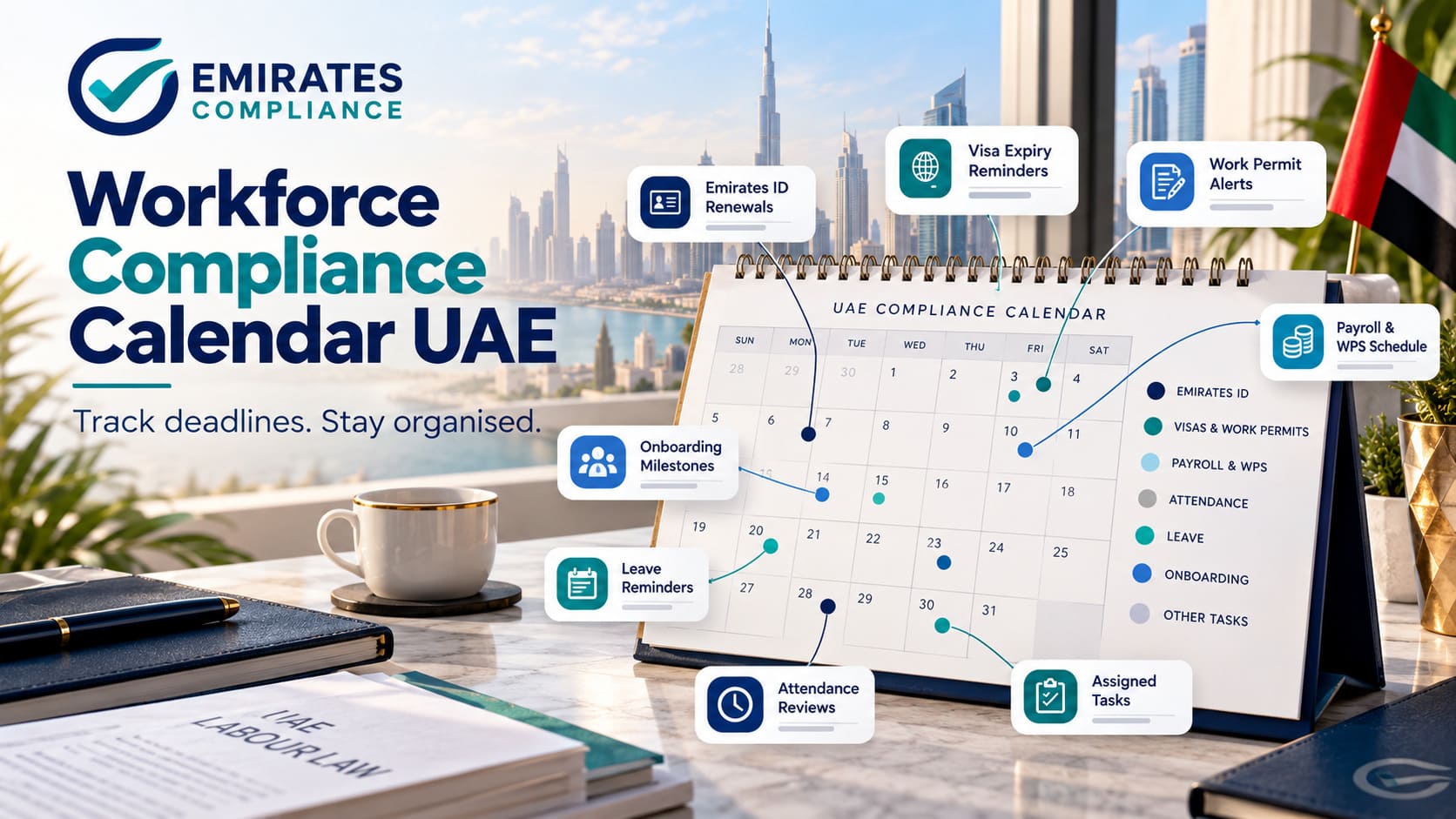
A workforce compliance calendar is a structured schedule that helps businesses monitor important HR deadlines, employee document renewals, payroll activities, and recurring workforce checks. Unlike a basic office calendar, it connects specific tasks with employee records, responsible departments, and follow-up dates. A well-maintained HR compliance calendar gives teams a clearer understanding of upcoming activities and outstanding actions. It also encourages employers to review workforce information regularly instead of responding only when a problem appears.
Why UAE Businesses Need a Compliance Calendar
Companies operating in construction, manpower staffing, security, logistics, and facilities management often manage employees with different document expiry dates, employment arrangements, and worksite assignments. Tracking these details manually becomes increasingly difficult as workforce numbers grow. An organised employee compliance tracking system helps businesses reduce dependence on individual reminders and disconnected spreadsheets. By establishing consistent review schedules, HR managers can identify upcoming tasks earlier, coordinate responsibilities, and improve communication between HR, payroll, and operations departments.
1. Track Emirates ID, Visa, and Work Permit Renewals
Employee documentation should be a major component of any workforce compliance calendar. UAE employers frequently manage Emirates ID details, residency visas, work permits, and other relevant employment documents. Each employee may have different validity periods and renewal requirements, making manual tracking unreliable. Employee document expiry tracking software helps organisations record important dates and configure advance reminders. HR teams should also monitor renewal progress and confirm that necessary applications are completed through the appropriate government channels.
2. Include Monthly Payroll and WPS Activities
Payroll preparation is another important activity that belongs on a workforce compliance calendar. Employers covered by the UAE Wage Protection System must follow applicable wage payment requirements. HR and payroll teams should schedule internal deadlines for attendance verification, overtime approvals, salary calculations, and SIF file preparation where relevant. A connected HR and payroll management system helps businesses organise these tasks and identify missing information before salary processing. Payment confirmation and unresolved payroll issues should also be reviewed regularly.
3. Schedule Attendance and Leave Record Reviews
Accurate attendance and leave records support effective workforce administration. Companies managing rotating shifts or employees across multiple client locations may need regular reviews of missing check-ins, overtime entries, approved absences, and leave balances. A workforce management compliance calendar can include weekly or monthly timesheet verification activities. This helps supervisors correct approved discrepancies before payroll preparation. Regular reviews also give operations managers better visibility into staffing availability and help prevent administrative issues from accumulating over several months.
4. Monitor Employee Onboarding and Contract Milestones
Workforce compliance begins when an employee joins the organisation. HR teams should track onboarding documentation, relevant permit information, employee profile completion, and internal approval activities. Employment contracts and other important milestones may also require scheduled reviews. Automated employee onboarding software can help businesses organise these activities and highlight incomplete records. For manpower staffing companies onboarding large groups of workers, connecting onboarding tasks with a centralised calendar can improve coordination before employees are assigned to projects.
5. Include Training and Site-Specific Requirements
Some industries require additional monitoring of workforce training, safety inductions, certifications, or client-specific deployment requirements. For example, construction and facilities management companies may need to review internal training records before assigning employees to particular worksites. These requirements vary by role, industry, and applicable regulations. Including relevant activities in an HR compliance management calendar helps businesses maintain clearer records of training completion and outstanding actions. Managers can also schedule periodic reviews to confirm that workforce information remains current.
6. Assign Responsibilities and Configure Automated Reminders
A compliance calendar becomes more useful when every task has a clearly assigned owner. HR teams may manage documentation, payroll departments may handle salary preparation, and operations supervisors may verify attendance information. Instead of sending the same reminder to everyone, businesses should define who is responsible for each activity and when follow-up is required. HR compliance automation can support configurable notifications, task statuses, and escalation processes. This creates greater accountability while reducing repetitive communication between departments.
7. Review and Update Your Calendar Regularly
Creating a calendar is only the beginning. Businesses should review outstanding activities regularly and update employee records when circumstances change. New hires, employee transfers, contract changes, and revised regulatory requirements can all affect compliance schedules. Monthly dashboard reviews help managers identify overdue actions and upcoming deadlines. Employers should also verify applicable requirements against current official guidance, particularly when operating across different UAE jurisdictions. A useful calendar must remain accurate, accessible to authorised users, and connected with everyday HR activities.
How Emirates Compliance Helps Simplify Workforce Tracking
At Emirates Compliance, we understand how challenging it can be to manage employee information across multiple locations. Our platform connects AI-assisted onboarding, centralised employee records, document expiry alerts, attendance tracking, leave management, and payroll-related workflows. These capabilities help UAE businesses organise recurring workforce activities and reduce dependence on manual reminders. By maintaining important information within a connected system, HR and operations teams can gain clearer visibility over employee administration and upcoming responsibilities.